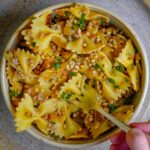
Jewish Kasha Varnishkes Recipe
Bowtie pasta, nutty toasted buckwheat, and a heap of golden caramelized onions—kasha varnishkes is the dish your carb-loving soul has been waiting for. An Ashkenazi Jewish staple that was built for big appetites and cold weather. It’s hearty, wholesome, and tastes like it came straight from a Brooklyn deli—minus the line and the guy yelling orders in the background.
Servings: 6 (12 cups)
Calories: 357kcal
Cost: $7.50
Equipment
- Lid for skillet
Ingredients
The Onions (& Optional Mushrooms):
- 3 tablespoons olive oil
- 4 cups yellow onion diced
- 8 ounces cremini or oyster mushrooms, sliced (optional)
The Kasha:
- 1 ¼ cup kasha
- 1 teaspoon garlic minced
- 2 ¾ cups unsalted vegetable stock or water
- 2 teaspoons salt or to taste
- ½ teaspoon ground black pepper
Optional Garnishes:
- Vegan sour cream
- Thinly sliced chives
- Parsley leaves
Instructions
- Bring a large pot of water to a boil over high heat. Add the salt and farfalle, then cook until al dente according to the package instructions. Drain and set aside.
- Heat the olive oil in a large skillet over medium-high heat. Add the diced onions and cook, stirring occasionally, until soft and golden brown, 9-10 minutes. If using mushrooms, add them during the last 5 minutes of cooking and sauté until tender. Transfer the mixture to a bowl and set aside.
- In the same skillet, add the kasha and toast over medium heat for 2-3 minutes, stirring frequently, until fragrant.
- Add the minced garlic and cook for 60 seconds.
- Pour in the vegetable stock, add the salt and black pepper, and bring to a simmer.
- Cover, reduce heat to low, and cook for 12-14 minutes until the liquid is absorbed and the kasha is tender.
- Add the cooked pasta and onion mixture to the skillet with the kasha. Stir gently to combine and warm through. Adjust seasoning if needed.
- Serve with vegan sour cream, garnished with chives or parsley, if using.
Notes
🎭 Les Oignons Misérables:
Take the time to caramelize the onions until they’re deeply golden and sweet—this is where a lot of the flavor comes from.
🎯 Kasha Me If You Can:
Even if your kasha is pre-toasted, toss it in a dry pan over medium heat for 2-3 minutes before adding liquid. This keeps the grains separate and brings out a richer, nuttier flavor.
🛳️ Stock Picks:
Cooking kasha in vegetable stock instead of water gives it a deeper, more robust taste. If using salted stock, adjust the added salt in the recipe to keep the seasoning balanced.
Nutrition
Calories: 357kcal | Carbohydrates: 61g | Protein: 11g | Fat: 8g | Saturated Fat: 1g | Polyunsaturated Fat: 1g | Monounsaturated Fat: 5g | Sodium: 1567mg | Potassium: 487mg | Fiber: 5g | Sugar: 7g | Vitamin A: 3IU | Vitamin C: 8mg | Calcium: 52mg | Iron: 1mg