

*This post may contain affiliate links. Read more »
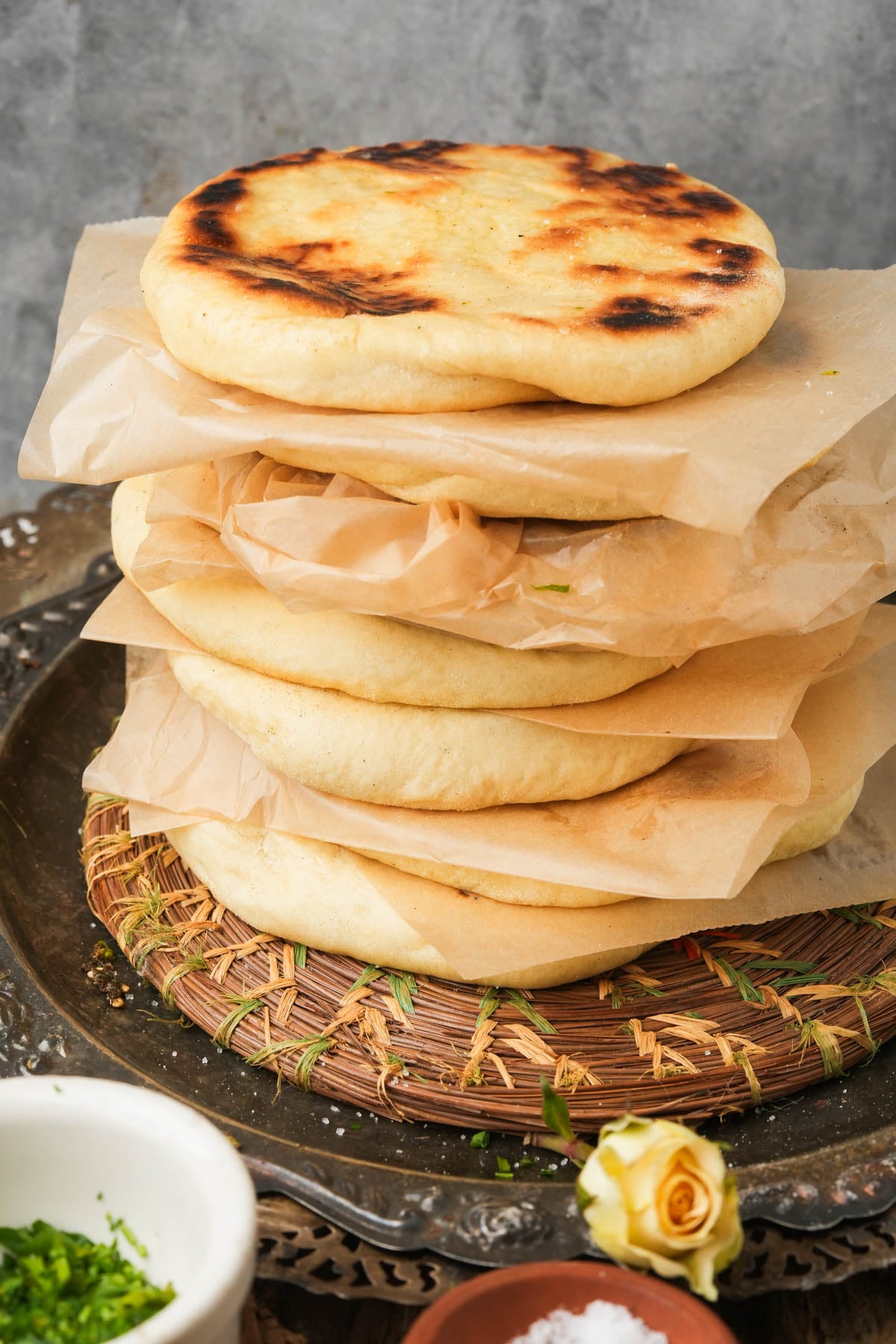
Bazlama are the fresh, fragrant pillows that Turkish folks call köy ekmeği, aka 'village bread." While it's traditionally baked on a sac, which is basically a big domed griddle sitting over a wood fire, I've dialed in this recipe to work with simple-to-make dough on a skillet on a regular home stovetop burner.
Recipe tips tailored to what matters most to you:

Swap in a gluten-free bread flour blend for the bread flour and semolina here, it just won't get quite as chewy and stretchy as the wheat version.

Make the dough the night before and let it do its rise in the fridge, that skips the day of wait and the flavor gets even better from the long ferment.

Skip the plant milk and use plain water instead, it's free and the dough still turns out great, just with a slightly less soft crumb.

Go light on the olive oil brushing at the end, or skip it entirely, the bread's already great with just a sprinkle of salt.

No semolina flour in your pantry? Whole wheat flour is a fine substitute, and it's sold in every regular grocery store.

Keep your liquid just barely warmer than room temp, not hot. Too hot and you murder the yeast, too cold and it just sits there doing nothing.
Do not skip the 20-minute rest after shaping the balls. It relaxes the gluten so the dough rolls out nice and smooth instead of fighting you.
Keep an eye on your pan and adjust as you cook. Too hot and the outside scorches, too low and you get dried out, tough bread.
Oodles more tips, step-by-step recipe photos, info on weird ingredients, and FAQs are all still here. I just tucked 'em out of the way so you can start cooking sooner.
Back in 2006, my family and I traveled all throughout Turkey. As vegans in what was at the time a not-super accommodating country, we survived on Turkish ekmek and when we could find it made vegan, bazlama. We would roll into a town early in the morning and see the glow of neon lights from the bakeries and load up on the still-warm bread.
But what to put on it? We would go to markets and grab hot pickled peppers, olive oil and parsley. There wasn't a whole lot else we could get that was strictly vegan in Turkey back in those days.
I sure do remember the first time I bit into a hot pepper sandwich like that. I took one bite and was like "whoah. There's no way. This is way too spicy for me." I legit didn't think I could finish one. But a week into traveling in Turkey, I was like "…one more hot pepper sandwich, please."
While some people make these like kuboos with a little whole wheat flour, I make mine more like the way Moroccan msemen, is made with a small amount of semolina in the dough. It provides a faint sweetness that plain bread flour cannot deliver on its own, and it's one of those things you notice more when it is missing than when it is there.


My 9 year old likes this best when I use 3 cups spelt flour, 1 cup ripe sourdough starter instead of the 4 c flour, sugar and active dry yeast. He eats them hot from the pan. Sometimes with avocado instead of olive oil. Nothing like a *good* flatbread!
Jump to:
Why you'll adore this vegan Turkish flatbread
✊ Vegan AF: Vegan milk or plain water both work, and nobody at the table will clock the difference. And that's the whole deal with my vegan Turkish recipes, they aren't about causing harm to animals even a little bit.
🔥 Zero Oven Required: Your stovetop handles the entire job, no oven required whatsoever. This is summer bread, tiny-kitchen bread, my-oven-decided-to-die bread, and it comes out just as good as anything you would pull out of a hot box.
🥖 Stays Soft for Days: Stack them under a towel the second they come off the heat and they trap their own steam, staying tender way longer than they have any right to. These are still pretty great the next day, and flatbread is usually not built like that.
Tested and Approved Worldwide: Like all my vegan recipes, this one got handed to over 1,000 testers before it ever saw the light of day, and half of them messaged back genuinely stunned that they could pull this off with nothing more than a pan on a stovetop.

I'm on my knees staring weirdly into your eyes, asking you in a soothing voice to be my taste-testing partner in crime. Sign up for the recipe testing crew and get early access to new recipes before they're published.
Stovetop Turkish Bread Ingredients
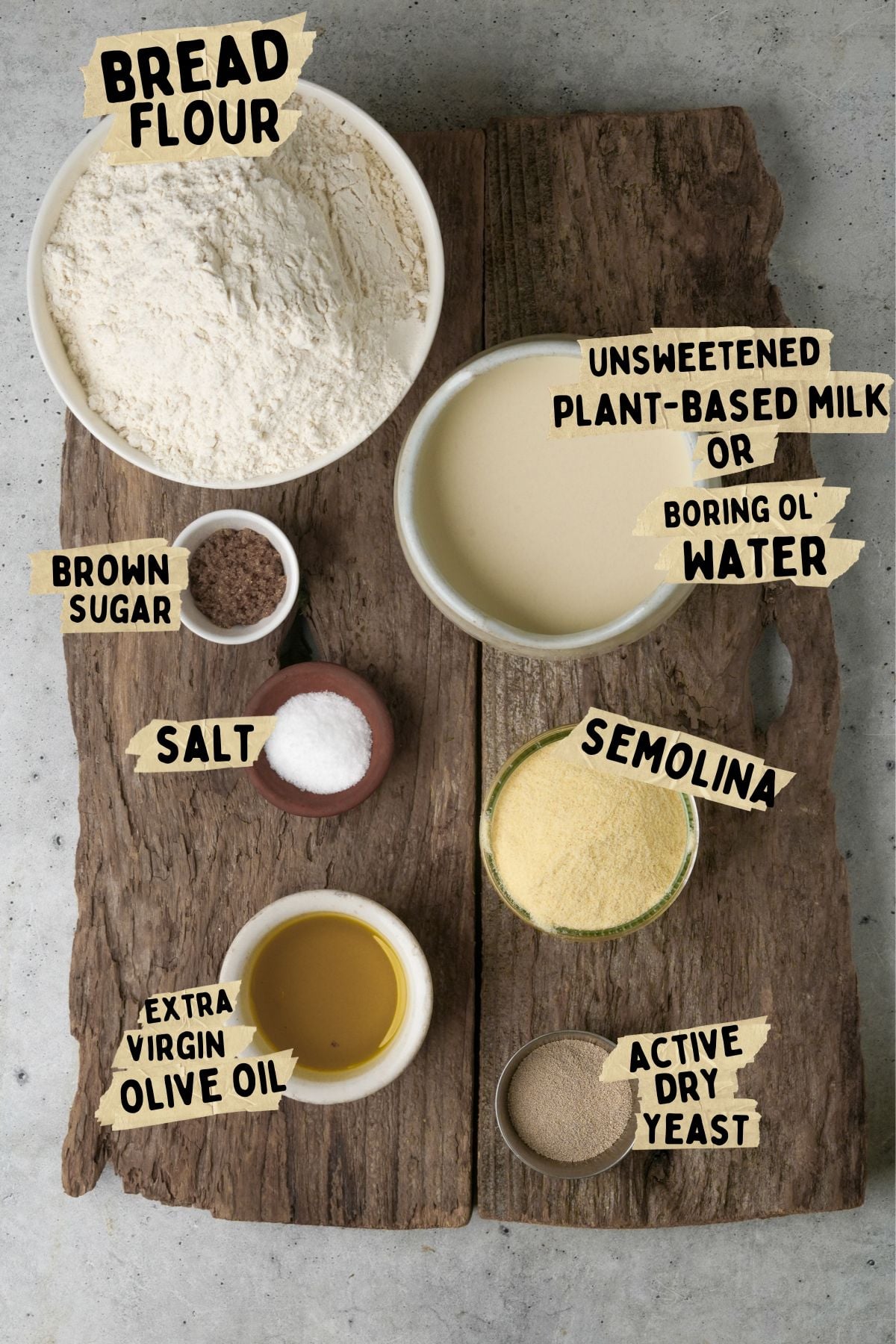
The Flour
Bread flour has more protein than all-purpose, which builds stronger gluten and gives bazlama its signature chew and structure. That structure is also what lets the bread puff dramatically in the pan. All-purpose will work if it is what you have, but the texture comes out softer and less springy.
Semolina
Semolina is coarser than wheat flour and adds subtle complexity, a faint golden color and mild sweetness. Finer semolina, sometimes labeled semola, works here too if that is what your store carries, and whole wheat flour is also a fine substitute if semolina is nowhere to be found. Skip it entirely and the bread is still super-lovely, just a little less multi-dimensional, if that doesn't make me sound like a worldwide goof named Hyper-Enlightened-Adam.
The Yeast
Proof the active yeast first with the sugar and warm liquid, and if it does not go foamy within 8 minutes, your yeast is dead and the bread will not rise. Instant yeast works too and can go straight into the flour without proofing as long as you are confident it is alive.
Plant-Based Milk
While you can 100% rock this with plain ol' water, any unsweetened plant milk gives the dough a softer crumb. Soy and oat both work well since they have a bit more body than thinner milks such as almond or rice.
*See the recipe card at the bottom of the page for exact quantities, nutritional info, and detailed cooking directions.
How to make Bazlama
There is a rise involved, so this is a "start it before you need it" kind of bread. Follow the steps and tips below, or head straight to the recipe card if you already know your way around a dough.
Step One
Yeast of Burden:
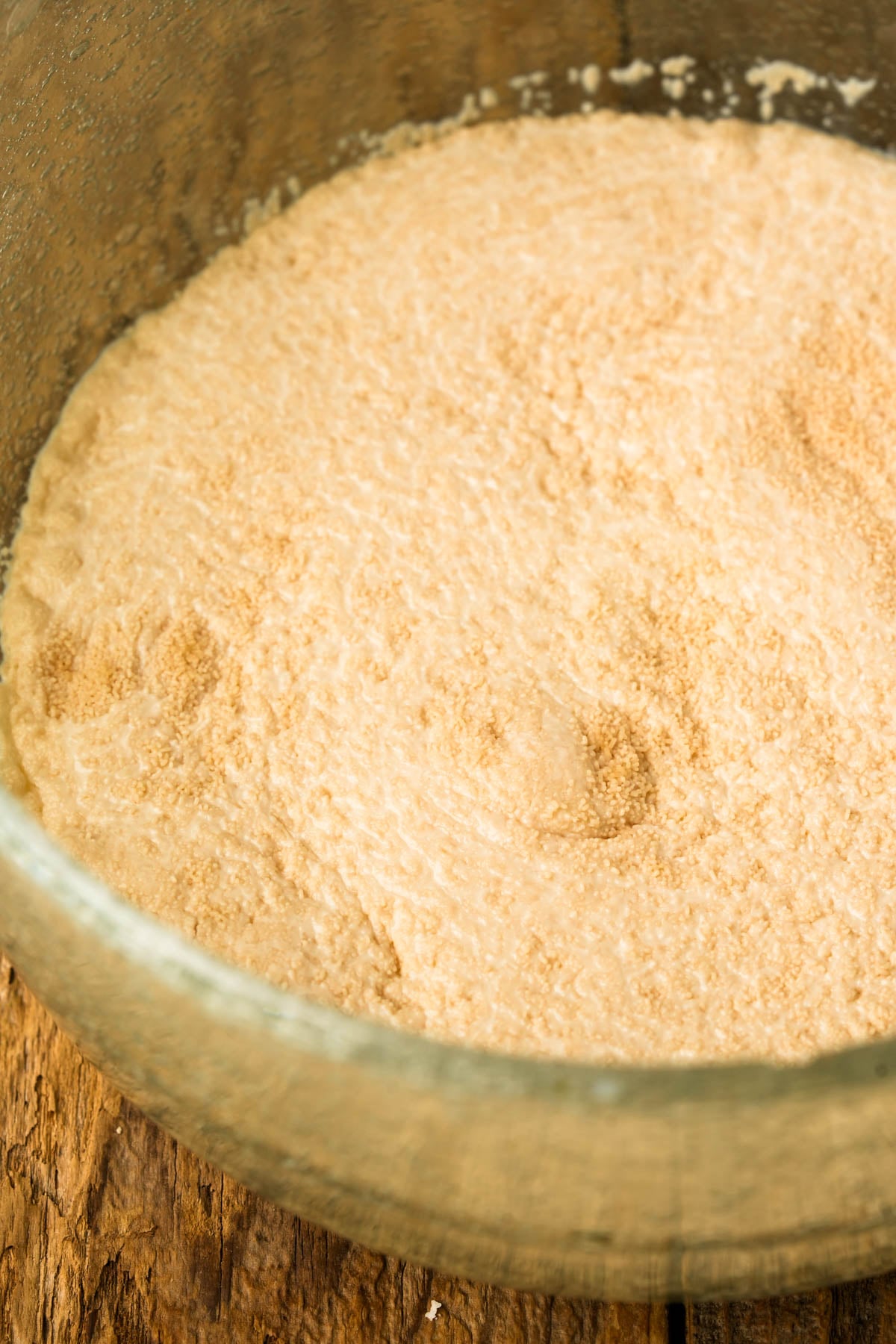
Combine the yeast, brown sugar, and plant milk or water in a large mixing bowl. Stir until the yeast and sugar dissolve, then let it sit for 7 to 8 minutes until the surface looks foamy and active.
Step Two
Knead to Know Basis:
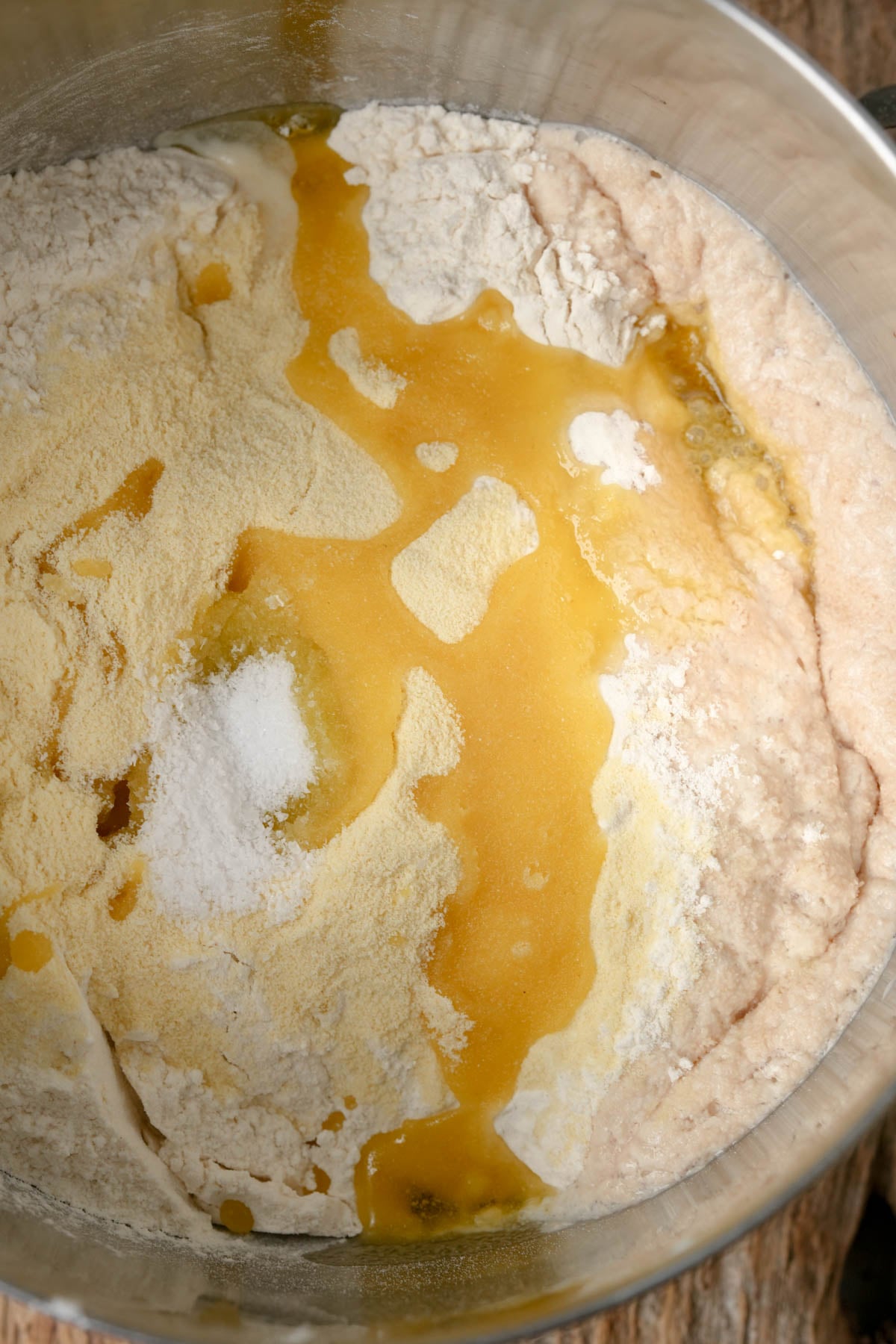
Add the semolina flour, bread flour, salt, and olive oil. Stir until a shaggy dough forms, then knead by hand or with a stand mixer and dough hook for 8 to 10 minutes, until the dough turns smooth, soft, and slightly tacky.
Step Three
The Hills Have Rise:
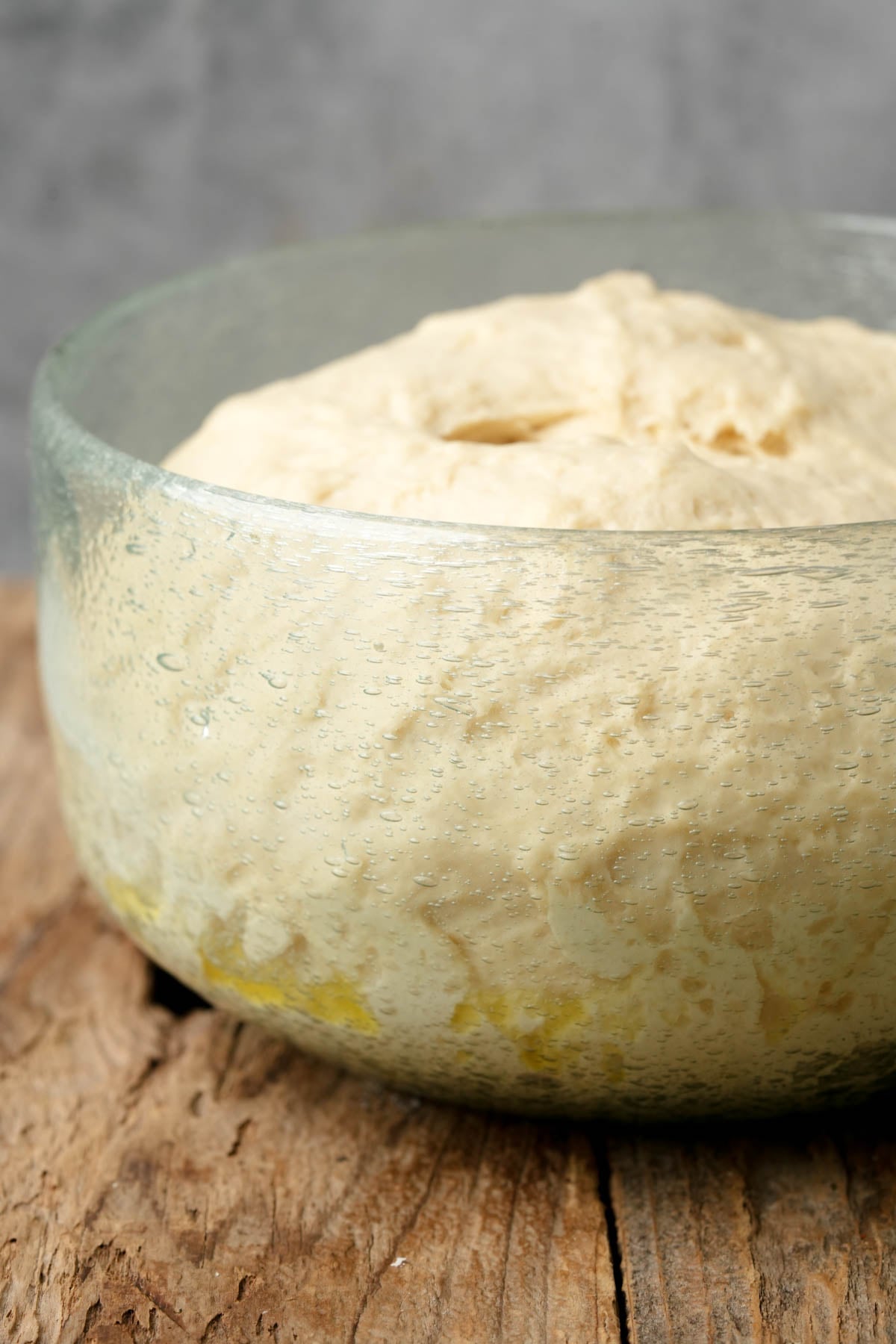
Move the dough to a lightly oiled bowl, cover it, and let it rise somewhere warm until doubled in size, 60 to 90 minutes.
Step Four
Divide and Conquer:
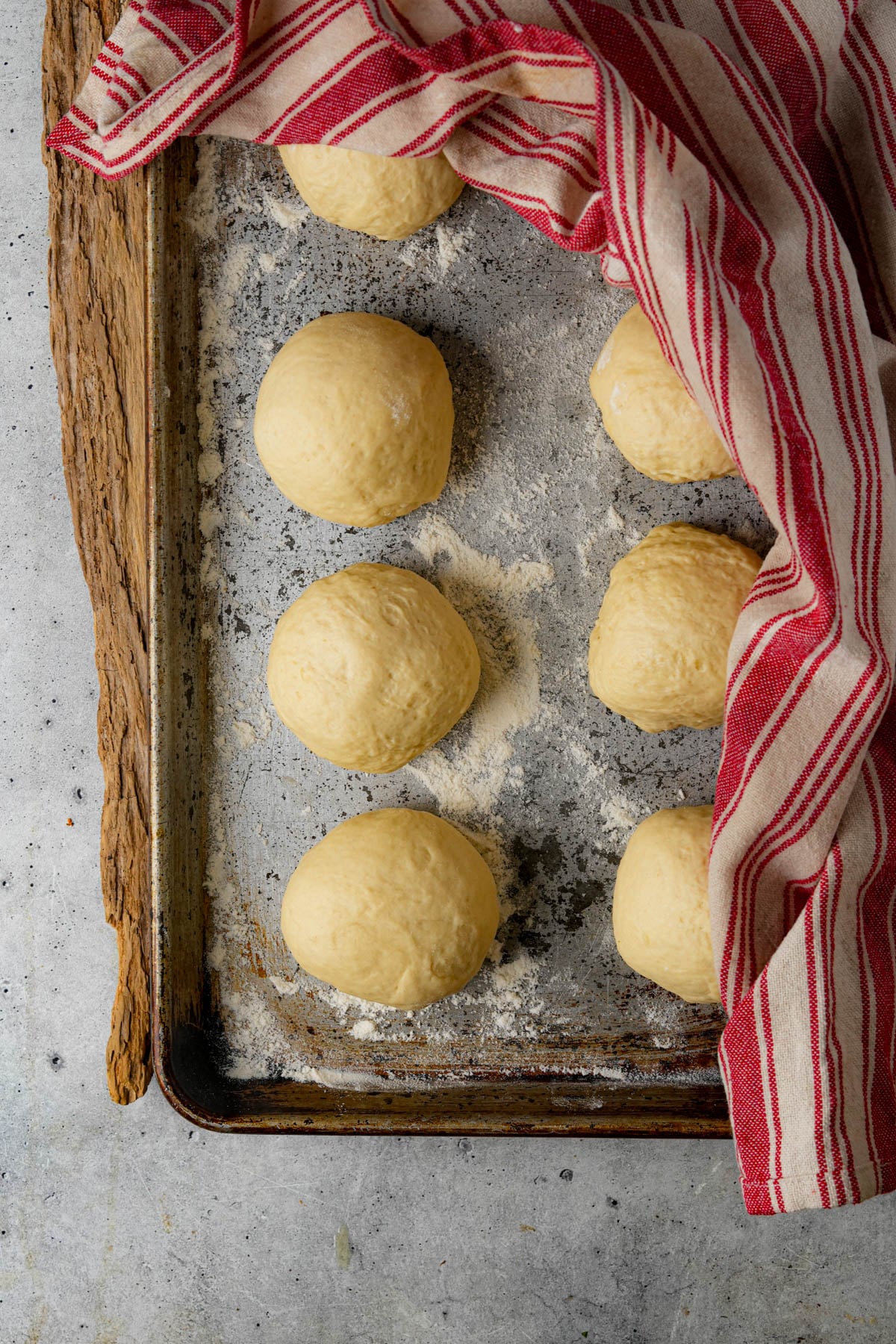
Turn the dough onto a lightly floured surface and cut it into 8 equal portions. Shape each one into a ball, cover with a clean kitchen towel, and let them rest for 20 minutes.
Step Five
The Dalai Bazlama:
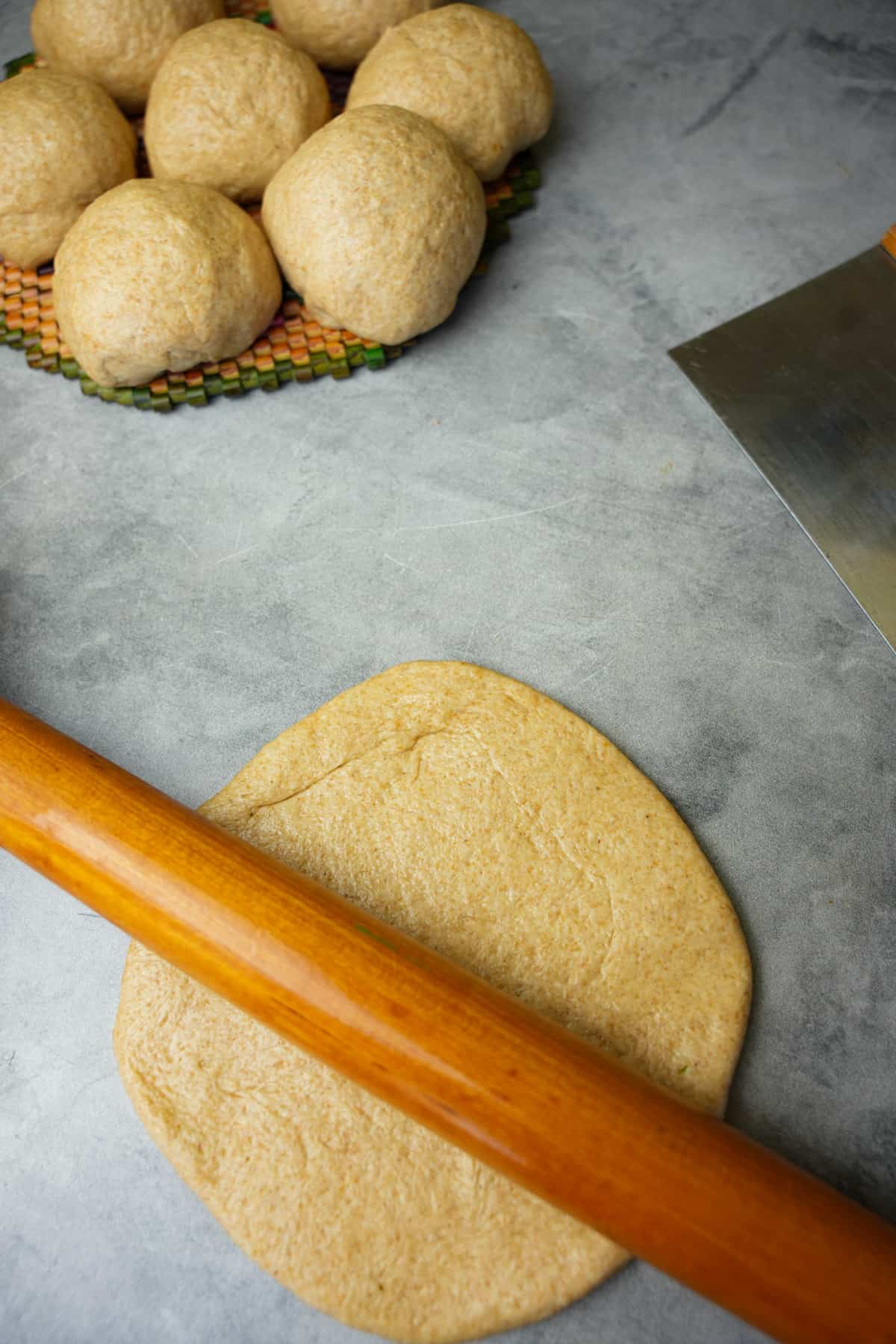
Roll each dough ball into a 6-inch circle about ¼ inch (6 mm.) thick.
Step Six
Pan's Labyrinth:
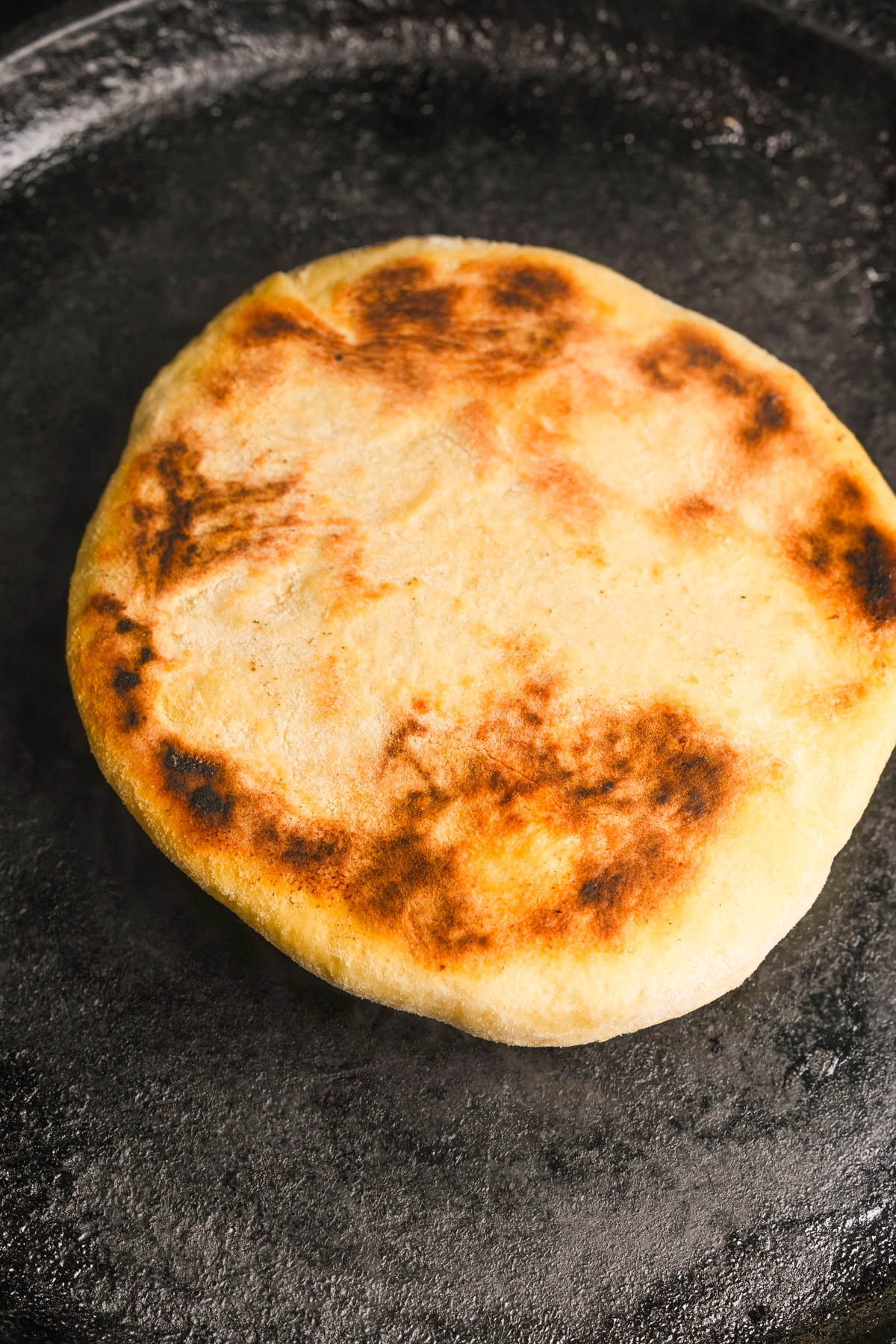
Heat a large dry cast-iron or heavy skillet over medium heat and cook 1 round at a time. After about 2 minutes, once bubbles have formed and the underside has golden brown spots, flip it and cook the second side for 2 to 3 minutes until browned and cooked through.
Adjust the heat as needed so the outside does not darken before the center finishes.
Step Seven
Brush Limbaugh:
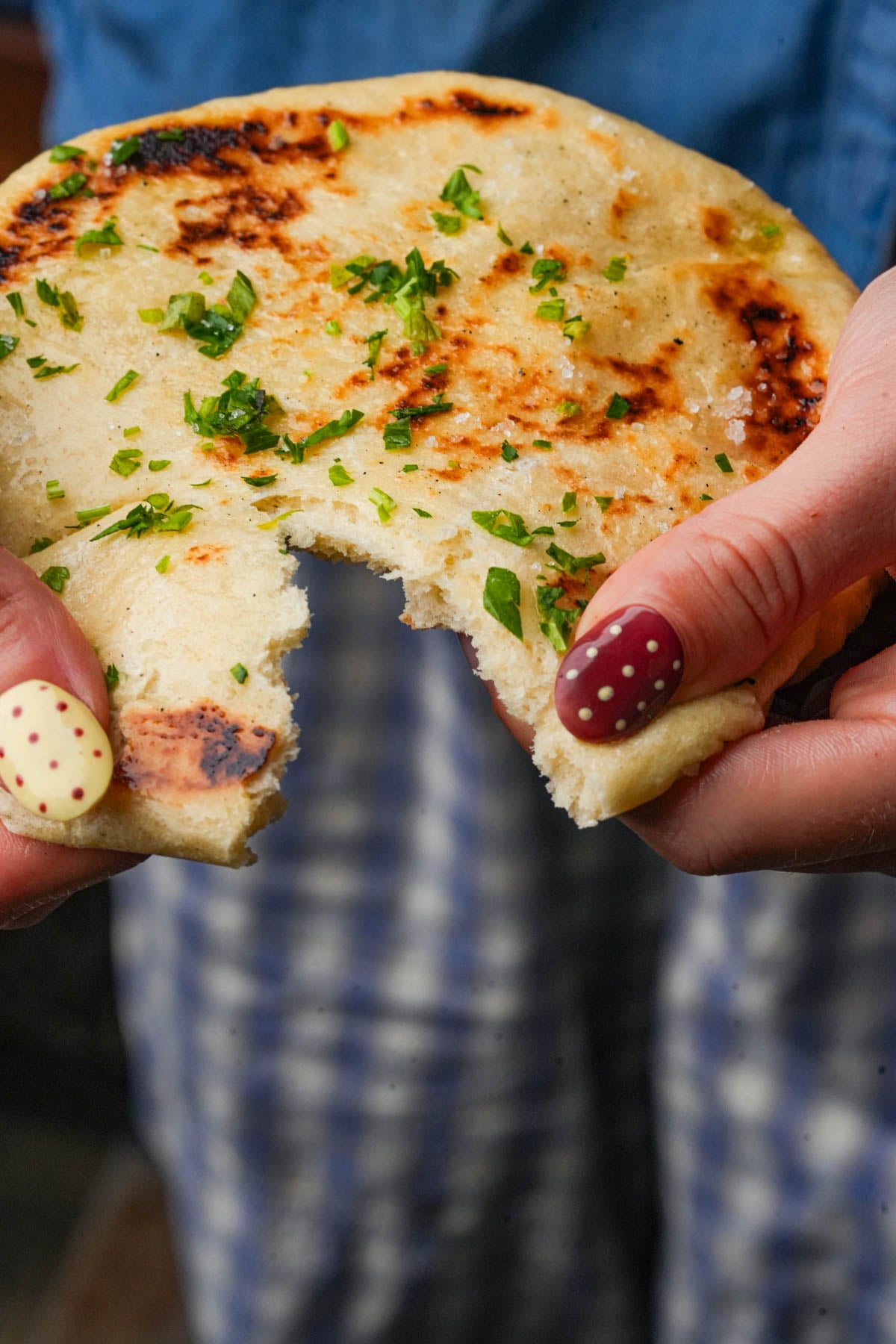
Move each finished bread to a clean kitchen towel and cover it to stay warm and soft while you cook the rest. Right before serving, brush both sides with olive oil, then sprinkle with coarse salt and chopped parsley.

Grab my easy-yo-use app that builds your whole week with real, chef-tested vegan dinners in 30 seconds, customized to your budget, time, and taste, with a shopping list sorted by aisle.

Serving Ideas
This bread was built to scoop, so give it something worth scooping.
Muhammara or cranberry ezme next to it will make people (including you) stupidly happy in about 4 seconds flat, and a big spoonful of şakşuka with warm bazlama torn up alongside is one of my favorite lazy brunches on planet Earth.
Tear it up next to kisir, piyaz, or a bowl of ezogelin corbasi and watch it disappear. Bazlama also doubles as the only utensil you will need for mopping up sauce from soslu patlican yemegi or diving into a bowl of barbunya pilaki.
Top tips
- Warm the Liquid: Keep your liquid just barely warmer than room temp, not hot. Too hot and you murder the yeast on the spot, too cold and it just sits there sulking and doing nothing, especially if your kitchen is drafty and cool. If it is not foamy after 8 minutes, that yeast is gone, toss it and start fresh.
- Let the Dough Rest Before Rolling: Do not skip the 20-minute rest after shaping the balls. It relaxes the gluten so the dough rolls out nice and smooth instead of fighting you and springing back like it has trust issues with rolling pins.
- Adjust the Heat as You Cook: Keep an eye on your pan and adjust as you cook. Too hot and the outside scorches while the middle stays raw and doughy, too low and you get dried out, tough bread that will make nobody give you a high five.
Recipe FAQs
Usually the pan was not hot enough, or the dough was rolled too thin. You need enough heat to create steam fast inside the dough, and enough thickness to trap it. Let the pan preheat properly and keep the rounds at about ¼ inch.
Yes. After kneading, cover the dough and refrigerate it overnight for a slow cold rise. Bring it back to room temperature for about an hour before dividing and shaping. The flavor actually improves with the longer ferment. But that all requires thinking ahead of time, which isn't something my chaotic life usually allows for.
Room Temp
Wrapped tightly, these keep for up to 3 days at room temperature. They will firm up as they age, so warm them before serving to bring the softness and life back.
❄️ In the Freezer
Stack the cooled breads with parchment between each one, then seal in a freezer bag for up to 3 months. Thaw at room temperature or warm straight from frozen in a skillet.
🔥 Reheating
Warm them in a dry skillet over medium heat for 30 to 60 seconds a side, or wrap a stack in foil and heat in a 350°F (175°C) oven for about 10 minutes. A light brush of water before reheating helps them steam back to soft.
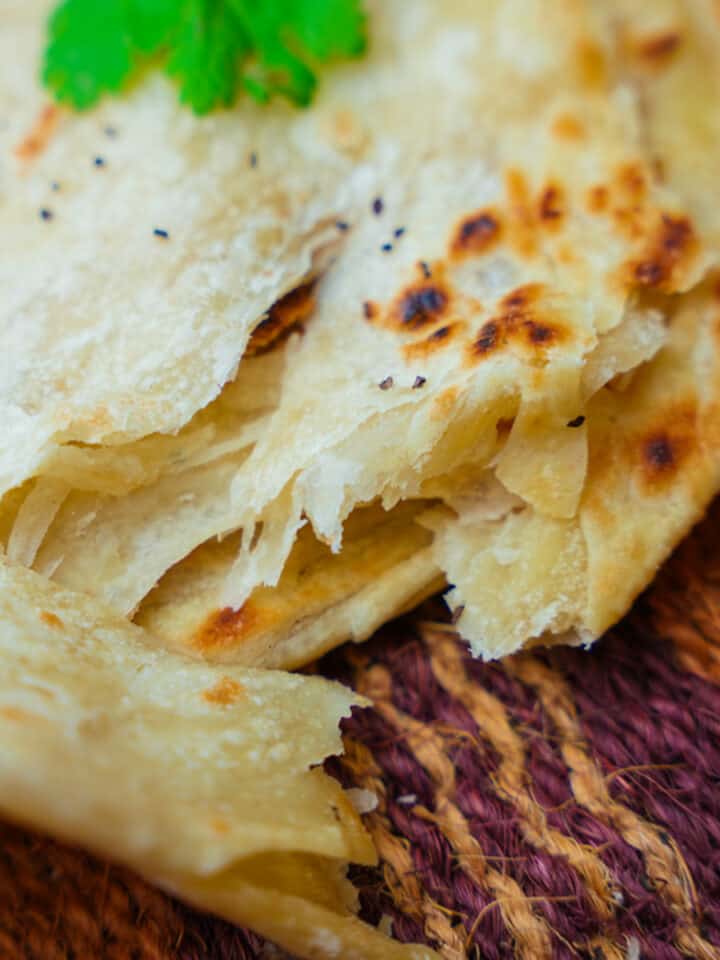
You'll also love these vegan flatbread recipes:


Enter your email & I'll send it to your inbox. Plus, get great new recipes from me every week!
By submitting this form, you consent to receive emails from Cinnamon Snail.
Bazlama Recipe
Equipment
- stand mixer (optional)
Ingredients
- 2 ¼ teaspoons active dry yeast
- 1 tablespoon brown sugar
- 1 ¾ cups unsweetened plant-based milk or water (slightly warmer than room temperature)
- ½ cup semolina flour
- 4 cups bread flour
- 1 ½ teaspoons salt or to taste
- ⅓ cup extra-virgin olive oil
Optional Toppings:
- ¼ cup extra virgin olive oil
- ½ teaspoon coarse sea salt
- 2 tablespoons parsley chopped
Instructions
- In a large mixing bowl, combine the yeast, brown sugar, and plant-based milk or water. Stir until the yeast and sugar are dissolved. Let stand for 7-8 minutes, until the mixture is foamy and active looking.
- Add the semolina flour, bread flour, salt, and olive oil. Stir until a shaggy dough forms, then knead by hand or with a stand mixer fitted with a dough hook for 8-10 minutes, until the dough is smooth, soft, and slightly tacky.
- Transfer the dough to a lightly oiled bowl, cover, and let rise in a warm place until doubled in size, 60 to 90 minutes.
- Turn the dough onto a lightly floured surface and divide it into 8 equal portions. Shape each portion into a ball, cover with a clean kitchen towel, and let rest for 20 minutes.
- Roll each dough ball into a circle ¼ inch (6 mm) thick.
- Heat a large dry cast-iron skillet or heavy skillet over medium heat. Cook 1 round at a time. After 2 minutes, when bubbles have formed and the underside is golden brown in spots, flip and cook the second side for 2 to 3 minutes, until golden brown with additional browned spots and the bread is cooked through. Adjust the heat as needed to prevent excessive browning before the center is fully cooked.
- Transfer the cooked flatbread to a clean kitchen towel and cover to keep warm and soft while repeating with the remaining dough. Directly before serving, brush both sides of each bazlama with extra-virgin olive oil, sprinkle with coarse salt, and parsley.
Notes
Enter your email & I'll send it to your inbox. Plus, get great new recipes from me every week!
By submitting this form, you consent to receive emails from Cinnamon Snail.


AliS says
I was excited to come across this recipe as there's a Turkish eatery I love which has the most amazing bread but it is 600 miles away. This bazlama was well worth the time and effort to make (most of the time was just 'waiting'). I did use all-purpose flour because it's just what I had, and vanilla soy milk because again, it's what was already in the fridge, and I didn't want to wait to make this as I had just bought some homemade stuffed grape leaves from a local food truck with their homemade hot sauce. They turned out amazing nonetheless. Fluffy, yet dense, and flavorful as well. I love that the recipe makes 8 good-size bazlama, so there will be some leftover to enjoy with soup and hummus.
Adam Sobel says
So glad you made and loved it!
h says
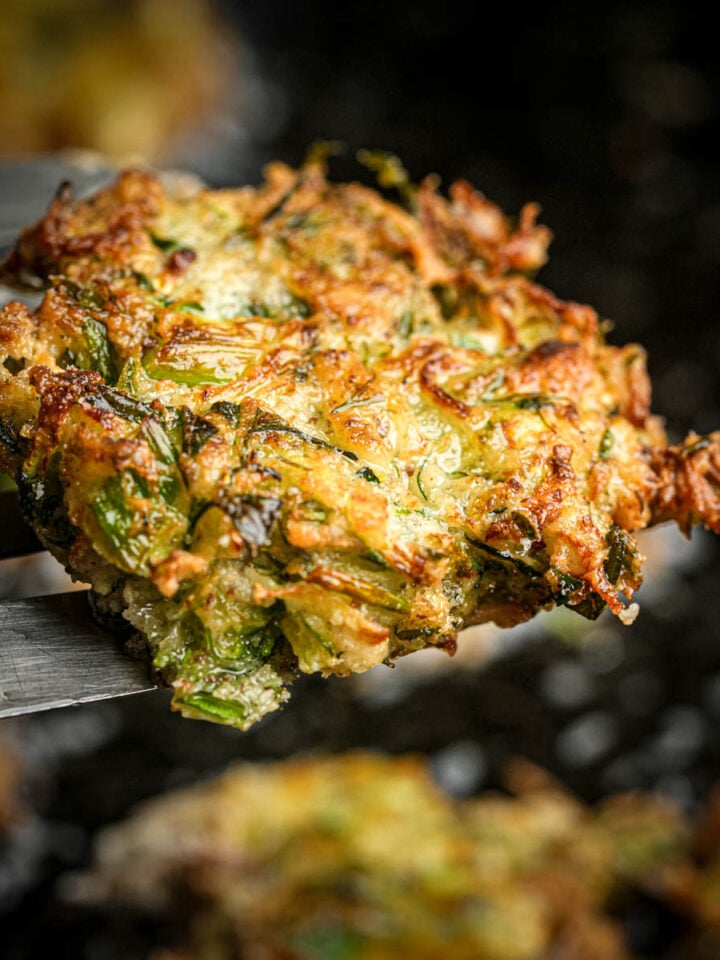
I've made several of Adam's bread recipes -- msemen, kuboos, manakeesh, bolani -- and this bazlama recipe has been our favorite, though we loved all the others too. It was fluffy and thick without being dense, perfect for dipping in soup, and it's flavorful even on its own. Served with moroccan loubia and mücver, both from this site.
Dushenka Silberfarb says
My 9 year old likes this best when I use 3 cups spelt flour, 1 cup ripe sourdough starter instead of the 4 c flour, sugar and active dry yeast. He eats them hot from the pan. Sometimes with avocado instead of olive oil. Nothing like a *good* flatbread!