

*This post may contain affiliate links. Read more »
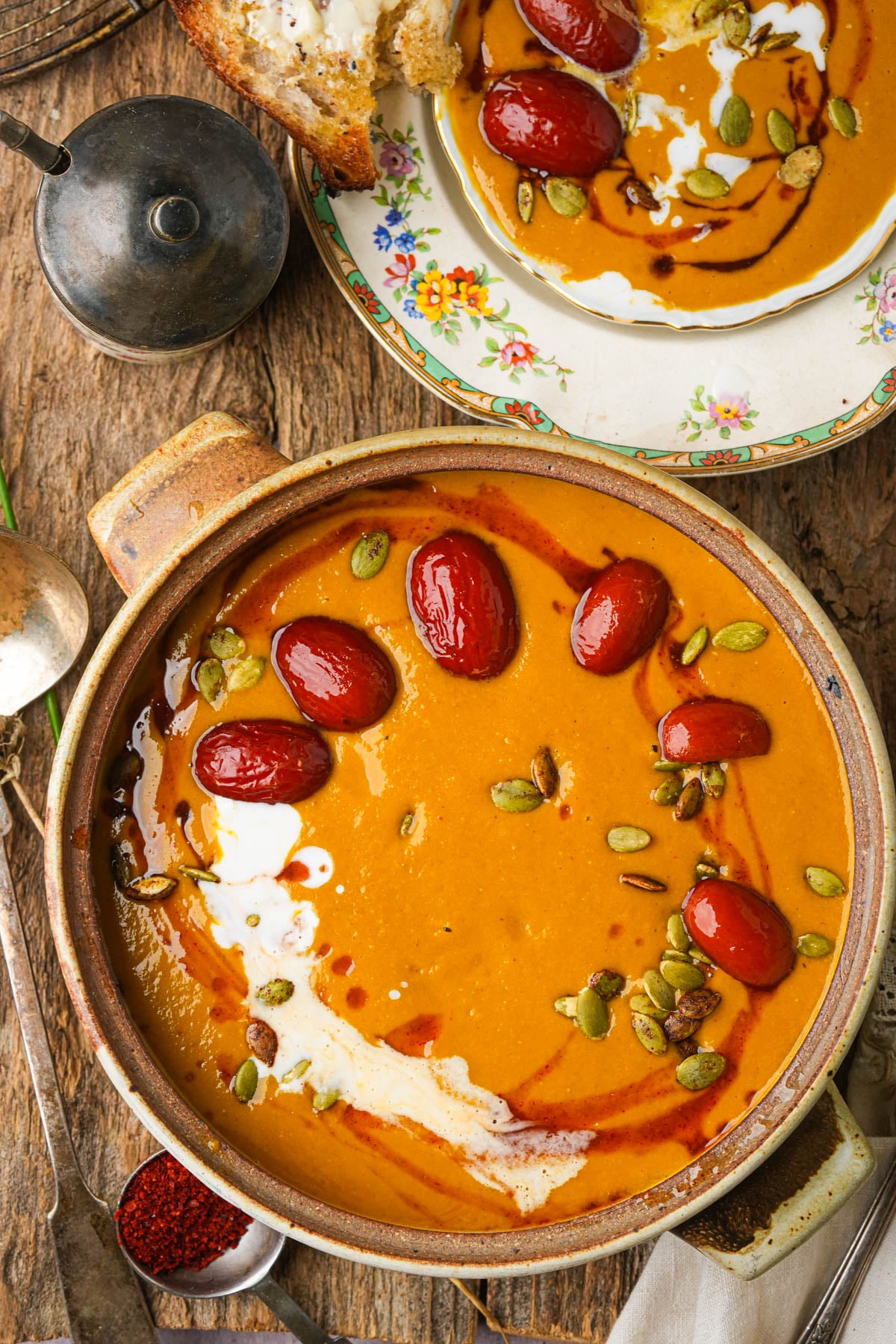
Think pumpkin soups need to be stereotypically Thanksgivingy? Booooring. This hyper flavorful vegan kabocha squash soup packs just a little Korean fire from ginger, gochujang, and a touch of complexity from miso. And it requires hardly any prep time, fussy roasting, or a even a whole lot of kitchen skill. Get ready for your new Faveraham Lincoln.
Recipe tips tailored to what matters most to you:

Grab a certified gluten-free gochujang like the Trader Joe's one I use here and check your miso label too, since both can be cut with wheat flour.

Skip the seeding and cutting hassle by grabbing pre-cubed kabocha squash if your store carries it.

Butternut squash is usually cheaper and easier to find than kabocha, and it works great here too, just peel it first.

This recipe already leans on unsalted vegetable stock, so you're in full control of how much sodium ends up in the bowl.

Jujube dates are just part of the optional garnish, so don't freak out if you can't get any.

The skin is completely edible and blends up smooth once cooked, so your peeler can sit this one out.
Boiling miso is basically assault on a fermented paste that did nothing to deserve it. Keep things gentle, just enough to warm through.
Brands vary a ton in heat and saltiness. So taste the soup before adding the full amount and adjust up or down until you are pumped about the flavor!
Oodles more tips, step-by-step recipe photos, info on weird ingredients, and FAQs are all still here. I just tucked 'em out of the way so you can start cooking sooner.
Kabocha itself is denser and perhaps a wee bit sweeter than butternut, with a texture that's somewhere between pumpkin and sweet potato once it cooks down. That natural sweetness is exactly what makes it such a good match for gochujang, since the sweet and the spicy play off each other instead of one just steamrolling the other like mean old Bob the Builder on a job site rampage after he knocks back a few with whoever that Home Depot mascot goon is. But I digress…
You guessed it, this might be a fun addition to your Thanksgiving spread to accompany with some pan-fried slice of vegan pumpkin cornbread, but it's also bangin' as part of a plant-based Korean meal alongside a gochujang seitan sandwich or vegan kimchi fried rice.
You are about to be considerably more thrilled than you were when you had your Bar Mitzvah on a rollercoaster while running from the police.


This was delicious! Perfect blend of flavors.
Jump to:
🥰 Why you'll adore this Kabocha Soup
✊ Vegan AF & GF: All my vegan soup recipes avoid harming animals, and they're free of cholesterol as a bonus. The whole thang is naturally GF too as long as you use a gluten-free gochujang in it.
⏱️ No Peeling Required: Kabocha skin is completely edible, so you dice it right off the cutting board and into the pot without a peeler anywhere in sight.
🌰 A Genuinely Unexpected Garnish: Rehydrated jujube dates are not something you see on top of squash soup often, and they make this one quite a bit extra.
🍽️ Great for a Non-Traditional Thanksgiving Soup Course: If your holiday table could use something with a lil more edge than the usual vegan butternut squash soup, this is the move for you.
Tested and Approved Worldwide: Over 1,000 recipe testers around the globe made this before it went live, and gochujang sold out at more than a couple of their local grocery stores in the process.


I'm on my knees staring weirdly into your eyes, asking you in a soothing voice to be my taste-testing partner in crime. Sign up for the recipe testing crew and get early access to new recipes before they're published.
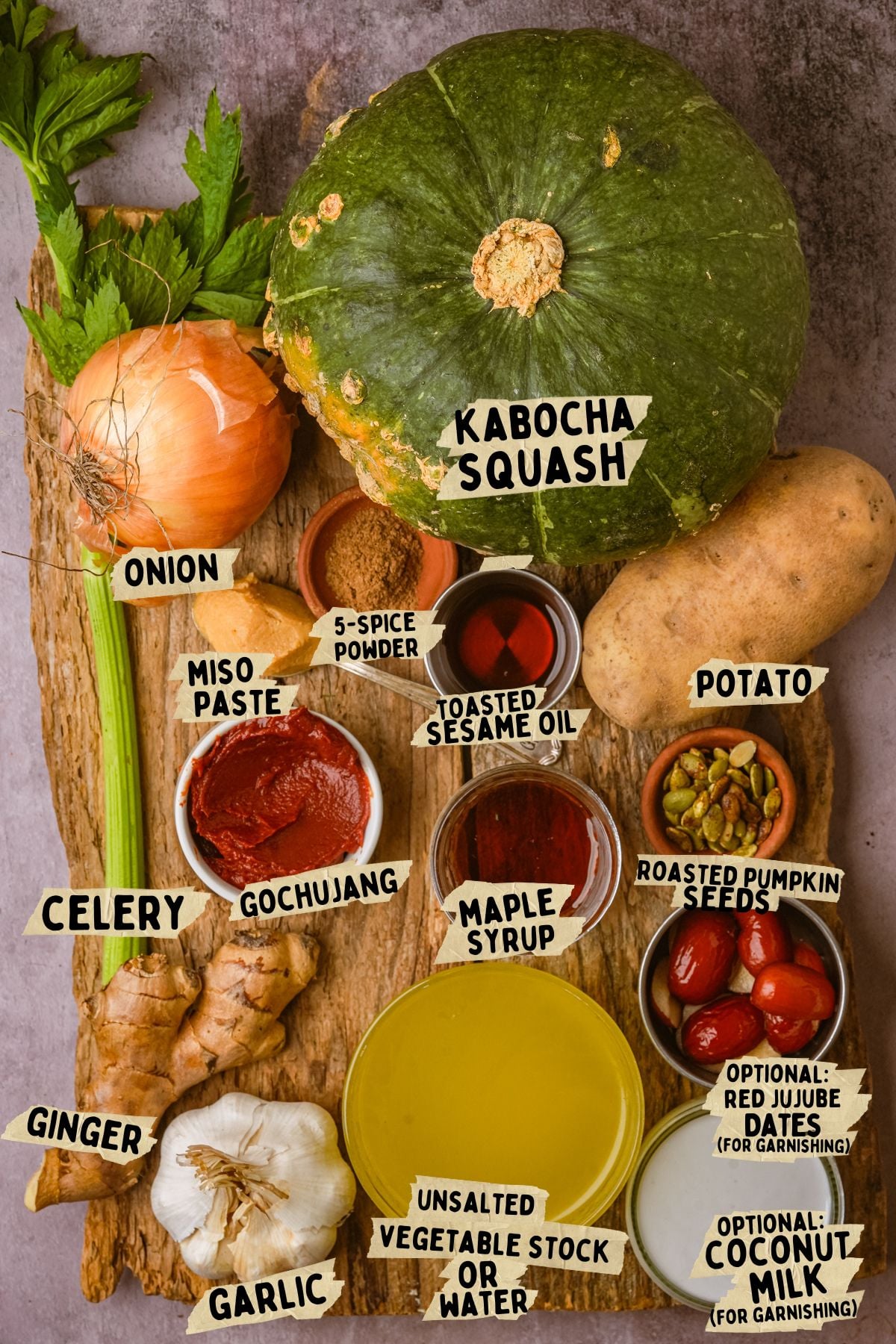
🍲 Kabocha Squash Soup Ingredients
Kabocha
Denser and, dare I say, tastier than butternut? Kabocha brings a rich, almost chestnut-like flavor that stands up awesomely to the intensity of gochujang and miso. Its skin is completely edible, so there is no peeling involved, just scoop out the seeds, dice it and go. The only sucky thing about kabocha is that the seeds don't roast up nicely as a garnish. They are lame and woody. Boooo to that.
If kabocha is not available to you, butternut squash or acorn squash both work in this recipe, as long as you peel them.
Got extra kabocha on hand? You can use it to make vegetable okoy and Filipino vegetable curry. They are both mega-yummers.
Gochujang
This fermented Korean chili paste is doing double duty, going into the base AND coming back as a bold drizzle on top, so you taste it twice in 2 completely different forms. Start with the amount listed and adjust from there, since brands swing wildly in heat level.
Real talk, the Trader Joe's version is genuinely great here, it is gluten free and skips the high-fructose corn syrup that a lot of the brands at Asian markets sneak in to cheapen the stuff up.
Got a thing of it and no plan for what to do with the rest? My Korean braised tofu and vegan Korean fried chicken both put it to work in highly addictive ways.
Miso Paste
You might have noticed there's no salt listed on the ingredients for this recipe. Miso goes in last and adds deep, salty umami. Once it's stirred in, keep the heat low, boiling it kills the flavor and the fermentation magic.
White shiro miso is my pick here for something milder and a touch sweet. If you want to go a different direction, doenjang, the traditional Korean fermented bean paste, works great too.
Five-Spice
If buying a jar of 5-spice just for this recipe feels unnecessary, it is typically just star anise, cloves, cinnamon, fennel seed, and Sichuan peppercorns blended together, so you can DIY it at home.
Got some leftover after making this? Vegan bo kho and rice dumplings are both made more legendary with it.
Jujube Dates
These are just part of the optional garnish, so don't freak out if you can't get any. Jujube dates can be found at most Asian grocery stores, and rehydrating them in warm water for a few minutes softens them up enough to be edible. They are also super good in Korean-style ginger tea.
*See the recipe card at the bottom of the page for exact quantities, nutritional info, and detailed cooking directions.
📖 How to make Korean kabocha soup
Most of this recipe is you standing near a pot pretending to supervise while the squash does the actual work. Follow the steps and tips below, or skip straight to the recipe card if you have already earned your squash-simmering PhD.
Step One
Sesame Street Cred:
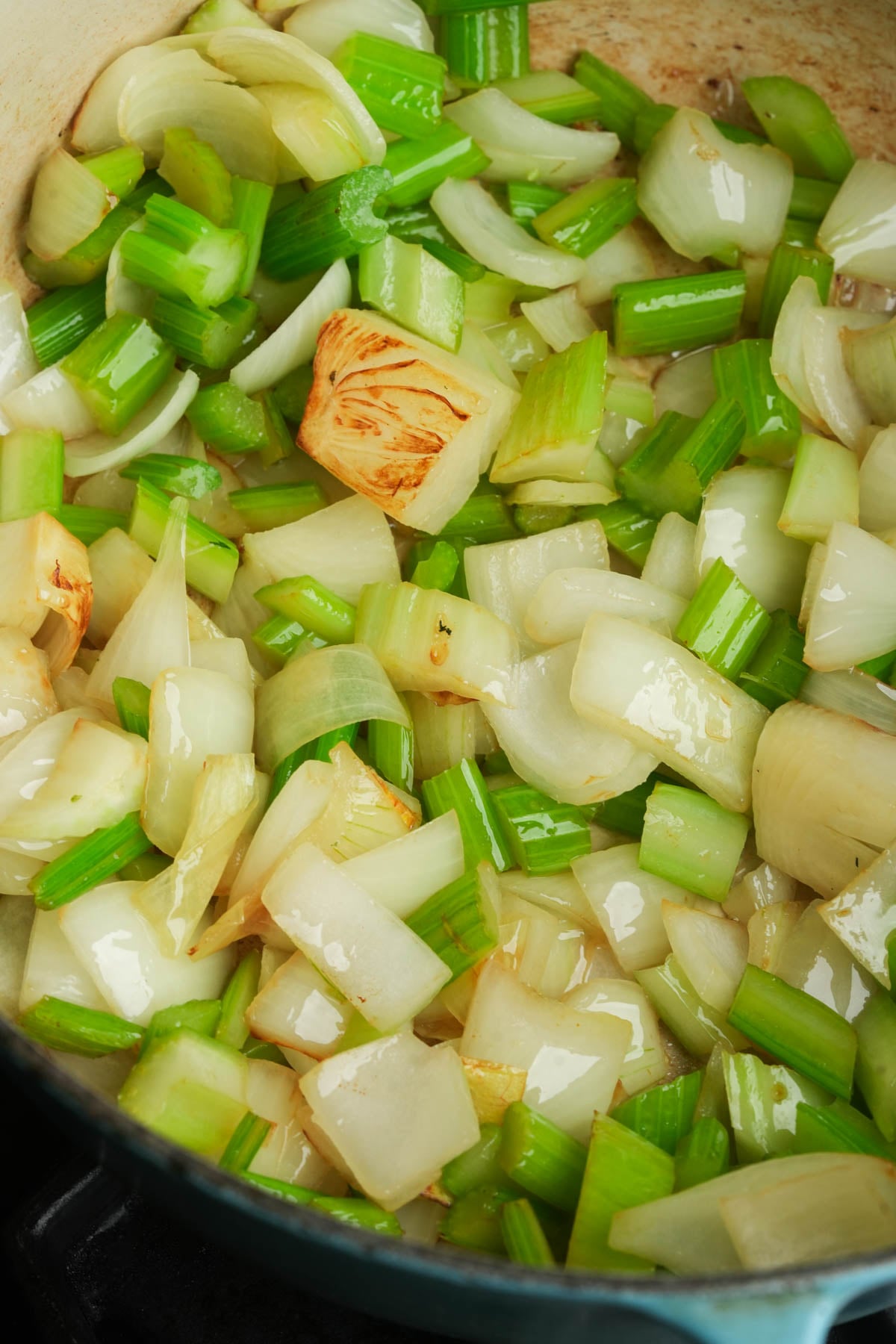
Heat the toasted sesame oil in a large pot over medium heat. Once hot, about 90 seconds, add the onion and celery and cook for 8 minutes, stirring occasionally, until softened.
Step Two
Garls Barkley:
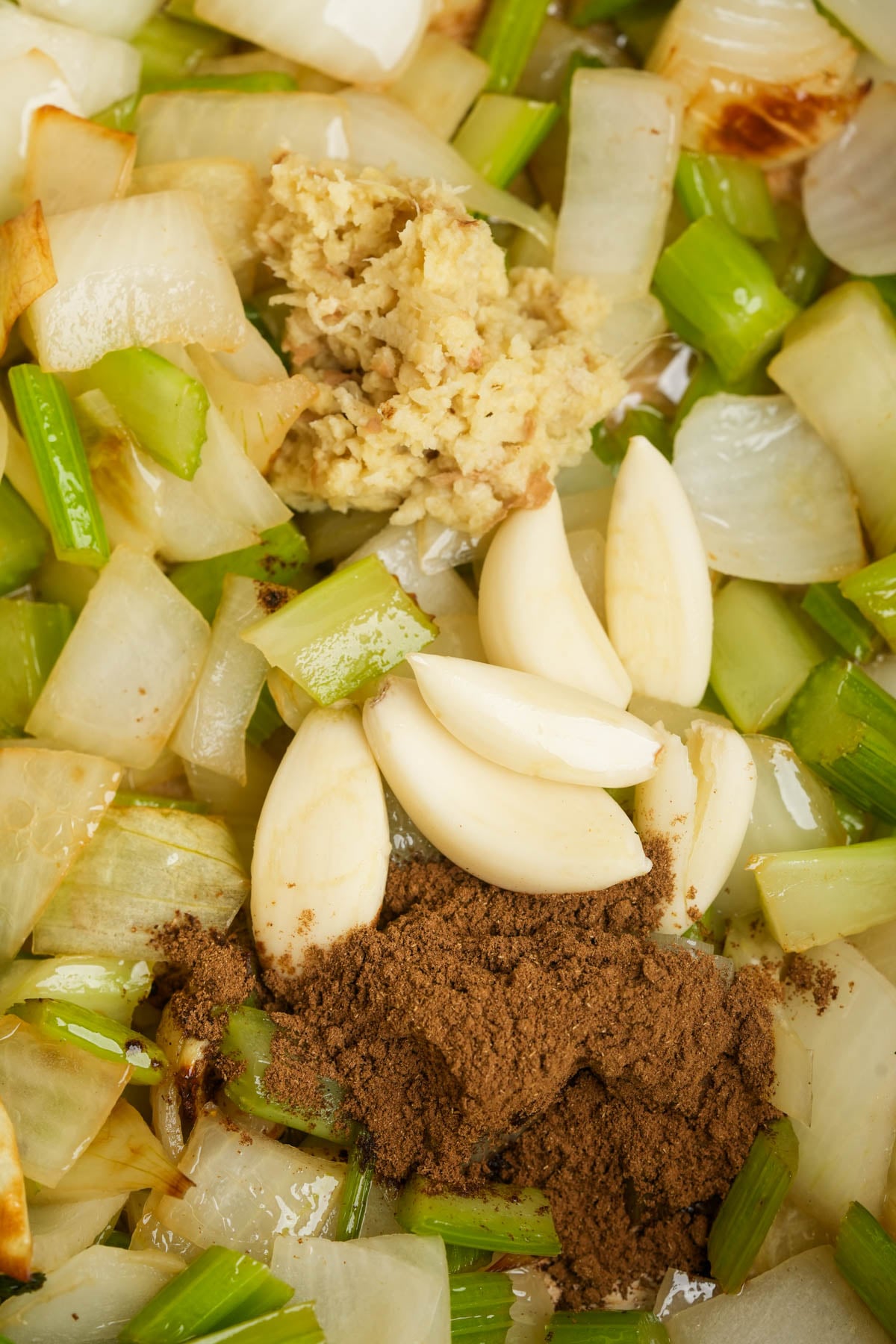
Add the ginger, garlic, and five-spice. Cook for 3 minutes, stirring frequently to bloom the spices in the hot oil.
Step Three
Kabocha Patch Kids:
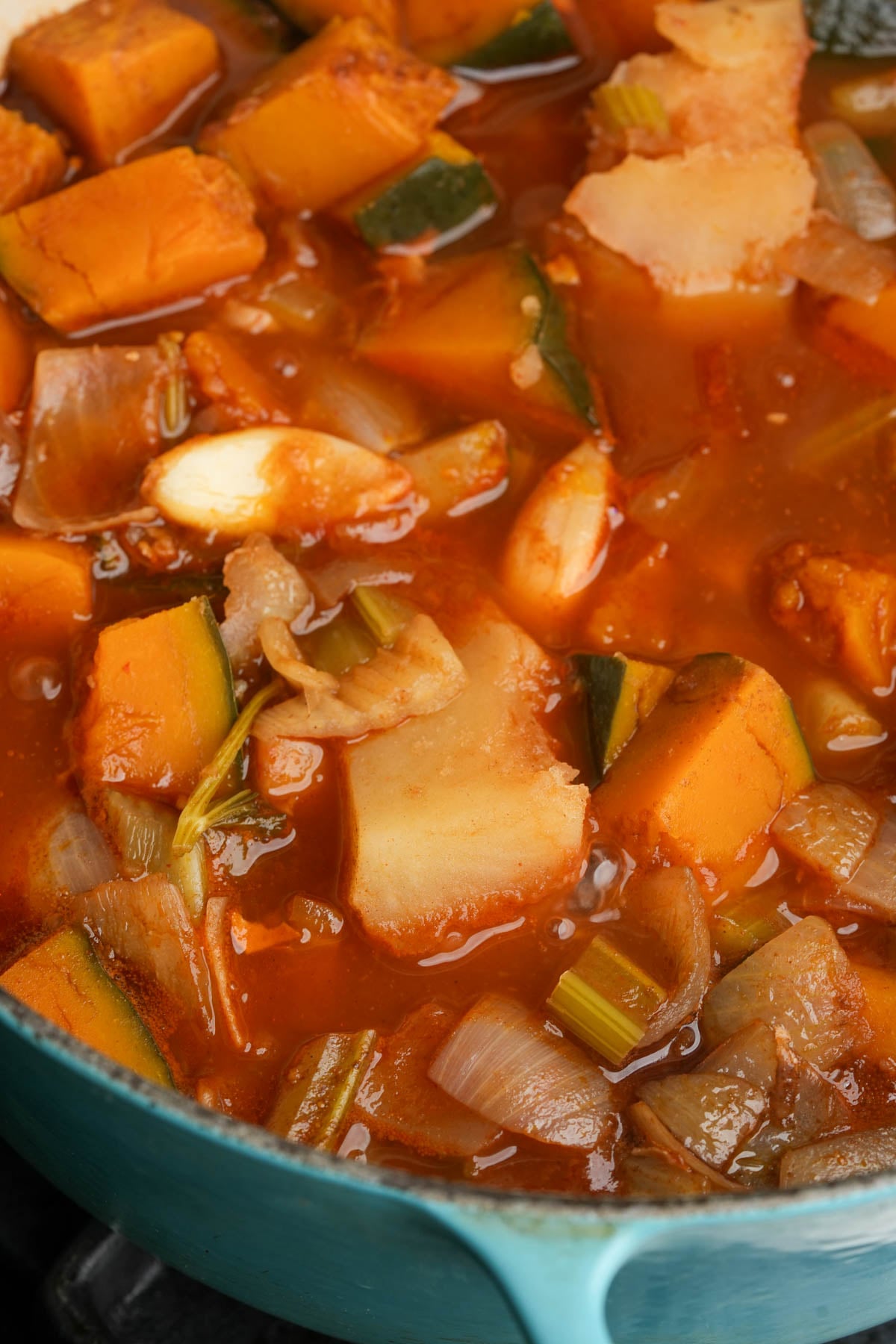
Add the kabocha squash, potato, gochujang, maple syrup, and vegetable stock. Bring to a boil over high heat, then reduce to a simmer over medium-low. Cover and cook for 25 minutes, until the squash and potato are fully tender.
Step Four
Blend It Like Beckham:
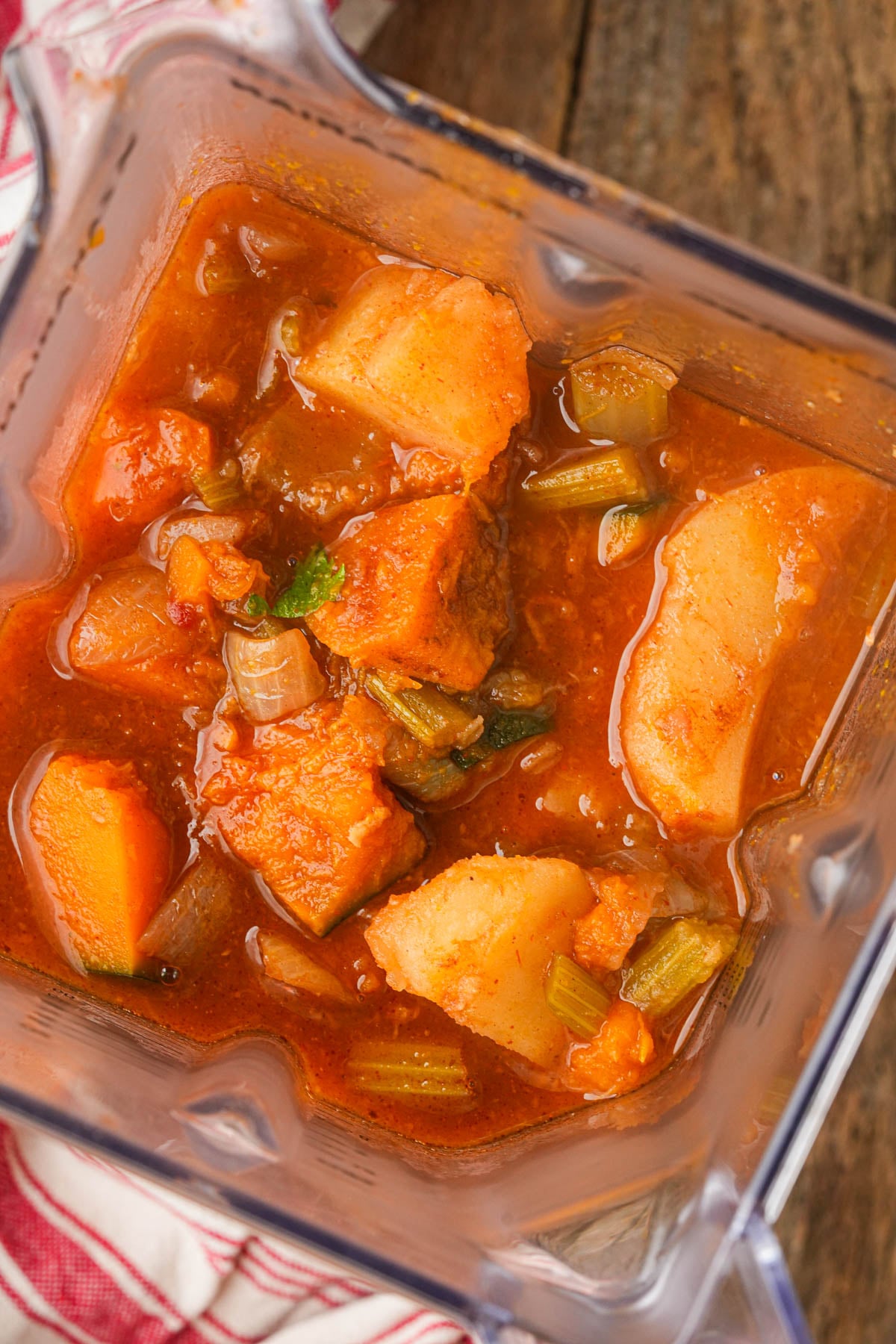
Pull the pot off the heat. Using an immersion blender, blend the soup until smooth, or carefully transfer it to a blender in batches.
Step Five
And I Miso, Like the Deserts Miss the Rain:
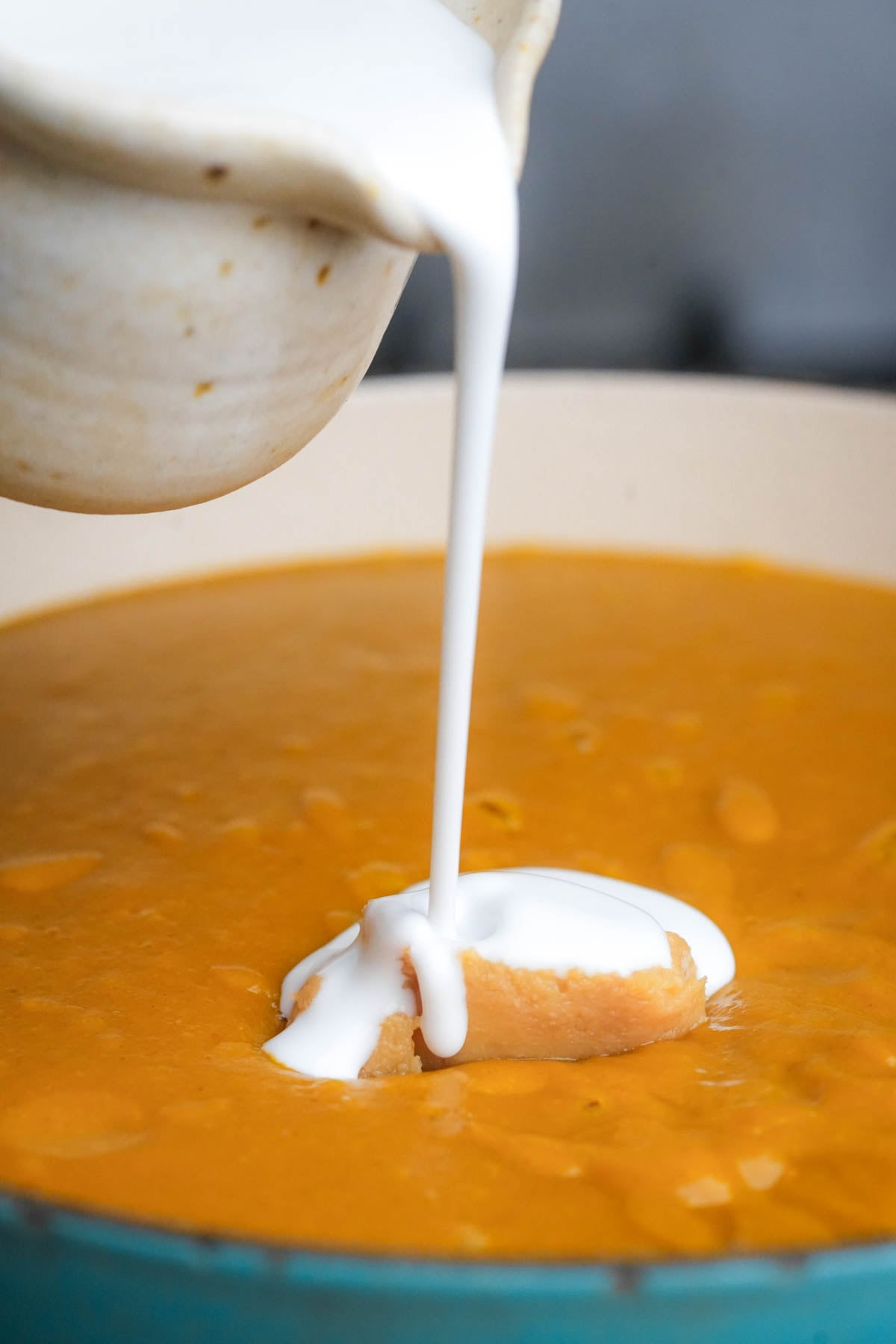
Return the soup to the pot and stir in the coconut milk and miso paste. Warm gently over medium-low heat for 3 minutes, stirring occasionally. Do not let it boil once the miso is in. Taste and adjust seasoning as you like.
Step Six
I Gochu Babe:
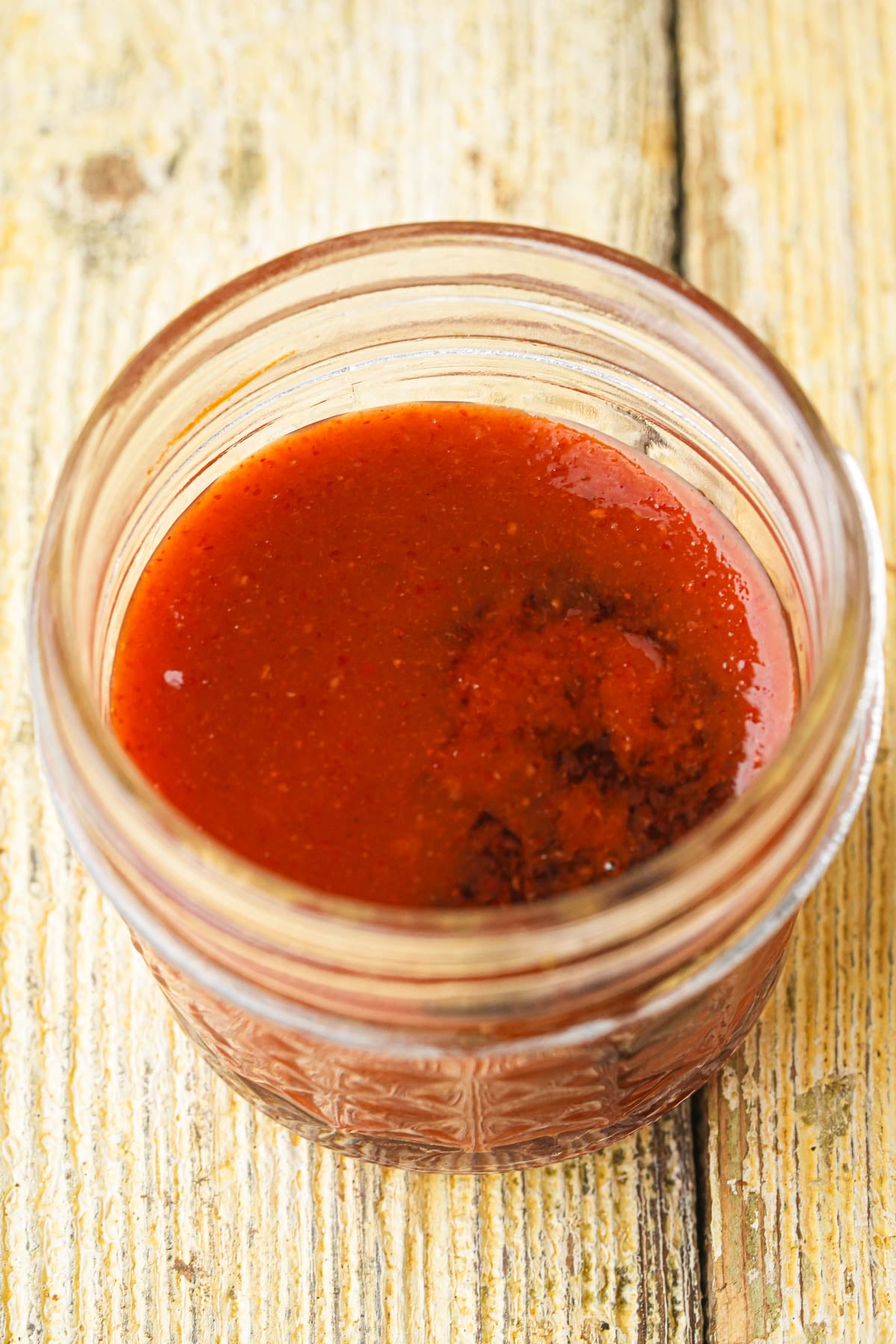
In a small bowl, whisk together the gochujang and maple syrup until smooth.
Step Seven
Squash the Beef:
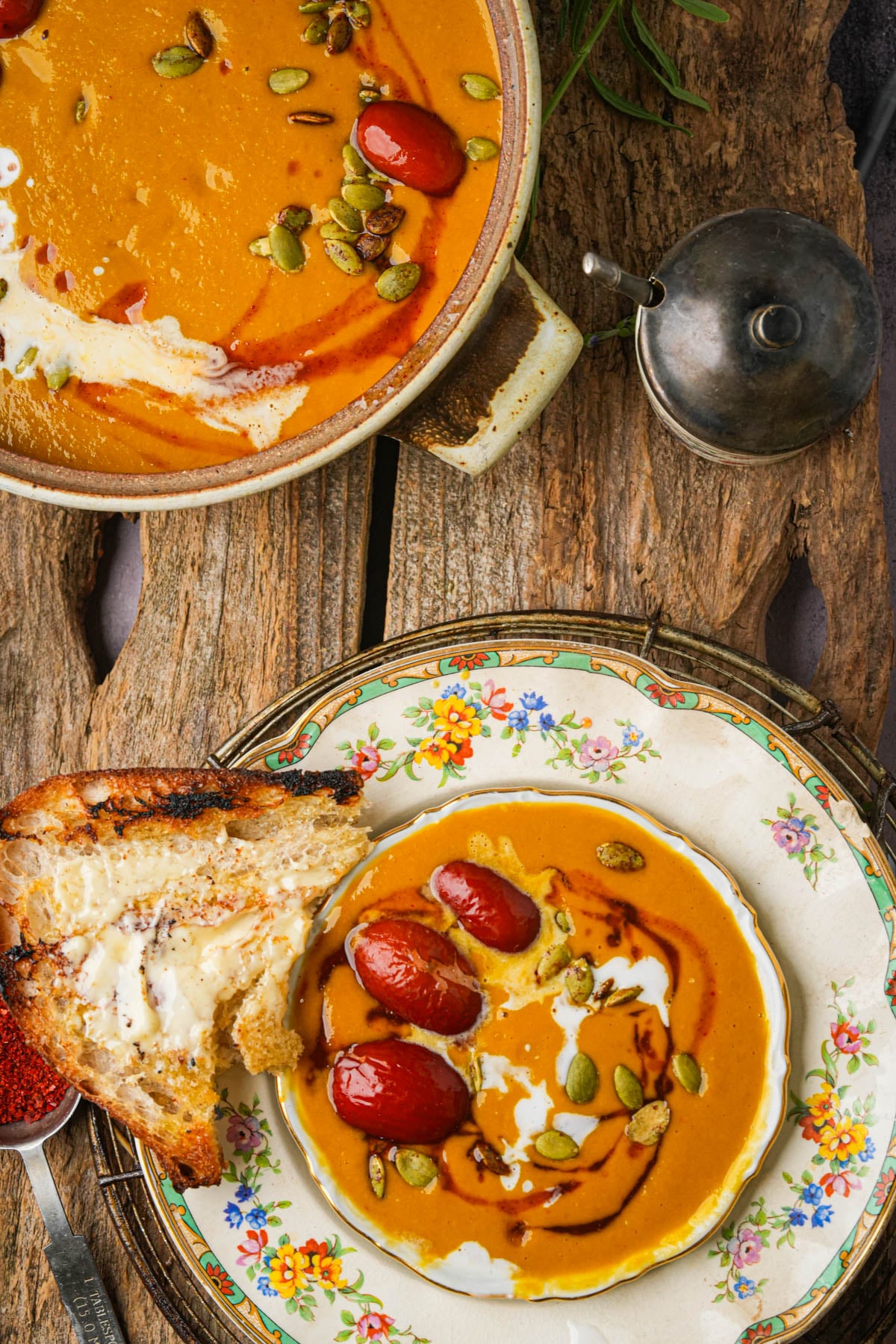
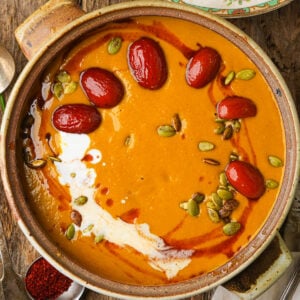
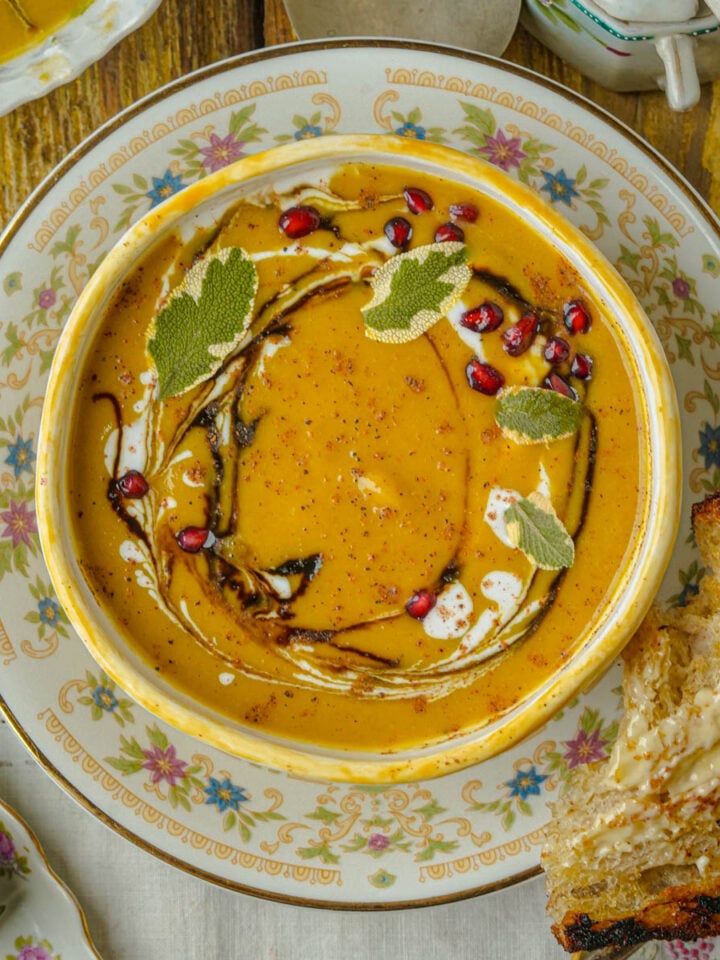
Ladle the soup into bowls. Drizzle with the coconut milk, then the gochujang-maple mixture. If you want to be crafty, you can swirl the liquid garnishes into the top of the soup a little using the tip of a chopstick.
Top with toasted pumpkin seeds (not the sucky, woody kabocha seeds) and rehydrated jujube dates.

Grab my easy-yo-use app that builds your whole week with real, chef-tested vegan dinners in 30 seconds, customized to your budget, time, and taste, with a shopping list sorted by aisle.

💡Serving Ideas
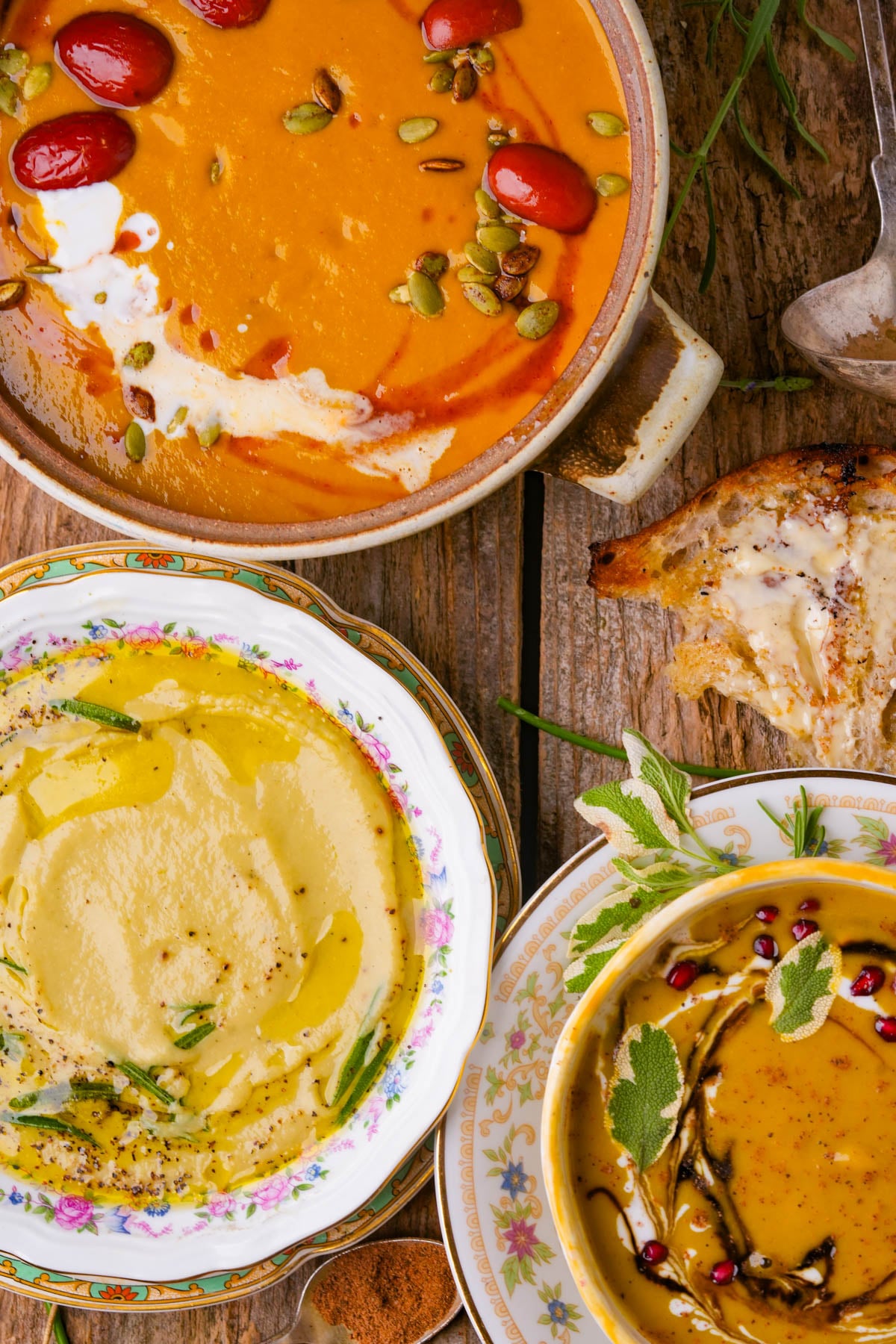
Like my Thai pumpkin soup, this one is a great non-traditional pick if your Thanksgiving table is tired of the same 4 orange soups doing the same thing every single year.
It also holds its own outside the holiday lineup entirely, especially next to Korean-leaning dishes like Korean BBQ seitan, Korean carrot salad, or Korean-style vegan pigs in a blanket. This soup doesn't care what season it is or what holiday you are celebrating, it just wants to show up for attention (just like me).
👉Top tips
- No Need to Peel the Kabocha: The skin is completely edible and blends up smooth once cooked, so your peeler can sit this one out. Scoop the seeds, ditch the stem, dice the flesh, and you're already done with the hardest part.
- Do Not Boil the Soup After Adding Miso: Boiling miso is basically assault on a fermented paste that did nothing to deserve it. High heat dulls the flavor and kills off the good fermentation benefits, so once it goes in, keep things gentle, just enough to warm through.
- Taste and Adjust the Gochujang: Brands vary a ton in heat and saltiness, and so does everyone's threshold for spiciness and saltiness. So taste the soup before adding the full amount and adjust up or down until you are completely pumped about the flavor!
🤷♀️ Recipe FAQs
Yes, butternut, pumpkin, and acorn squash all work as substitutes, though you will need to peel those first, since their skins are not as tender (or edible) as kabocha's.
Though traditional gochujangs are, as far as what is commercially available these days, not usually, contain wheat (and high-fructose corn syrup and other junk), so check the label carefully if gluten is a concern and look for a certified gluten free version, like the one I mess with from Trader Joe's.
Most Asian grocery stores carry dried jujube dates, sometimes labeled as red dates or Chinese dates. If you cannot find them, you can 100% just leave them out.
🧊 In the Fridge
Store in an airtight container for up to 5 days. The flavor deepens over time, though you may want to add a fresh drizzle of gochujang and coconut milk when serving leftovers.
❄️ In the Freezer
Freeze the base soup, without the miso stirred in, for up to 3 months. Thaw overnight in the fridge, then stir in fresh miso when reheating for the best flavor and texture.
🔥 Reheating
Warm gently on the stovetop over medium-low heat, stirring occasionally, and thin with a splash of stock or water if it has thickened. Avoid boiling if the miso is already mixed in.
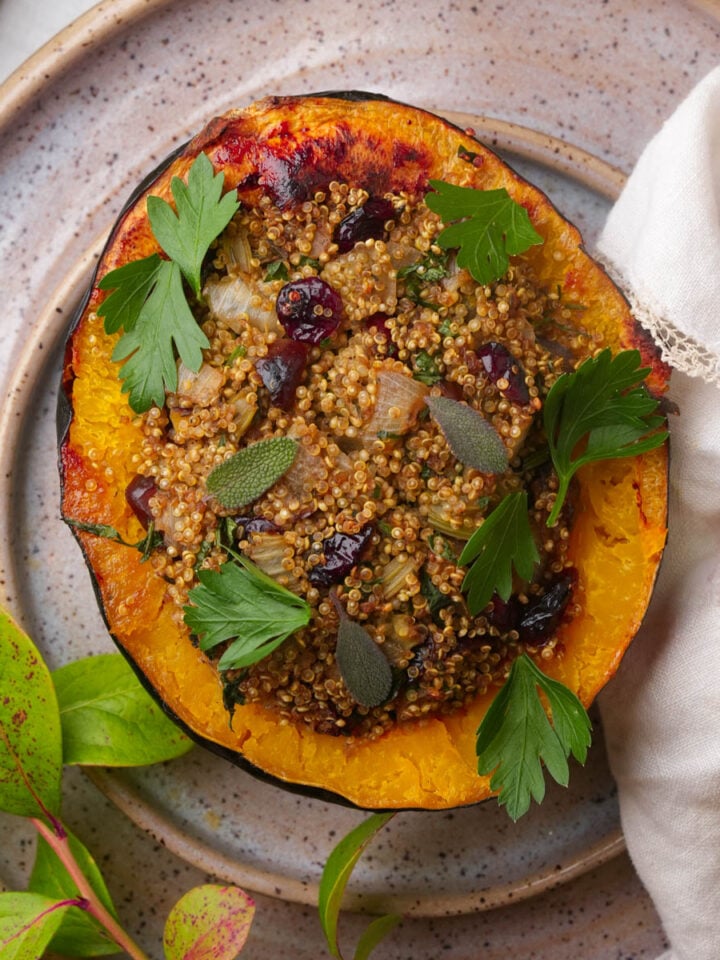
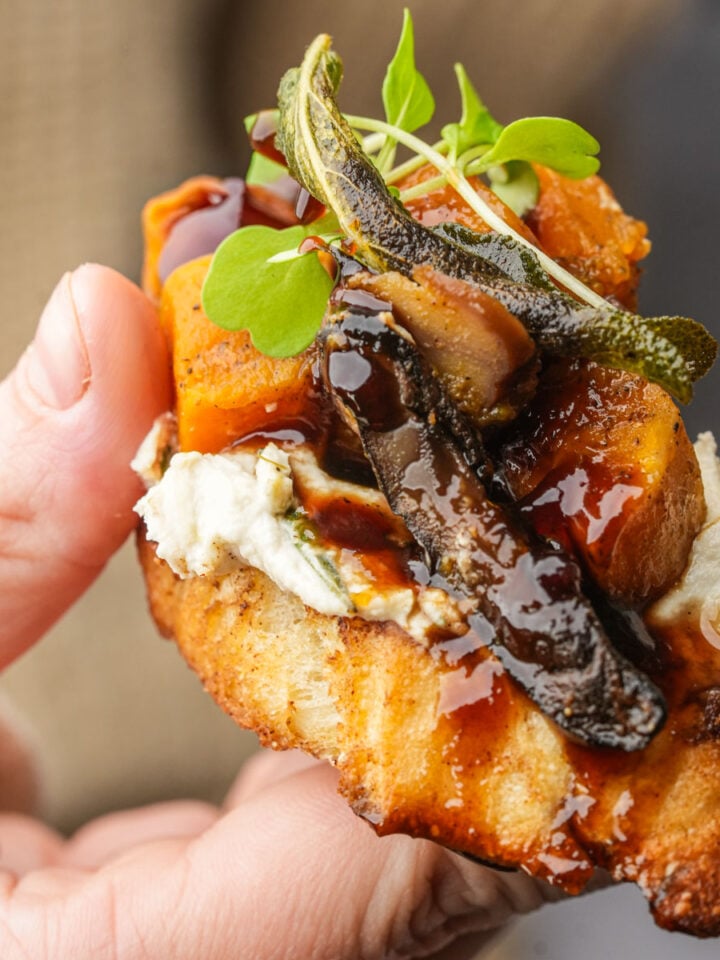
✌️Other squash recipes you'll love:

Enter your email & I'll send it to your inbox. Plus, get great new recipes from me every week!
By submitting this form, you consent to receive emails from Cinnamon Snail.
Kabocha Squash Soup Recipe
Ingredients
- 2 tablespoons toasted sesame oil
- 2 cups onion diced
- 2 cups celery diced
- 1 tablespoon ginger grated
- 6 cloves garlic peeled
- 2 teaspoons 5-spice powder
- 3 lb. Kabocha squash seeded and diced
- 1 russet potato peeled and quartered
- ¼ cup gochujang or to taste
- 2 tablespoons maple syrup
- 4 cups unsalted vegetable stock
- 15 oz. coconut milk full fat
- 4 teaspoons miso paste
For Garnishing:
- ⅓ cup coconut milk full fat
- 2 tablespoons gochujang
- 2 tablespoons maple syrup
- ¼ cup toasted pumpkin seeds
- 8 red jujube dates sliced and rehydrated
Instructions
- Heat the toasted sesame oil in a large pot over medium heat. After 90 seconds when the oil is hot, add the onion and celery and cook for 8 minutes, stirring occasionally, until the vegetables begin to soften.
- Add the ginger, garlic, and 5-spice. Cook for 3 minutes, stirring frequently to bloom the spices in the hot oil.
- Add the kabocha squash, potato, gochujang, maple syrup, and vegetable stock. Bring to a boil over high heat, then reduce to a simmer over medium-low heat. Cover and cook for 25 minutes, or until the squash and potato are fully tender.
- Remove the pot from the heat. Using an immersion blender, blend the soup until smooth. Alternatively, carefully transfer the soup to a blender in batches and blend until smooth.
- Return the soup to the pot and stir in the coconut milk and miso paste. Warm gently over medium-low heat for 3 minutes, stirring occasionally. Do not boil after adding the miso. Taste and adjust the seasoning if needed.
- In a small bowl, whisk together the gochujang and maple syrup until smooth.
- Ladle the soup into bowls. Drizzle with the coconut milk, followed by the gochujang-maple mixture. Garnish with the toasted pumpkin seeds and rehydrated jujube dates.
Notes
Enter your email & I'll send it to your inbox. Plus, get great new recipes from me every week!
By submitting this form, you consent to receive emails from Cinnamon Snail.
Rebecca says
This was delicious! Perfect blend of flavors.