

*This post may contain affiliate links. Read more »
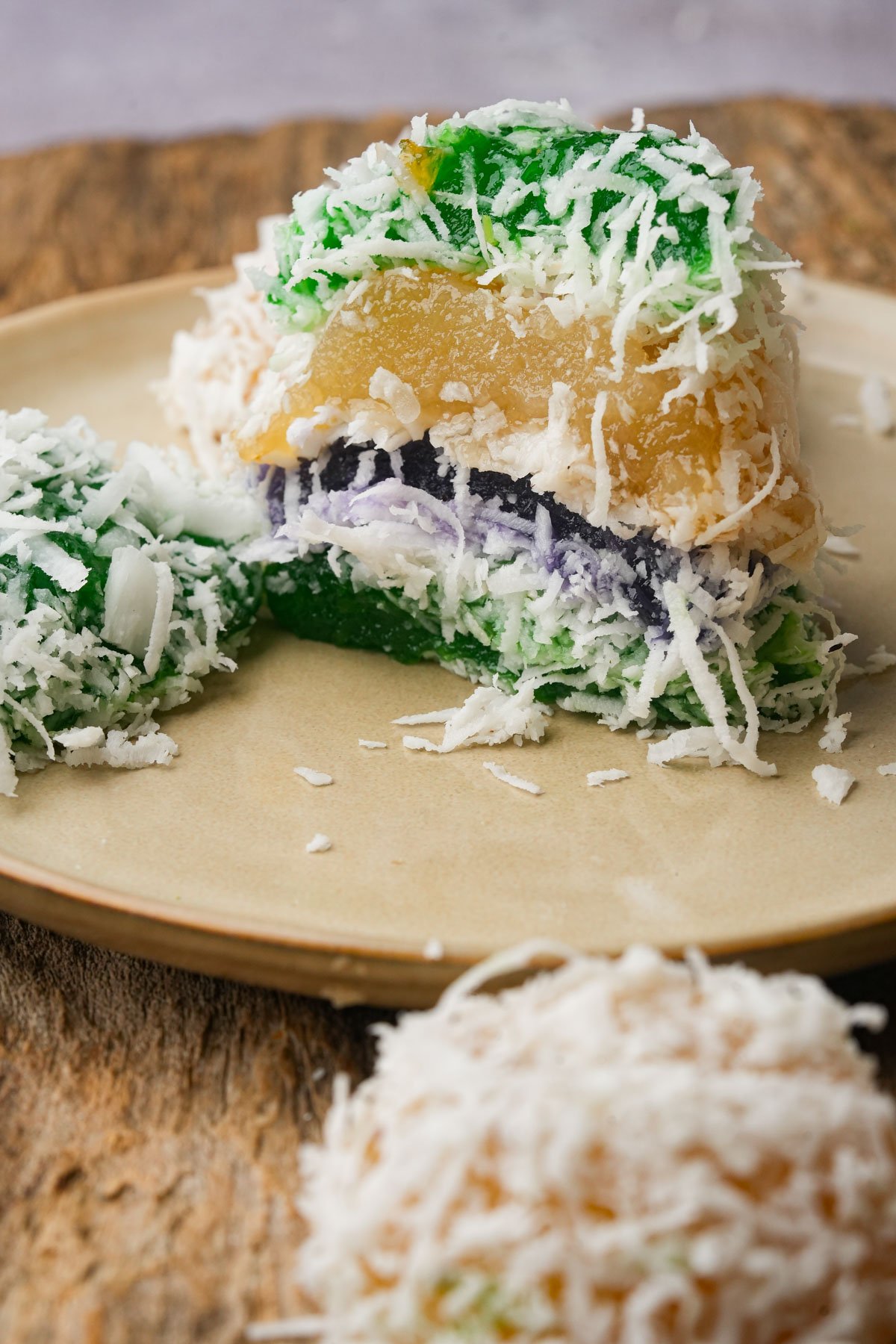
Nope. This is not mochi. Because, in some ways, it's wayyyy better! This pichi pichi recipe is gloriously soft, super-fun, springy, and just the right amount of sweet. Think of these Filipino cassava desserts as edible jelly clouds dressed in coconut that you need only 6 ingredients and a steamer to pull off flawlessly.
Recipe tips tailored to what matters most to you:

Cassava isn't wheat, it isn't even a grain. Zero changes needed, go roll some in coconut.

Pre-grated frozen cassava skips the whole grating workout. Thaw it, squeeze the extra liquid out in a colander, and you're at step two.

Buy the whole cassava root and grate it yourself instead of paying for pre-grated frozen. Desiccated coconut saves you from cracking whole coconuts too.

Coconut sugar and palm sugar both work here. I make them that way since my wife avoids cane sugar, they just darken the color a little.

The extracts are optional and desiccated coconut handles the coating, but lye water has no stand-in. Asian markets carry it, just get the food-grade stuff.

If you are using frozen cassava, squeeze it thoroughly to remove excess water. Too much moisture will dilute the batter and cause cakes that might fall apart.
Maintain steady, consistent steam throughout the cooking process to make sure the cassava cooks evenly. Make sure your steamer doesn't run dry.
Measure the lye water precisely. Even a little extra can push the texture from pleasantly bouncy to overly rubbery.
Oodles more tips, step-by-step recipe photos, info on weird ingredients, and FAQs are all still here. I just tucked 'em out of the way so you can start cooking sooner.
Pichi-pichi is a Filipino kakanin from Quezon province. It really is the kind of sweet treat that feels party-worthy but doesn't demand you turn yourself into a kitchen overachiever. The grated cassava gives it that signature bounciness, while lye water works its behind-the-scenes magic so that it's still a little sticky and satisfyingly chewy, but still somehow firm enough to hold together when rolled in grated coconut.
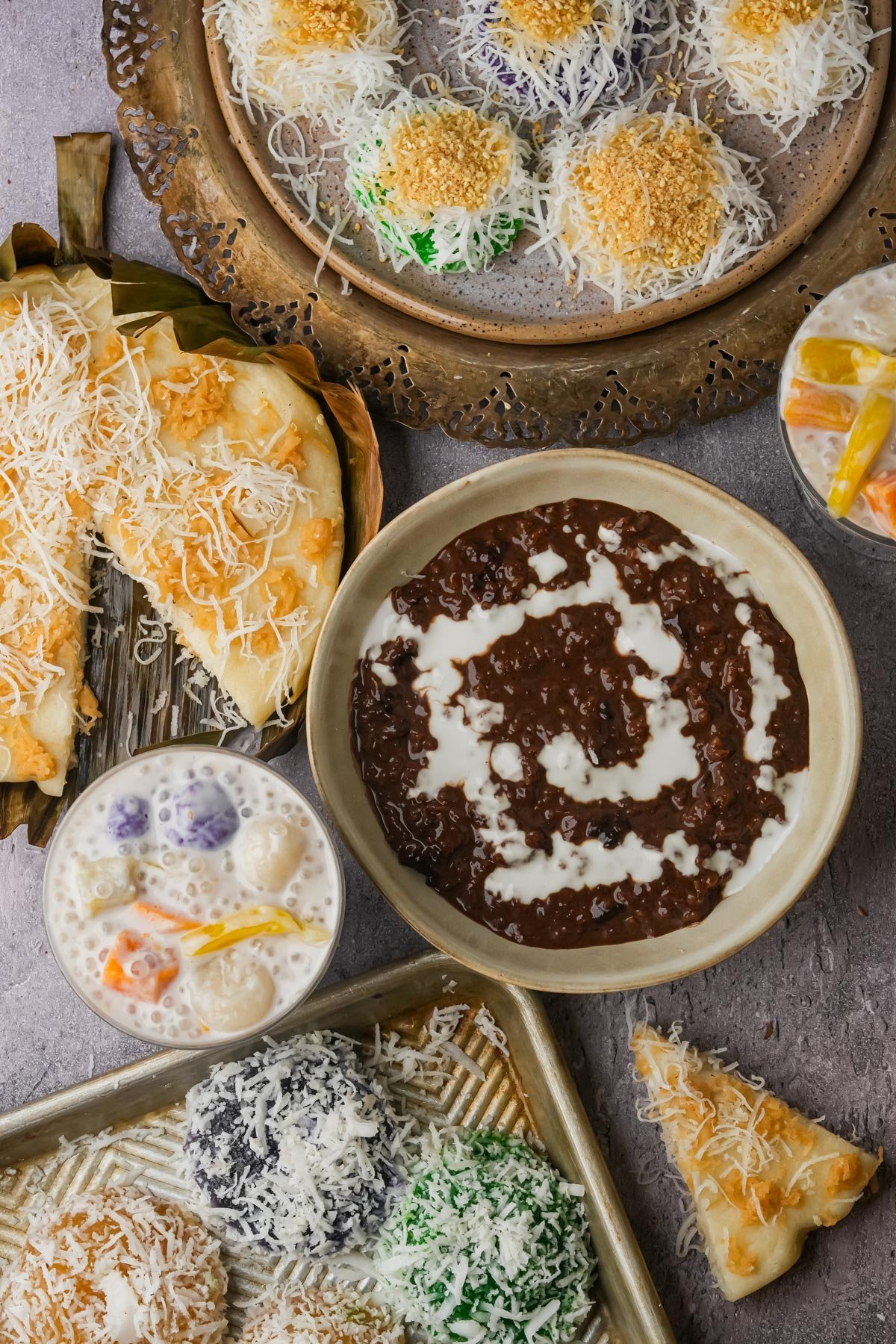
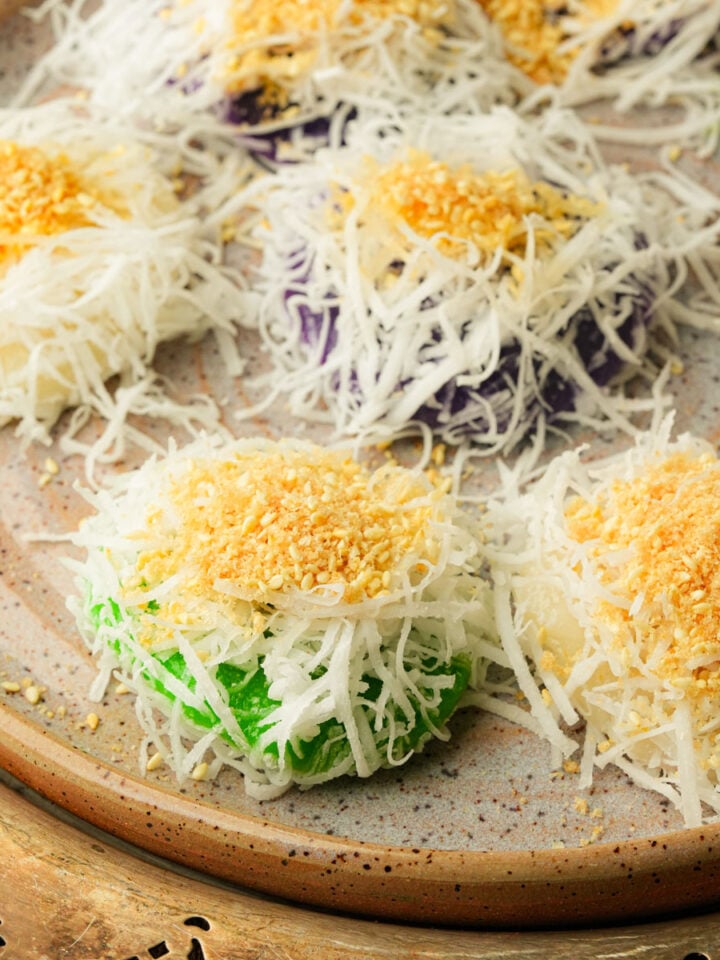
Bonus points: you can rock out classic, pandan, or ube flavored pichi pichi without adding a minute to your prep time! For an even more celebratory dessert table, serve 'em alongside other Filipino favorites like crispy fried karioka, creamy buko pandan salad, smoky grilled tupig, and golden, lemongrass caramelized turon.
This is one of those recipes you'll want to make in triple batches, half for now, half for the fridge, and half for the inevitable friend who "just dropped by" the moment they caught a whiff.


Tastes like it was cooked in the Philippines. Trust me, I'm Filipino.
Jump to:
Why you'll adore this pichi pichi recipe
✊ Vegan AF & GF: Like all of my vegan Filipino recipes, I am not gonna advise you to throw grated cheese all over these (GTFO with that), and there's no gelatin, or melted down animal parts in sight. This will quickly climb up your list of favorite gluten-free vegan recipes!
💜 Flavor Triple Threat: Go classic, pandan, or ube without changing a single step in the process.
🍲 No Oven, No Problem: All you need is a steamer and a big appetite.
Tested and Approved Worldwide: Like all of my vegan recipes, this one has been perfected with feedback from hundreds of recipe testers from all around the world.


I'm on my knees staring weirdly into your eyes, asking you in a soothing voice to be my taste-testing partner in crime. Sign up for the recipe testing crew and get early access to new recipes before they're published.
Pichi pichi ingredients

The Cassava
Fresh cassava (A.K.A. yuca) is the main substance that pichi pichi is made from. It's super starchy, which is how it gets that iconic chewy texture and mild, earthy sweetness.
If you've got a food processor with a grater attachment, use it-it'll save you a ton of time. A manual rotary grater works too, as long as the holes are on the larger side, and you can otherwise do the shredding with a box grater (just be ready for a little workout).
Whole frozen cassava is easier to grate if you let it thaw slightly, especially if it's rock-solid or coated in ice. Don't let it thaw all the way, or it'll get tougher to work with, as freezing it sometimes makes the cassava a little rubbery when completely thawed. If you can find pre-grated frozen cassava, even better-just thaw and use it after squeezing a bit of the extra liquid out in a colander.
The Sugar
White sugar keeps the cakes bright and translucent. Light brown sugar can be swapped in for a subtle caramel undertone and deeper color.
I've made these with coconut sugar and palm sugar too, because my wife avoids cane sugar, and they work beautifully, though they slightly darken the pichi pichi.
Vanilla Extract
Pure vanilla extract adds aromatic warmth that rounds out cassava's natural flavor. Vanilla powder is also a fantastic substitute-I use it often in my suman and in the filling for bomboloni, where it gives intense flavor with little specks of vanilla bean.
Lye Water
Food-grade lye water (lihiya) is the key to that signature bouncy firmness. Available at most Asian markets, it works by tightening the cassava's starch structure during steaming-no other substitute delivers the same result. This stuff is caustic in the undiluted and uncooked state, so try not to splash it all over yourself. Pretty please, with chemical burns on top…
Optional Extracts
Natural pandan and ube extracts are the way to go here-skip the artificial ones if you can. If fresh pandan leaves are available, you can even replace the plain water in the recipe with pandan juice (I show how to make this in my ondeh ondeh and kuih dadar recipes) for a more authentic, natural flavor.
Coconut Meat (and Alternatives to the Fresh Stuff)
Freshly grated mature coconut is the classic coating for pichi-pichi. If you can find fresh mature coconuts (the ones with the brown "hairy" wooden shells), great. If not, I don't really recommend you coat these in frozen grated coconut, which I personally find to be sorta flavorless at best, and rancid at worst.
So, as an alternative, you can grab unsweetened desiccated coconut and put it in a pan with a few tablespoons of water. Warm it with a lid on for 5-6 minutes over a low flame, and then let it cool with the lid on. It will taste pretty fresh and juicy, and is a good backup option.
*See the recipe card at the bottom of the page for exact quantities, nutritional info, and detailed cooking directions.
Variations
Calamansi Pichi Pichi
Cut back by ¼ cup on the water in the recipe, and replace it with ¼ cup of calamansi juice.
Palitaw
Palitaw is like pichi pichi's sticky rice-based cousin-equally coconut-clad but softer, with a toasty sesame sugar finish. It floats to the surface in minutes, then gets coated in coconut, sugar, and sesame seeds.

Grab my easy-yo-use app that builds your whole week with real, chef-tested vegan dinners in 30 seconds, customized to your budget, time, and taste, with a shopping list sorted by aisle.

How to make pichi pichi
If you're only here for chewy cassava and not a photo essay, you can scroll to the recipe card below. If you actually want to nail this, let's do this step-by-step.
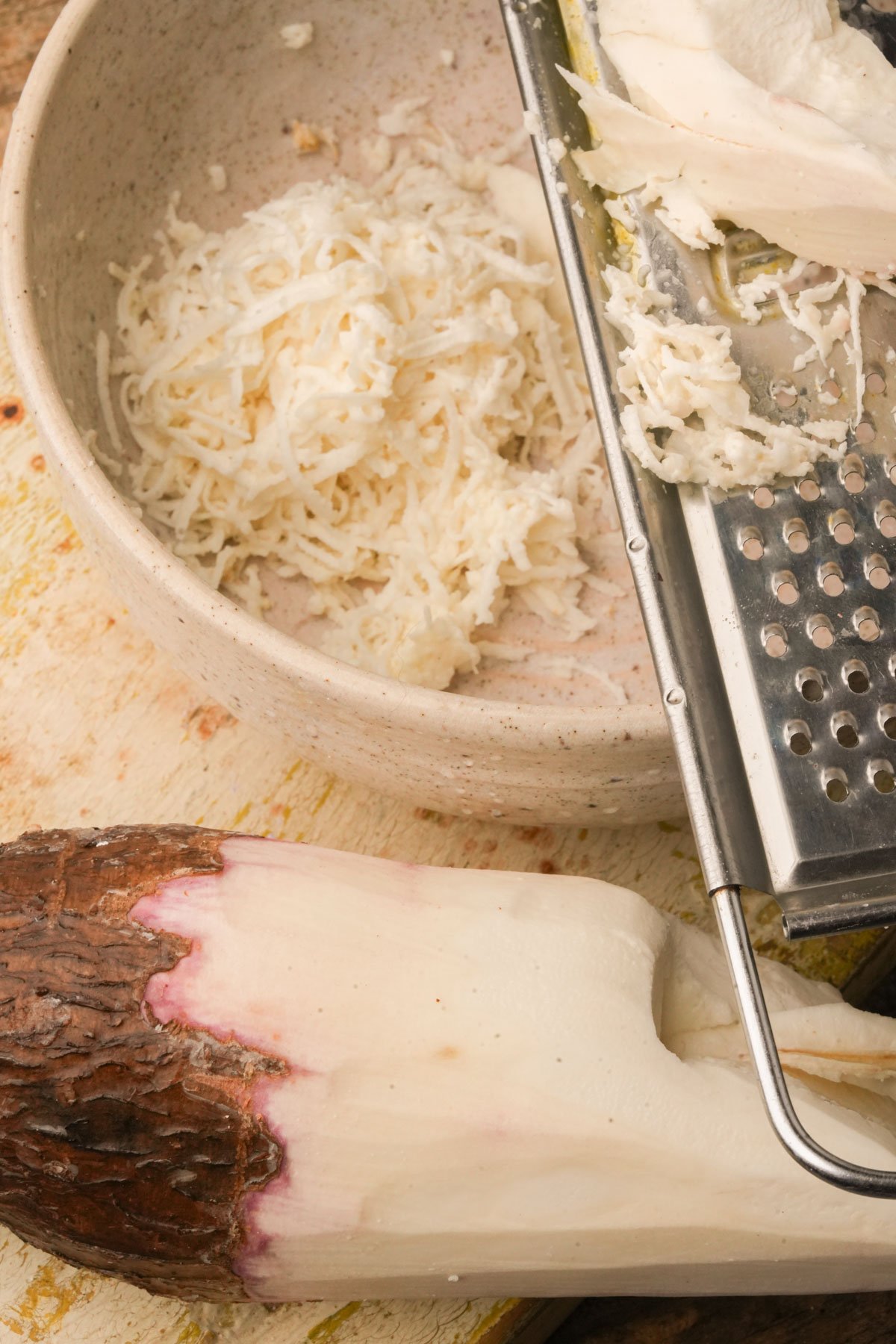
Step One
Have A Grate Day:
If using fresh cassava, peel it and grate it finely. If using frozen pre-grated cassava, drain it in a wire mesh strainer.
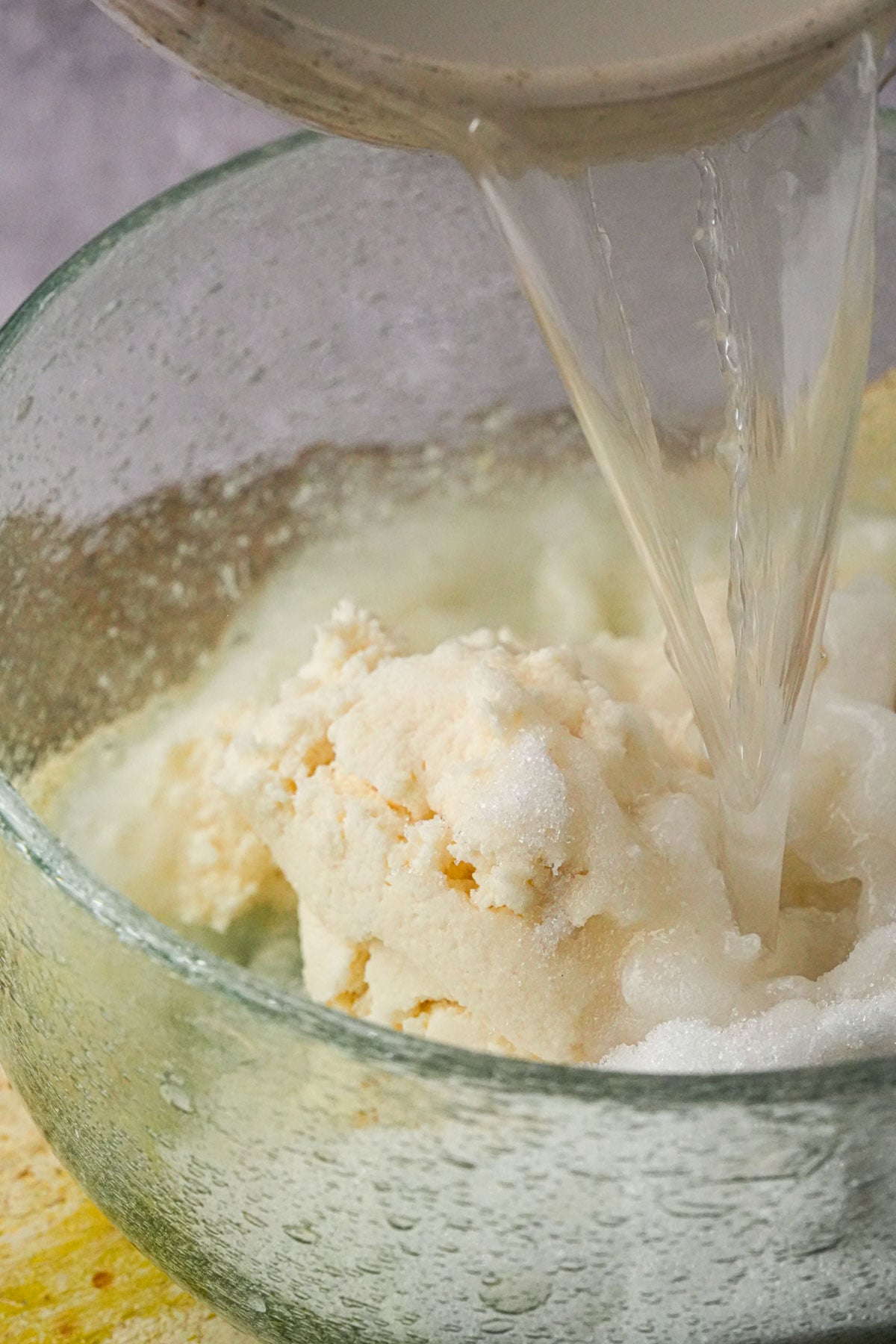
Step Two
Cassava Little Faith:
Place the steamer over medium heat. In a large mixing bowl, combine the grated cassava, water, sugar, vanilla extract, salt, and lye water.
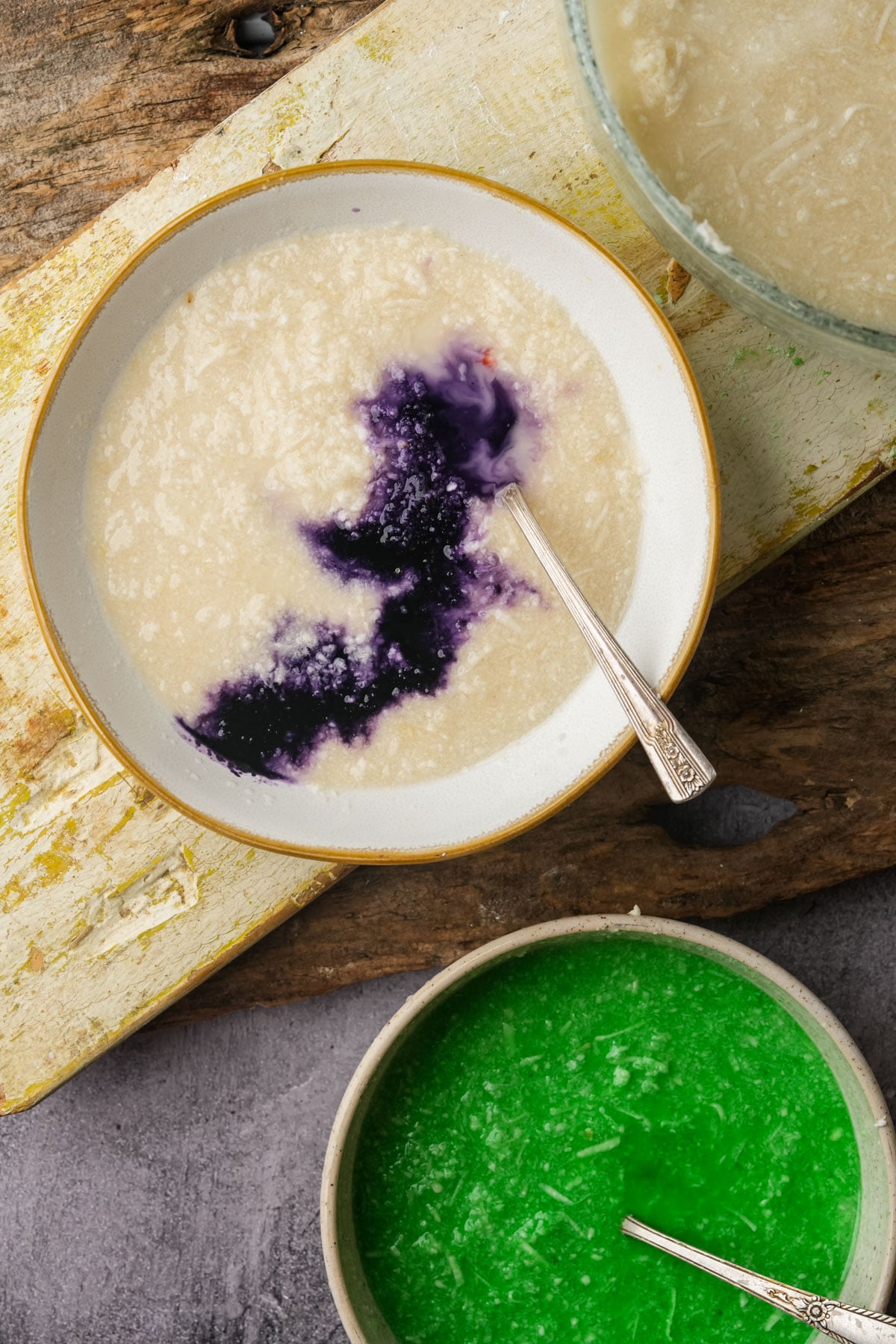
Step Three
Ube'b Ruth:
If using pandan or ube extract, divide the mixture into portions, leaving one plain, and mix the extracts in the others until evenly colored.

Step Four
Fill Collins:
Lightly brush individual molds or ramekins with oil. Fill each about two-thirds full (approximately 3 tablespoons).

Step Five
It Was All a Steam (I used to read Word Up Magazine):
Arrange molds in the steamer basket, leaving space between them. Cover and steam for 50-55 minutes, or until translucent and with the texture of firm, but sticky jelly.

Step Six
Cool Runnings:
Let the pichi pichi cool completely in the molds before loosening with a thin spatula or paring knife.
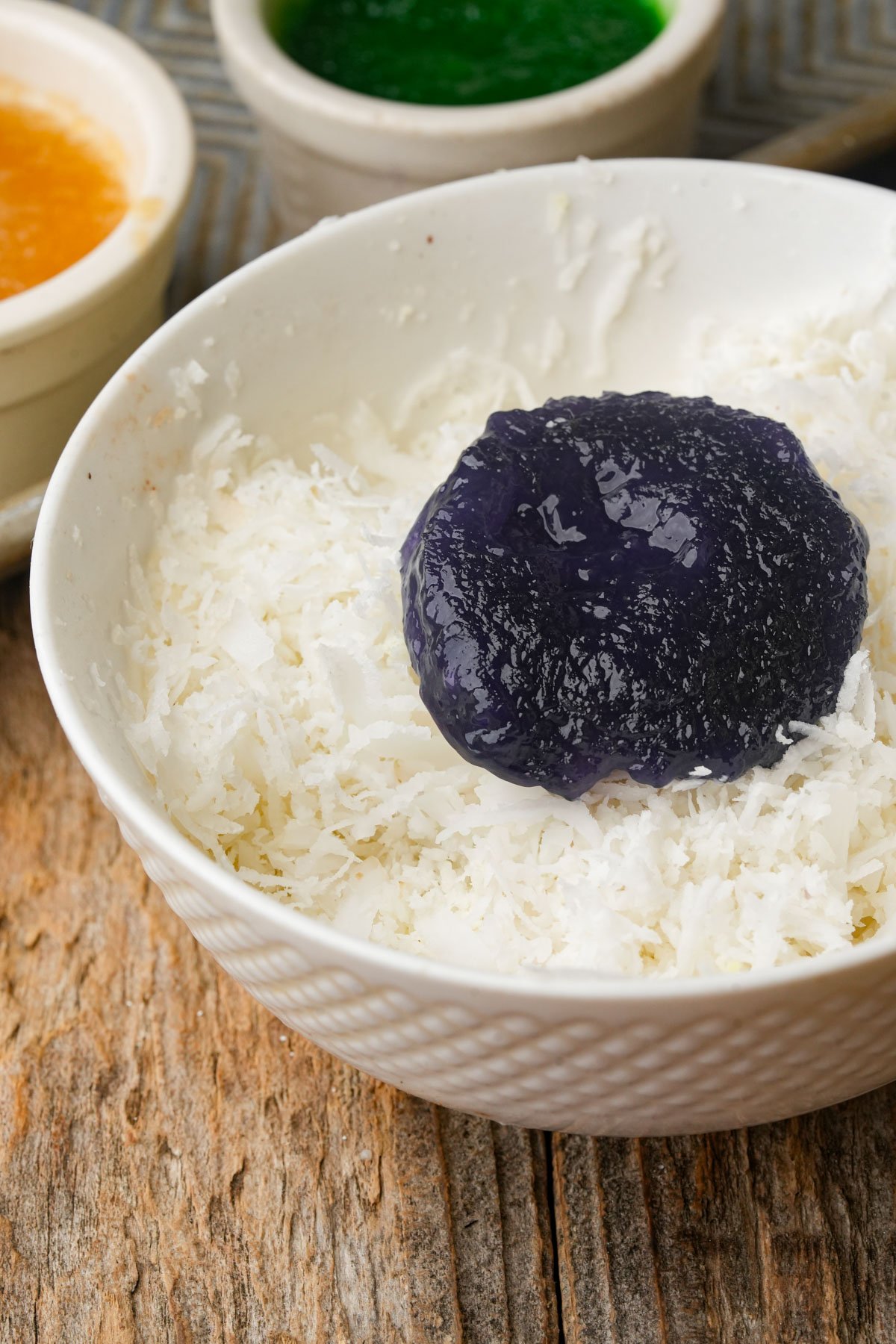
Step Seven
I'm in Love with the Coco:
Before serving, roll each piece in grated coconut until fully coated.
Top tips
- Drain That Cassava: If you are using frozen cassava, squeeze it thoroughly to remove excess water-too much moisture will dilute the batter and cause cakes that might fall apart or spread a lot when removed from the molds.
- Steam With Care: Maintain steady, consistent steam throughout the cooking process to ensure the cassava cooks evenly from center to edges. Make sure your steamer doesn't run dry, and make sure the heat is not so high that the pichi pichi aren't being splashed.
- Cool For Control: Allow the pichi pichi to cool fully before unmolding; this lets the starches set so the cakes hold their shape.
- Precision With Lye: Measure the lye water precisely-even a little extra can push the texture from pleasantly bouncy to overly rubbery. Be careful not to let the liquid come in direct contact with your skin, as it can irritate.
Recipe FAQs
Lye water is an alkaline solution made of about 80% potassium carbonate and 20% baking soda.
In the Philippines, it's called lihia or lihiya; across Asia, you'll see it labeled kansui. You can usually find it at Asian supermarkets or online-just make sure it's food-grade, specifically for cooking.
Handle it carefully. Lye water is powerful stuff and can cause serious burns if consumed in large amounts. Use sparingly and keep it out of reach of kiddos.
Don't freak out, though-it is completely safe to consume when used in recipes like pichi-pichi. Lye water is diluted and then fully cooked-steaming breaks down the alkaline solution, making it harmless. The small amount in the batter transforms the texture without leaving any scary residue.
Yes, but reduce the sugar in the batter slightly to balance the sweetness.
They were either unmolded too soon or the molds weren't greased enough. Cool fully and brush the molds lightly with oil next time. Sometimes using a spoon to scoop them out of the mold is your best option.
Yes, you can set a heatproof plate on top of a rack inside a large pot., Make sure the steam can circulate evenly.
❄️ Refrigerating:
Store in an airtight container for up to 3 days. It will continue to get stiffer as it ages. If you want, you can re-steam them for about 5 minutes to bring them back to their original soft glory.
Mad people in this world are confused, so lemme straighten things out once and for all about this: taro and cassava are totally different things. Both are starchy roots, sure-but taro (which you can use to make Southeast Asian sweets like Malaysian bubur cha cha and Vietnamese che khoai mon) comes from the Araceae family, and cassava (also called yuca or manioc) is in the Euphorbiaceae family. OK, lesson over, but the main thing is that they are NOT interchangeable as far as making pichi pichi is concerned.
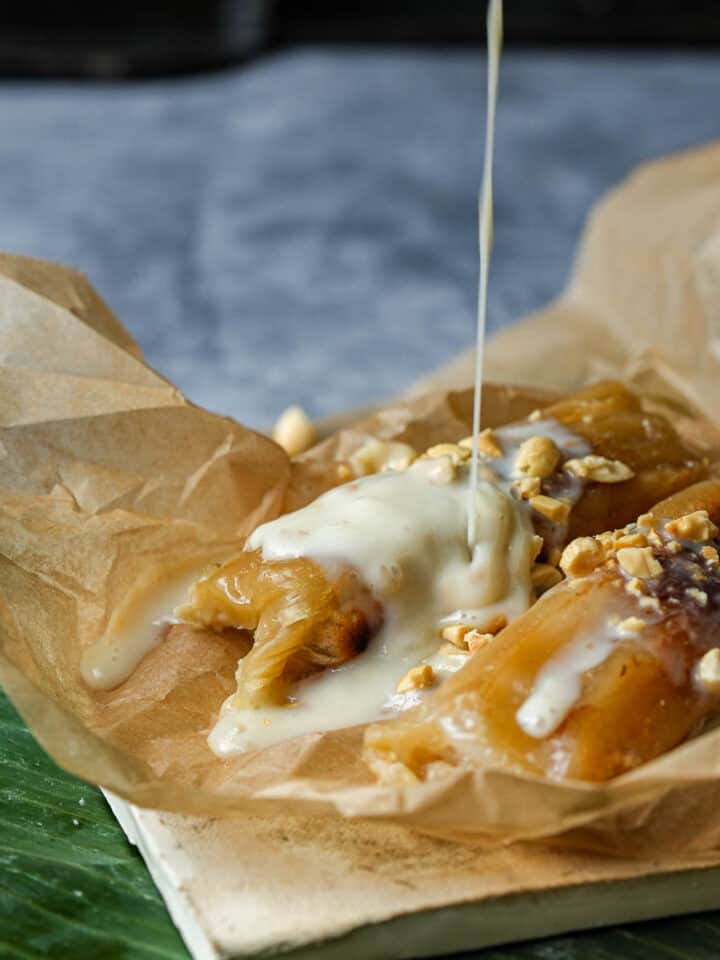
You'll love these vegan Filipino desserts too:



Enter your email & I'll send it to your inbox. Plus, get great new recipes from me every week!
By submitting this form, you consent to receive emails from Cinnamon Snail.

Pichi Pichi Recipe
Ingredients
- 2 ½ cups cassava grated. (if using frozen, squeeze and drain the extra fluid)
- 1 ½ cups water
- 1 cup sugar
- 1 teaspoon vanilla extract
- ¼ teaspoon salt
- 1 teaspoon lye water
Optional Extracts:
- ½ teaspoon pandan extract
- ⅛ teaspoon ube extract
Topping:
- 2 cups coconut meat grated
Instructions
- Unless using frozen pre-grated cassava, peel and grease the cassava using the small-shred side of a box grater.
- Place the steamer over medium heat. Combine the grated cassava, water, sugar, vanilla extract, salt, and lye water in a large mixing bowl.
- If using pandan and/or ube extract, divide the batter into 3 portions, leave one plain, and add the extracts to each of the other portions. Stir until the mixtures with the extracts are uniform in color.
- Prepare individual molds or small ramekins by lightly brushing them with oil. Fill the molds two-thirds full with the cassava mixture (about 3 tablespoons each).
- Arrange the molds in a steamer basket, leaving space between each for steam circulation. Cover with a tight-fitting lid and steam for 50-55 minutes, or until the mixture becomes translucent and the consistency of firm jelly. Remove from the steamer and allow to cool completely in the molds.
- Loosen each portion from the mold using a thin offset spatula or the tip of a paring knife and transfer to a serving plate.
- Before serving, roll each piece in grated coconut meat until fully coated.
Notes
Enter your email & I'll send it to your inbox. Plus, get great new recipes from me every week!
By submitting this form, you consent to receive emails from Cinnamon Snail.
Marjorie says
Tastes like it was cooked in the Philippines. Trust me, I'm Filipino.