

*This post may contain affiliate links. Read more »
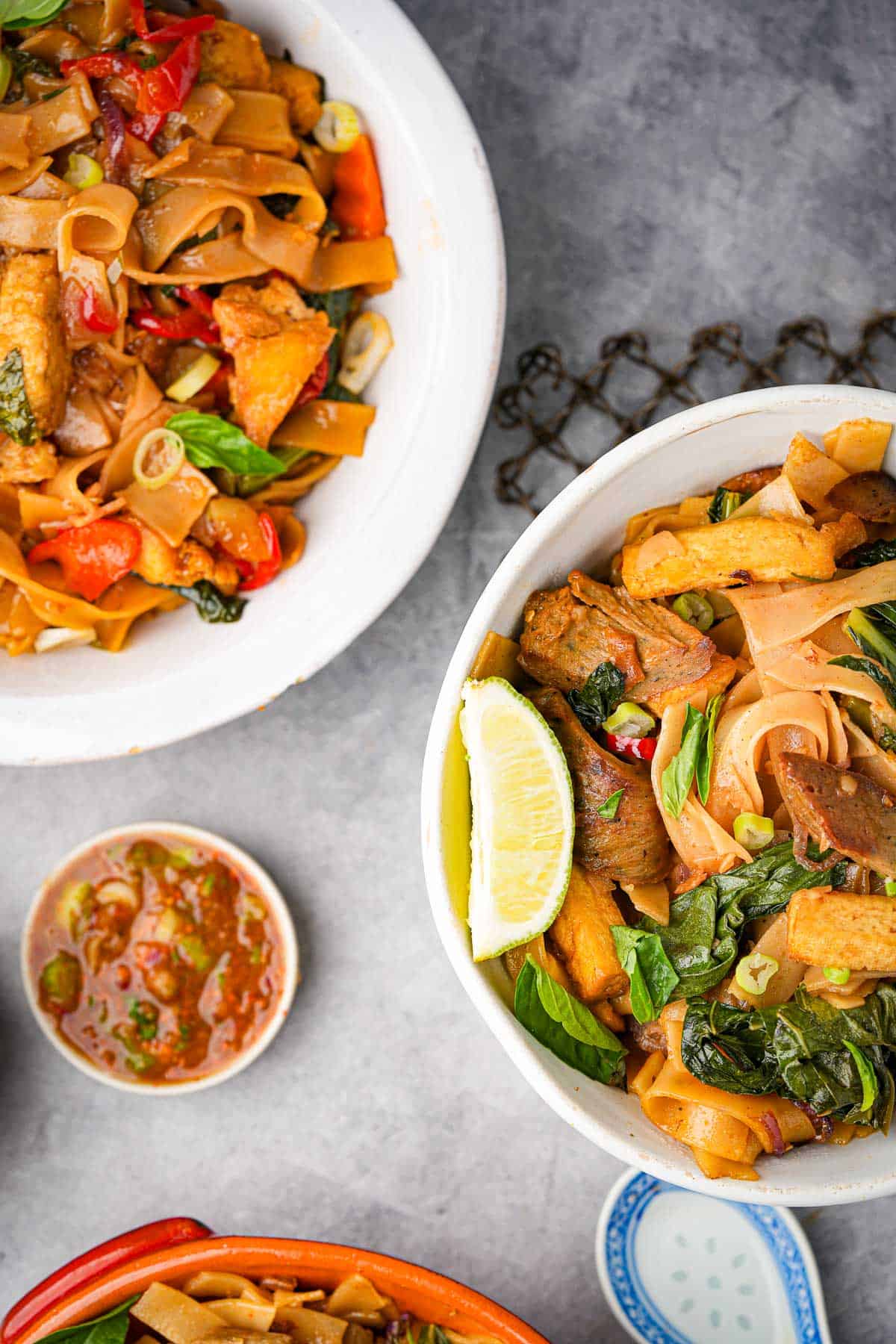
One of Thailand's most beloved street foods? This vegan pad see ew recipe is a gosh darned a noodle dish. Let that sink in, but not too long, because it takes under 25 minutes to make this classic Thai dish!
Recipe tips tailored to what matters most to you:

Skip the seitan and use hand-torn oyster mushrooms, soy curls, or young green jackfruit, that's my GF swap. Glutinous rice flour has no gluten, despite the name.

Use fresh ho fun noodles and there's no soaking at all, just cut them to size if they're huge. Then it's about 15 minutes of cooking.

Go tofu-only and skip buying seitan, or tear up oyster mushrooms instead. Regular broccoli or string beans stand in for Chinese broccoli.

Air fry the tofu in about 2 teaspoons of oil instead of frying it. Crispy, golden, and wayyy less grease.

Glutinous rice flour hard to find? Cornstarch or arrowroot work. No palm sugar? Coconut sugar, brown sugar or even maple syrup do the job.

Rather than chopping seitan for this dish, I like to rip the pieces by hand, which allows their natural strands of protein to give the pieces a natural, meat-like appearance.
Never boil rice noodles that you will stir fry! Over-soaking can lead to mushy noodles, so aim for that sweet spot.
Make sure you press the tofu dry before cutting and frying as it will make less mess from splattering oil.
Oodles more tips, step-by-step recipe photos, info on weird ingredients, and FAQs are all still here. I just tucked 'em out of the way so you can start cooking sooner.
Also known as Pad Siew and Phat Si Io, this big fat bowl has wide rice noodles, tender, meaty tofu strips, and veggies, all sizzling in a wok, absorbing the essence of garlic, shallots, and bird's eye chilies. Thai basil and Chinese broccoli and a balance of sweet, savory, and spicy make this one of the most popular Thai recipes anywhere on the planet. It's right up there with khao pad and pad woon sen! I'm gonna help you unlock the way your favorite Thai restaurants and street vendors make this banger!
With this foolproof recipe, even if you're a Pad See Ew novice, you will nail a steaming bowl of perfect noodles on your first attempt. So, roll up your sleeves, gather the ingredients, and let's bring the streets of Bangkok into your home kitchen. Your journey to Pad See Ew perfection begins now.


My partner said this is richer and more flavorful than any pad see ew he's ever had (it's his usual order at thai restaurants) and that the lime leaves really put it over the top. I used the vegan chicken seitan recipe from this site (incredible), and fresh 25mm rice noodles. For the rice noodles, I just steamed them a bit first to get them to loosen up, as they were packaged in a big block. They were perfect in this dish. Chinese broccoli wasn't available at my market this time so I used water spinach -- fell in love with it after first making the stir-fried water spinach recipe also from this site!
Jump to:
Why you'll adore this vegan pad see ew recipe
Tested and Approved Worldwide: Like all of my vegan recipes, perfected after countless tries, tested by a massive team of recipe testers, and hailed as a favorite. This Thai stir-fried noodle recipe is foolproof, and loved worldwide!
🍜 Perfectly Textured Noodles: The secret to the perfect chewy wide noodles lies in their preparation - whether you choose fresh ho fun or hydrate wide dried rice noodles, you are to gonna have some fally-aparty nonsense ruining your meal.
🔥 Seitan Magic: Meaty hand-torn seitan takes these noodles to the next level without harming any cute birds. Its unique texture absorbs the stir-fry sauce, ensuring every bite is a flavor-packed delight.
🌱 Vegan AF: Like all of my Thai recipes, this one happens to be completely plant-based. Feel free to swap out the tofu and seitan with other proteins of your choice, but trust me, there is a reason this recipe is a fan fave for busy weeknights!


I'm on my knees staring weirdly into your eyes, asking you in a soothing voice to be my taste-testing partner in crime. Sign up for the recipe testing crew and get early access to new recipes before they're published.
Ingredients for vegetarian pad see ew

Wide Rice Noodles (Sen Yai)
Dried wide rice noodles, provide the canvas for our Pad See Ew. THey are the same thickies I use in my Thai peanut noodles too.
These are normally a little wider than pho noodles, and pad Thai noodles. If you can get fresh ho fun noodles, ese are also great in this recipe. If you don't care about the noodle size, fresh Shanghai noodles (normally used for mie goreng), planed noodes (which I use for making Thai basil noodles), or thin rice noodles (like you would use in pad ba mee) can all be used.
Seitan (Lor)
Hand-torn seitan, made from wheat gluten, adds a meaty chewiness to the dish. If you have never made your own seitan, my vegan chicken recipe is a good place to start, and if you want to get even better at making the stuff, my seitan masterclass will turn you into like the Harry Potter of the seitan game, or something like that! For a gluten-free option, use hand-torn oyster mushrooms, like I use in my vegan shawarma recipe.
Bird's Eye Chilies (Phrik Khi Nu)
Available at your local Asian market, these spicy lil' red guys from Thailand bring the heat to recipes like Thai salad dressing, tom yum paste, and Thai eggplant curry.
Sliced thinly, they provide the perfect amount of spice, elevating the dish without overwhelming the palate. You will definitely. find these at all Asian grocery stores, but if you want, you can substitute Fresno, or jalapeño for a similar kick. Just keep in mind that your average bird's eye chili is about ⅙ of the size of those.
Chinese Broccoli (Gai Lan)
I just LOVE the crisp texture and slightly bitter flavor of Chinese broccoli. Broccolini or regular broccoli can be used as a substitute, or make it with bok choy, or long beans (like you would use to make sitaw, or sambal goreng tempe).
Palm Sugar
Palm sugar, with its caramel-like sweetness, balances the salty and savory flavors. Coconut sugar, brown sugar, or even maple syrup can be used in its place if you can't find palm sugar. If you have any leftovers after making this, palm sugar makes amazing Southeast Asian desserts like klepon, kuih dadar, tupig, and suman.
White Pepper
White pepper provides a mild smoky heat, distinct from black pepper. You can use it in banh bao chay and bakwan sayur. Adjust to taste, and use black pepper if white is unavailable.
Thai Basil
Thai basil's aromatic, slightly spicy flavor enhances the overall profile. Substitute with "regular basil" (Italian basil) if you can't get Thai basil. If you have extra Thai basil, don't miss out on making this Thai basil eggplant recipe too! Some people use Thai holy basil, but I do not cook with that because I am a Hare Krsna. We view Tulasi as one of Krsna's most pure devotees, so we do not cook or chew her leaves.
Sriracha
Sriracha lends a tangy and garlicky bite to the stir-fry sauce. In the past decade there have been numerous "Sriracha Droughts" for various reasons. So if you can't get any, you can make your own following my sriracha recipe. Otherwise, homemade sambal oelek, nam prik pao, shatta, and gochujang all make nice, albeit slightly different substitutes.
Glutinous Rice Flour (Paeng Khao Chao)
Glutinous rice flour acts as a thickener for the stir-fry sauce, giving it a glossy finish. I use the stuff all the time to make chee cheong fun, and bubur sum sum. Cornstarch or arrowroot will both also work as suitable substitutes.
*See the recipe card at the bottom of the page for exact quantities, nutritional info, and detailed cooking directions.
Variations
🇲🇾 Kway Teow Kung Fu (Malaysian Vegan Stir-Fried Flat Rice Noodles):
In neighboring Malaysia, a vegan adaptation known as "Kway Teow Kung Fu" made with fresh wide rice noodles maintains the spirit of Pad See Ew. Swap the Chinese broccoli with choy sum, and incorporate Malaysian flavors by adding a dash of sambal oelek for extra heat, and swap the tamari for kecap manis (Indonesian sweet soy sauce).

Grab my easy-yo-use app that builds your whole week with real, chef-tested vegan dinners in 30 seconds, customized to your budget, time, and taste, with a shopping list sorted by aisle.

How to make vegan pad see ew
Get stir-frying this noodle dish like a pro on your first shot by following these step-by-step instructions with helpful tips. Or you can follow along with the easy-to-print recipe card towards the bottom of this page.
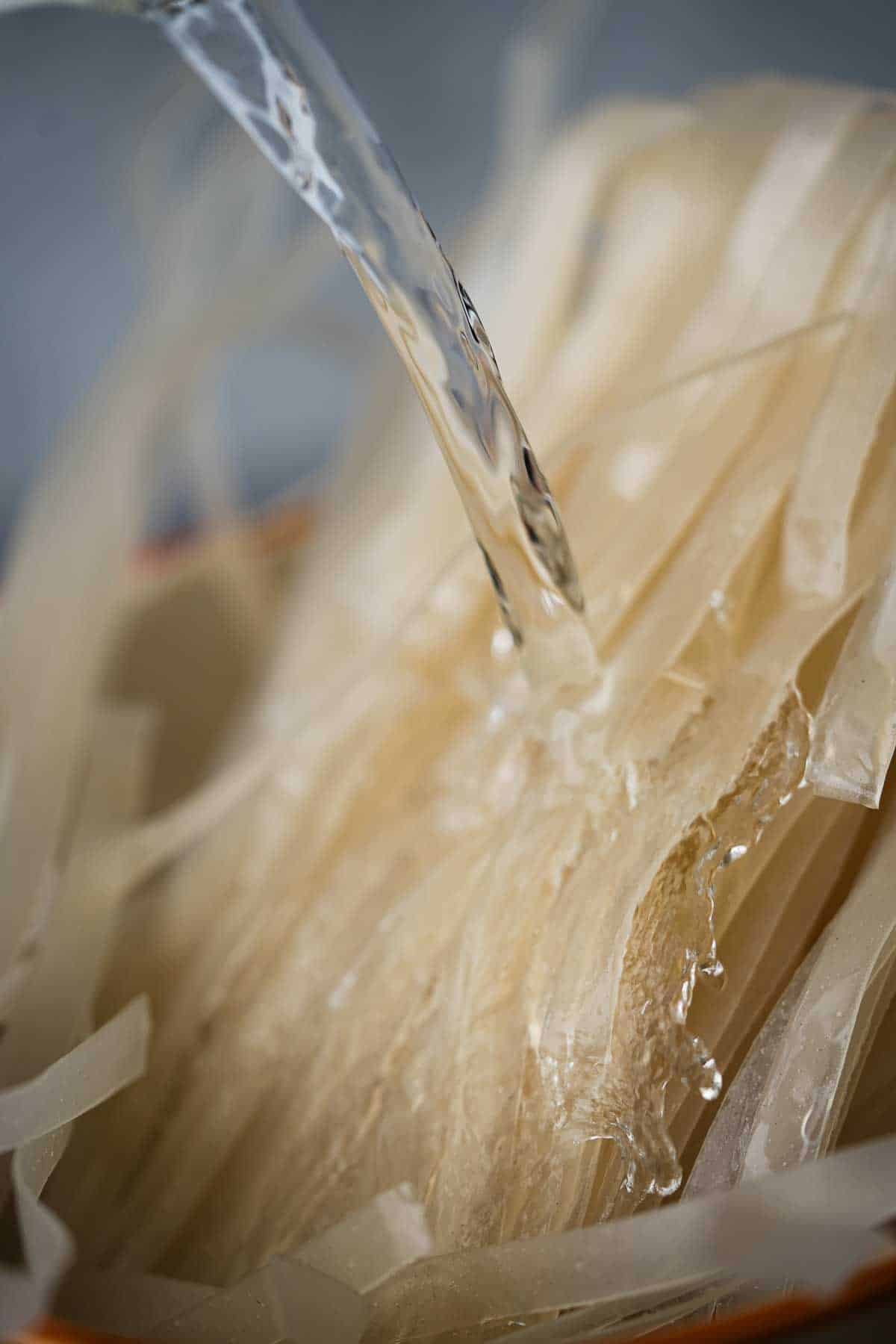
Step One
Tub time for your noods:
If using dried rice noodles, submerge them in warm water for 10-20 minutes until flexible. Drain and set aside.
If you are making this with fresh rice noodles, or ho fun noodles, you can skip this step. Just cut them to size if they are extra huge.

Step Two
Fry Golden Tofu:
In a pan, heat canola, vegetable, or peanut oil over medium-high heat. Fry tofu until golden brown. Remove and set aside. Save the oil for future frying.
To make this using less oil, you can alternatively air-fry the tofu. Toss the tofu strips in 2 teaspoons of oil and air fry at 375°F (190°C) for 16-18 minutes, flipping the pieces at the halfway point until lightly crispy golden brown all over.
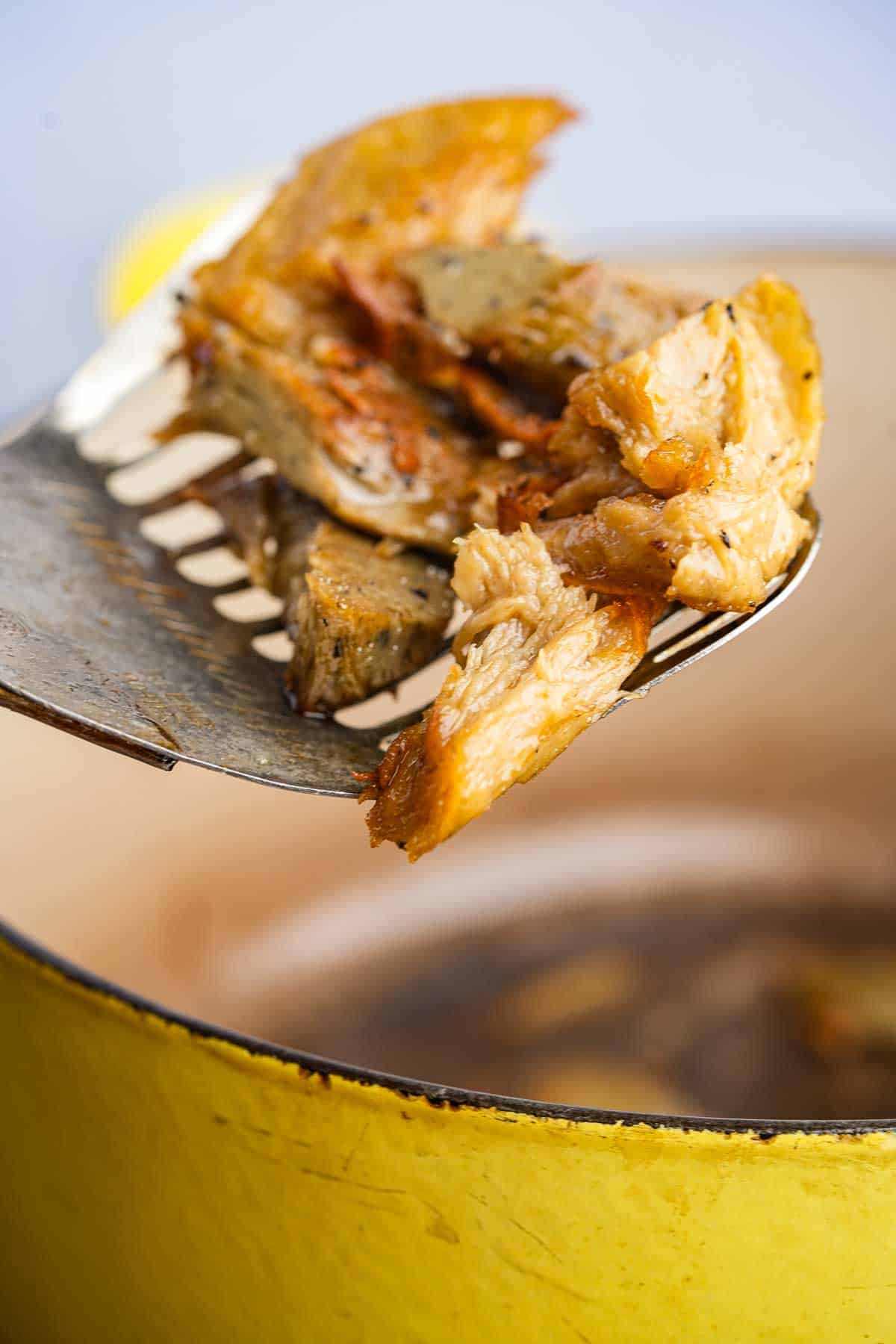
Step Three
Sear Hand-Torn Seitan:
Add sesame oil to the pan. After 90 seconds, stir in hand-torn seitan. Sauté over medium-high heat for 6 minutes until lightly browned.
If you can't eat sesame seeds, substitute with peanut, vegetable, or olive oil.

Step Four
Make your Whole Kitchen Smell Glorious:
Add thinly sliced shallots, minced garlic, and bird's eye chilies. Sauté for about 4 minutes until aromatic.
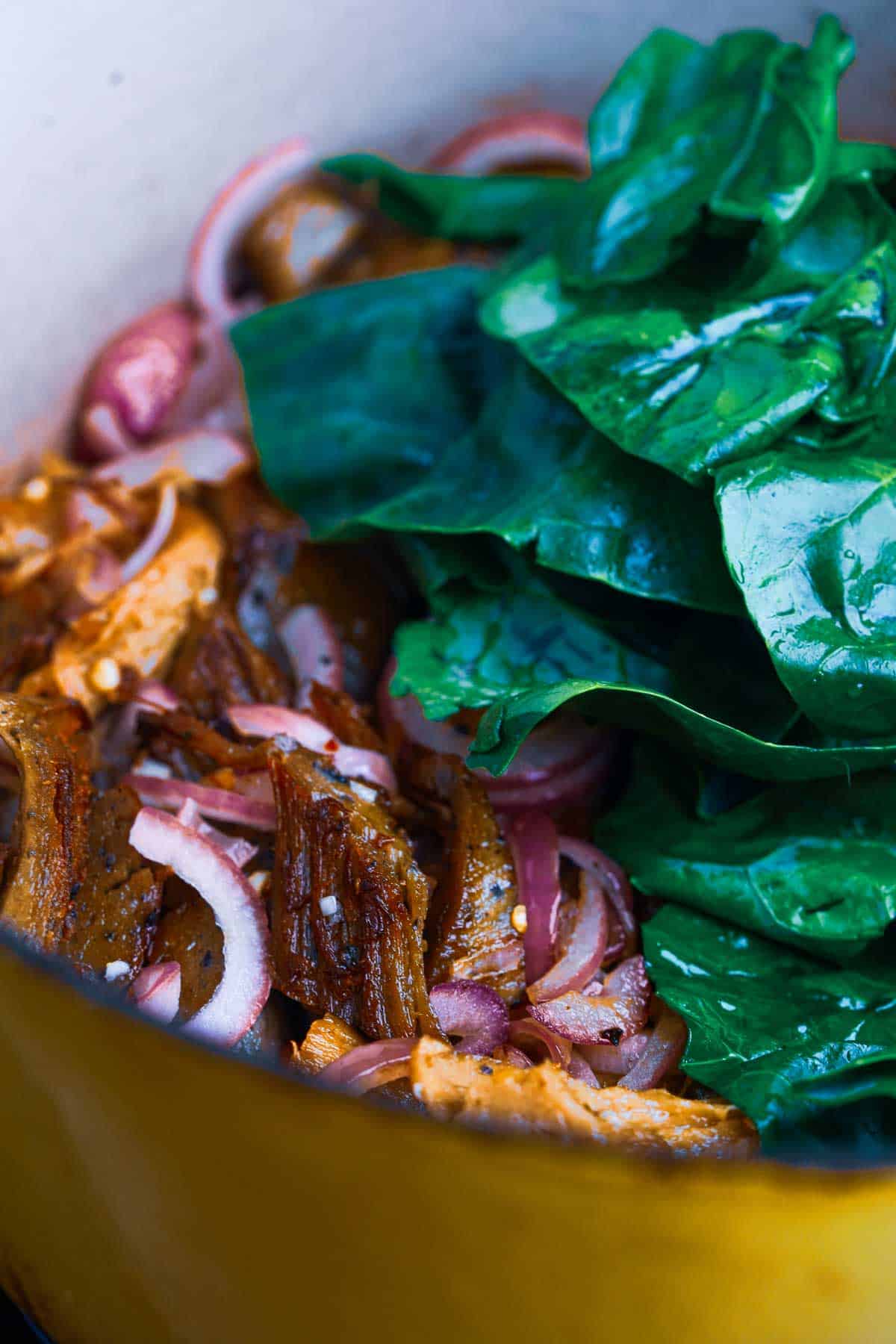
Step Five
Vibrant Broccoli Stir-Fry:
Mix in roughly chopped Chinese broccoli. Stir-fry until tender, yet the Chinese broccoli stems remain somewhat crisp. You don't want 'em lifeless and sad by the time the dish is finished, right?
Step Six
Lost in the Sauce:
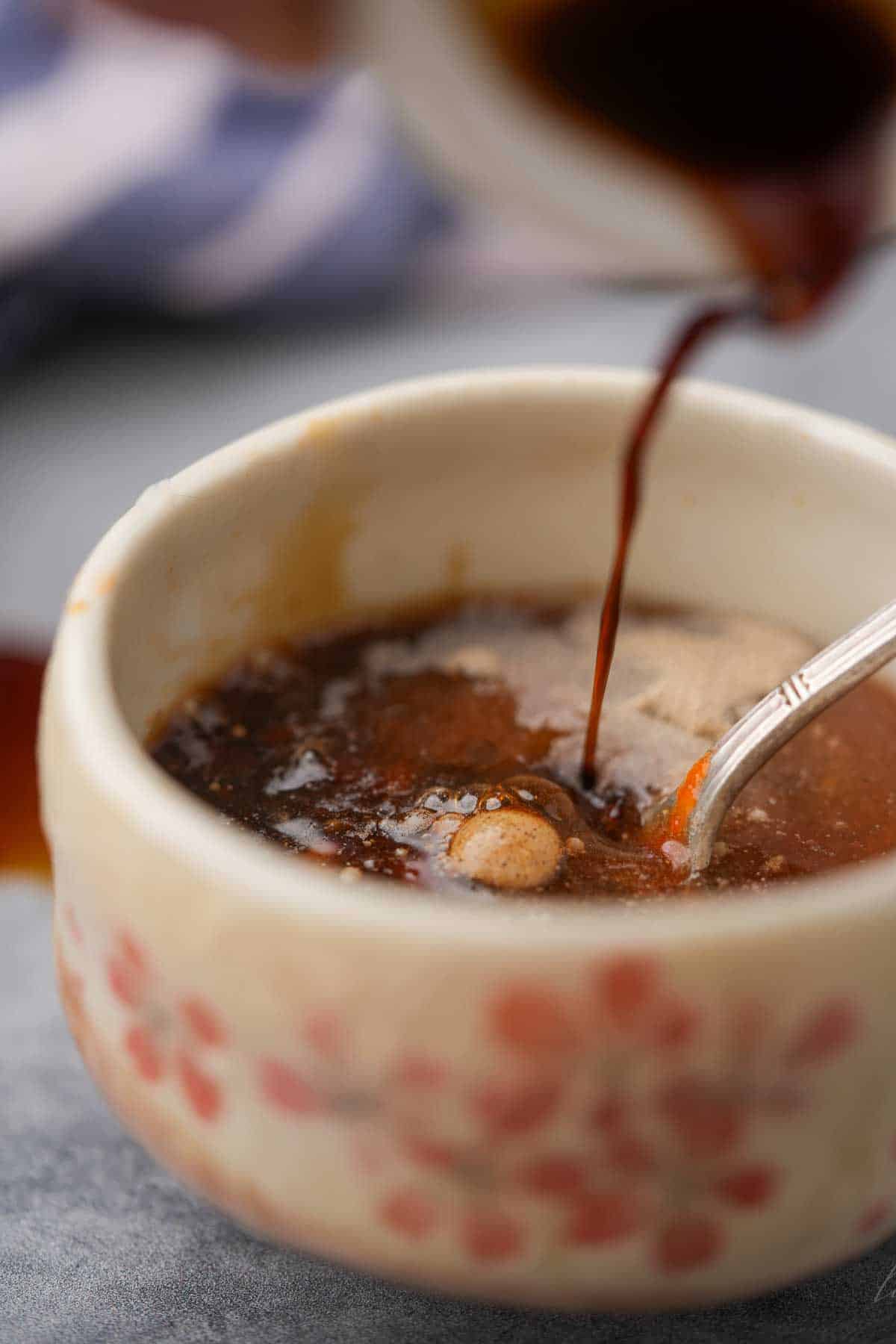
Mix together the stir-fry sauce by combining tamari, vegan fish sauce (or vegan oyster sauce), palm sugar, white pepper, rice vinegar, sriracha, water, and glutinous rice flour in a small bowl. Thoroughly mix with the tines of a fork. If you want a little more sweetness, add a spoonful of vegetarian hoisin sauce.
Step Seven
Everything Comes Together Fast:
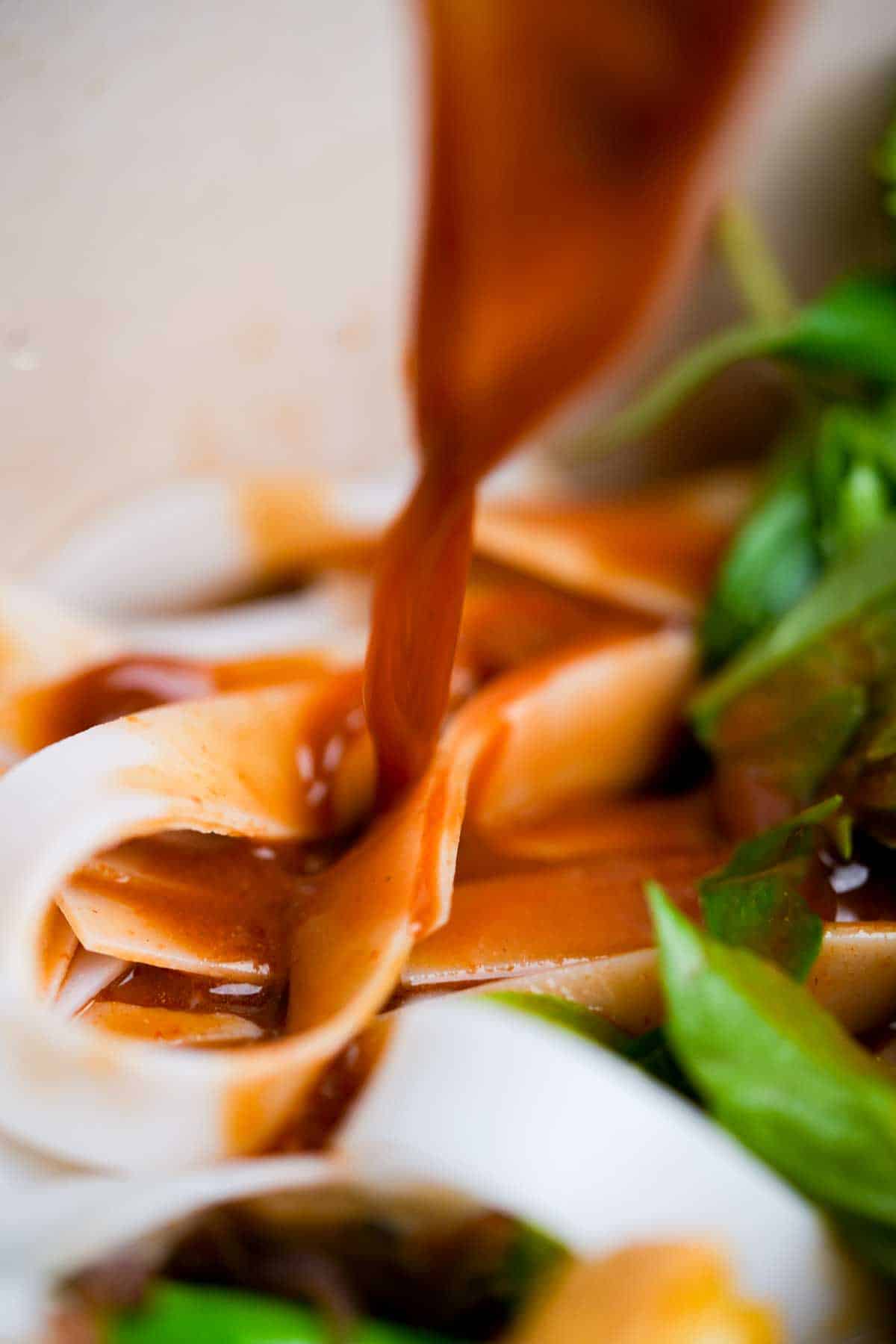
Pour the sauce into the pan, along with the crispy tofu, rehydrated (or fresh) thick rice noodles, and chopped Thai basil. Toss until coated, heated through, and the basil has wilted.
Step Eight
Dress it All Pretty Like:
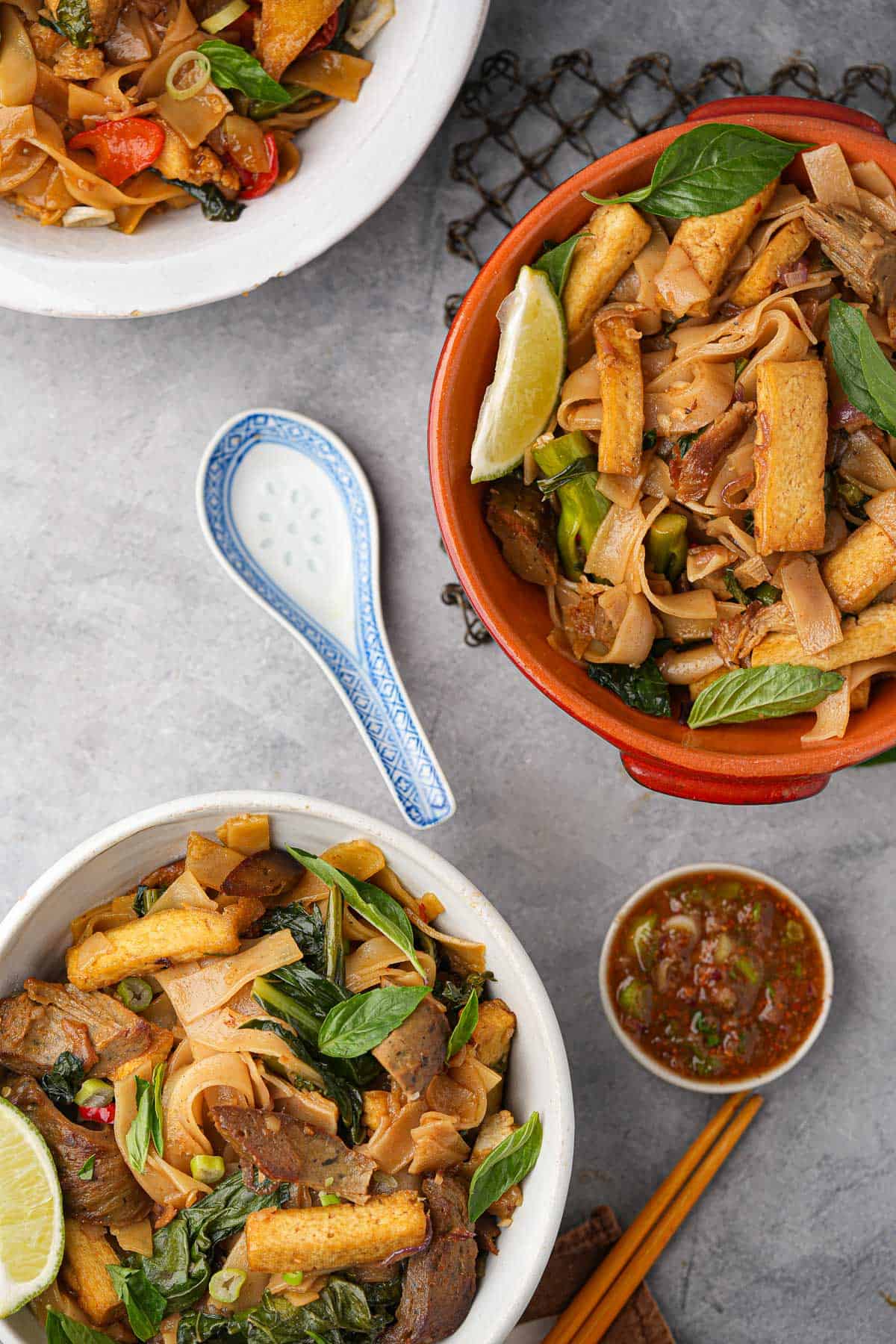
Transfer your stir-fried noodles to an attractive serving dish and garnish with Thai basil leaves, lime wedges, and thinly sliced scallions. Serve along side a steaming bowl of tom kha soup with an ice cold glass of vegan Thai tea!
Serving Ideas
Drizzle with a little vegan nuoc cham if you want a little more garlic and tanginess.
I love serving this steaming noodle dish with Vietnamese spring rolls, Thai spring rolls, or crispy rice dumplings.
You can top the bowl of noodles with miso roasted eggplant, or tempeh mendoan, and either some spicy marinated cucumbers, pickled burdock, pickled green chili, or a side of seitan fried chicken dripping in Korean bbq sauce.
A few refreshing classic Southeast Asian street food desserts to consider after this meal are Vietnamese Kem Chuoi, banh flan, Indonesian Putu Ayu, steamed roti kukus, Malaysian martabak, or bubur cha cha from Singapore.
Top tips
- Seitan Sauté Mastery: Rather than chopping seitan for this dish, I like to rip the pieces by hand, which allows their natural strands of protein to give the pieces a natural, meat-like appearance.
- Noodle Nirvana: Never boil rice noodles that you will stir fry! Achieve noodle perfection by ensuring they are soaked just until pliable. Over-soaking can lead to mushy noodles, so aim for that sweet spot.
- Tofu Textures: Make sure you press the tofu dry before cutting and frying as it will make less mess from splattering oil. If you want to give the tofu the meatiest texture, follow the pressing, freezing, and re-pressing on the thawing method I outline in my tofu katsu recipe.
- Skip Frying (if you want): Make this dish a bit healthier by air-frying the tofu, and also make your kitchen cleanup less of a big deal. To air-fry, toss tofu strips in a light coating of oil (about 2 teaspoons), then air fry at 375°F for 14-16 minutes, flipping halfway, until golden. The air fryer ensures a perfect, oil-free tofu texture for your Pad See Ew.
Recipe FAQs
If you are gluten-free, replace seitan with hand-torn pieces of oyster mushroom, or use young green jackfruit.
If using jackfruit, use canned young green jackfruit in brine. Drain the brine, and firmly squeeze out excess water from the jackfruit in a colander. Brown the jackfruit in this recipe as you would cook the seitan. If you are a jackfruit freak, you are gonna want to make my kathal ki sabji, or vegan sitaw next!
Store your Pad See Ew in an airtight container in the refrigerator. Consume within three days for optimal freshness. Keep in mind the noodles will continue to absorb moisture from the dish, so you may want to add some extra water or vegetable stock to the noodles when you reheat them.
🔥 Stovetop Reheating:
1. Heat a non-stick pan on medium heat.
2. Add a splash of water or vegetable stock to prevent sticking.
3. Gently stir-fry the Pad See Ew until thoroughly heated, ensuring an even distribution of heat for around 5-7 minutes.
🌡️ Microwave Reheating:
1. Place a microwave-safe dish in the microwave.
2. Add a bit of water to maintain moisture.
3. Heat in 1-minute intervals, stirring between each, until the desired temperature is reached. This typically takes 2-3 minutes.
Remember, add fresh garnishes (cilantro, scallions, lime wedges) to your reheated Pad See Ew to add back a little freshness.
My faves to serve with this vegan pad see ew recipe:


Say Hi on Social! 👋
Follow me on Instagram & Facebook for more recipes.

Enter your email & I'll send it to your inbox. Plus, get great new recipes from me every week!
By submitting this form, you consent to receive emails from Cinnamon Snail.

Vegan Pad See Ew
Ingredients
- 500 grams fresh ho fun noodles or 200 g. wide, dried rice noodles, hydrated in warm water for 15-20 minutes.
- 14 oz. extra firm tofu pressed and cut into 1 cm. strips
- ⅔ cup canola oil vegetable oil, or peanut oil for frying
- 2 tablespoons sesame oil
- 1 ½ cups seitan torn into bite-size pieces
- ½ cup shallots thinly sliced
- 2 teaspoons garlic minced
- 3 bird's eye chilies thinly sliced
- 3 makrut lime leaves thinly sliced (optional)
- 2 cups Chinese broccoli roughly chopped
- ½ teaspoon white pepper
- 1 cup Thai basil rough chopped
Stir-fry Sauce
- ¼ cup tamari
- 2 tablespoons vegan fish sauce or vegetarian oyster sauce
- 2 tablespoons palm sugar coconut sugar, or brown sugar
- ½ teaspoon white pepper
- 2 tablespoons rice vinegar
- 1 tablespoon sriracha
- ¼ cup water
- 1 tablespoon glutinous rice flour
Garnishes
- Thai basil leaves
- lime wedges
- Thinly sliced scallions
Instructions
- If using dried rice noodles, soak them in warm water for 10-20 minutes until pliable, then drain and set aside.
- In a pan, heat canola, vegetable, or peanut oil over medium-high heat. Fry tofu strips until they are a golden brown color. Remove from the pan and set aside. Drain and filter the frying oil, and set it aside for future frying projects.
- Add sesame oil to the pan and after 90 seconds when it is hot, stir in hand-torn seitan, and sauté over medium-high heat for 6 minutes until lightly browned all over.
- Add the thinly sliced shallots, minced garlic, bird's eye chilies, and lime leaves. Sauté for about 4 minutes until the ingredients become aromatic.
- Add the roughly chopped Chinese broccoli and continue stir-frying for a few minutes until the broccoli is tender, yet the stems retain a crisp texture.
- Prepare the stir-fry sauce by combining tamari, vegan fish sauce, palm sugar, white pepper rice vinegar, sriracha, water, and glutinous rice flour in a bowl. Ensure the flour dissolves completely by thoroughly mixing using the tines of a fork.
- Pour the sauce into the pan, adding the fried tofu, the hydrated (or fresh) noodles and the chopped Thai basil. Toss the ingredients together until thoroughly coated and heated through, and the basil has wilted.
- Serve the rice noodle dish in an attractive bowl garnished with Thai basil leaves, lime wedges, and thinly sliced scallions.
Notes
Enter your email & I'll send it to your inbox. Plus, get great new recipes from me every week!
By submitting this form, you consent to receive emails from Cinnamon Snail.


h says
My partner said this is richer and more flavorful than any pad see ew he's ever had (it's his usual order at thai restaurants) and that the lime leaves really put it over the top. I used the vegan chicken seitan recipe from this site (incredible), and fresh 25mm rice noodles. For the rice noodles, I just steamed them a bit first to get them to loosen up, as they were packaged in a big block. They were perfect in this dish. Chinese broccoli wasn't available at my market this time so I used water spinach -- fell in love with it after first making the stir-fried water spinach recipe also from this site!
Daniela says
thank you! this looks delicious! so, does this mean that usually this dish in thai restaurants has fish and oyster sauce? I've been ordering it regularly from different restaurants because it looked vegan. Have I been eating fish sauce all along??
Adam Sobel says
I always err on the safe side, and never assume how other people make it. Sadly, it's likely that if you are getting it at non-veg restaurants, it's not vegan by default even if there's no meat added to it.
Meg says
Ohhh yes! This was completely wonderful. Will be doing this again and again. I had fresh tofu and I air fried it. My golly gosh it was so tasty. Thank you yet again Chef Adam
Karla Merrels Lewis says
Better than takeout! I subbed jalapeño for the pepper and left the basil out, because the store was out.
Meg says
A very definite 5 stars do again soon recipe. Completely yum. Thanks Chef.
Adam Sobel says
Yay! So glad you loved this one.
Michele says
Make sure to look at the directions on the dried noodles--I followed directions from the recipe, but the soaking did not sufficiently soften the noodles and actually ruined the dish!! Other than that, delicious!
Adam Sobel says
Oh no! Were they glass noodles like suggested in the recipe, or were they a different kind of noodle? Thicker noodles (like what you might use for making pho or pad thai) tend to need more than just soaking, but cellophane noodles and thin rice noodles always get tender for me after 10 mins or so of soaking in warm water.
hg says
This is my favorite recipe so far. I couldn't believe I was eating something that tasted so much like I have had in some of my favorite Asian restaurants. I can't wait to make it again.
Adam Sobel says
So glad you loved it Harold! That comment means a lot because I think you have cooked nearly everything on the blog! ❤️