

*This post may contain affiliate links. Read more »
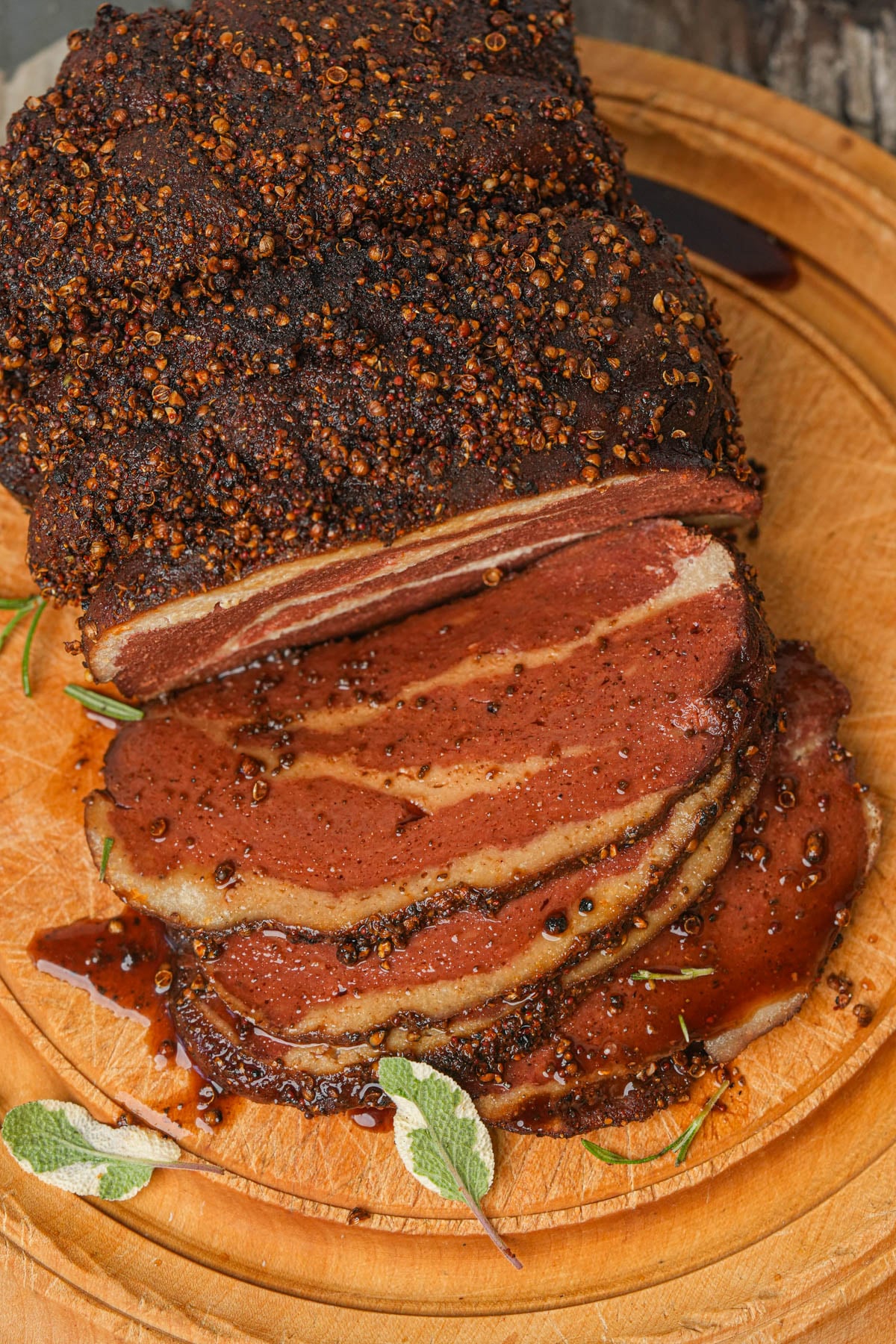
This is a smokey marbled vegan pastrami recipe with glorious bark and the most legendary juicy texture in the galaxy. When I shared it with a vegetarian friend on mine, he seriously thought I had given him meat. It's legit the real deal, just without harm being caused to animals.
Recipe tips tailored to what matters most to you:

Vital wheat gluten is in the lean dough, the fat dough, and even the glue, so this pastrami is basically gluten wearing a fat cap. Skip this recipe instead of hoping to modify it without gluten and ending up with weird warm vegan cottage cheese from hell.

Blend up the fat dough while the lean dough rests, and crush your bark spices while the roast cools in its braise.

Grab a big bag of cheap Anthony's vital wheat gluten, and buy your tamarind concentrate at an Indian or Southeast Asian grocery store instead of the supermarket.

Reach for a reduced-sodium tamari in the dough and the braise. Between the miso, the bark, and the reduced jus, nobody's gonna miss the extra salt.

A few drops of red food coloring can stand in for the red yeast rice powder, or skip it altogether, since it's just there for color.

The first 8-minute knead builds the dough, but the rest and 2-minute second knead are what create that fibrous, meaty grain. Skip it, and you've got yourself a sucky rubbery blob.
Chill the fat dough for 15 -20 minutes before building the roast, so the coconut oil stays firm enough to roll into clean sheets.
Tie the cheesecloth snug every inch with butcher's twine. Any slack lets the gluten puff up and go spongy instead of meaty.
Oodles more tips, step-by-step recipe photos, info on weird ingredients, and FAQs are all still here. I just tucked 'em out of the way so you can start cooking sooner.
When I was a kid, my dad, who was bar mitvahed in Brooklyn during the holocaust, used to recite a kosher butcher's yiddish radio commercial to me as a bedtime lullaby (I have no idea why). The only part in English was "Corned beef, pastrami, buy it for me, mommy!"
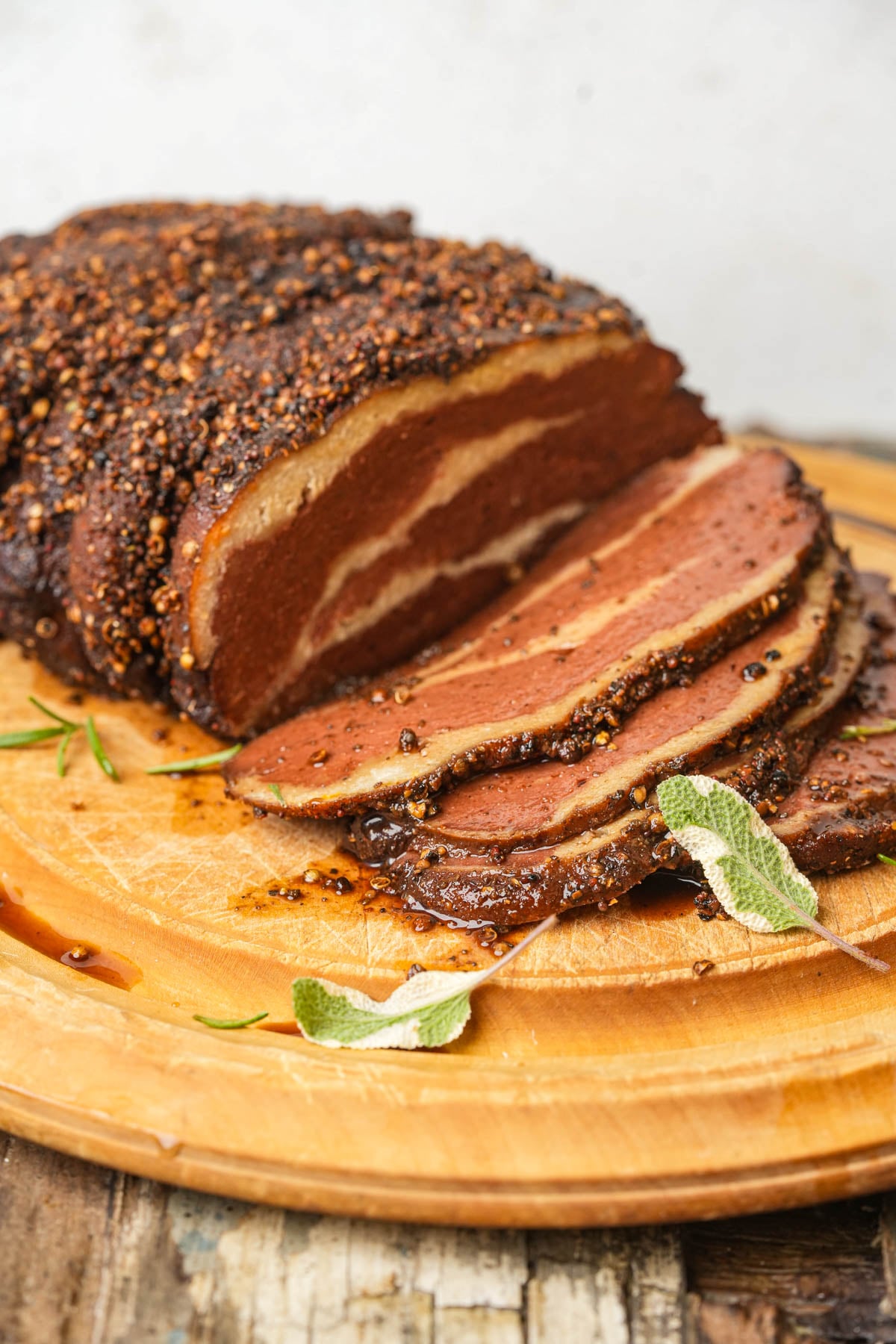
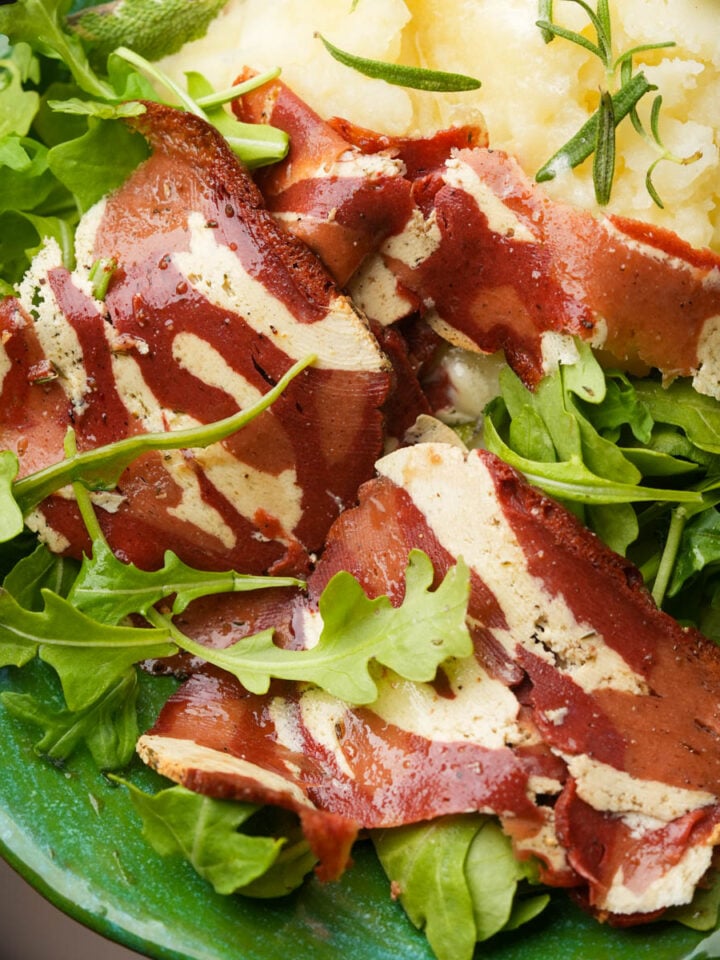
Most vegan pastrami I've come across is just a red-dyed brick of seitan rubbed with pepper, and it looks nothing like the real deal. Real pastrami has streaks of fat between layers of lean meat, so we're making 2 doughs. There's a lean one with mushroom powder, miso, tamarind, and liquid smoke, and a coconut oil fat dough that stays soft instead of melting into nothing.
Stack 'em, wrap 'em in cheesecloth, braise in red wine and porcini stock, then crust it in cracked pepper and coriander until the bark goes nearly black. Then chill it overnight under a little weight, so you can shave it into thin deli slices instead of crumbly chunks.
Like my vegan prosciutto and marbled seitan bacon, this takes a lil patience and skill to master. But the result is so crazy that when I gave some to my vegetarian electrician friend, he was legit scared to eat it, thinking I'd accidentally handed him meat. Pile it high on rye with mustard, and dare anyone to notice the difference.
Jump to:
Why you'll adore this vegan pastrami recipe
🥩 Real Marbling, Not a Red Dye Job: 2 separate doughs, lean and fat, get layered and glued together, so you get actual fat streaks running through every slice. Not some flat red brick pretending real hard.
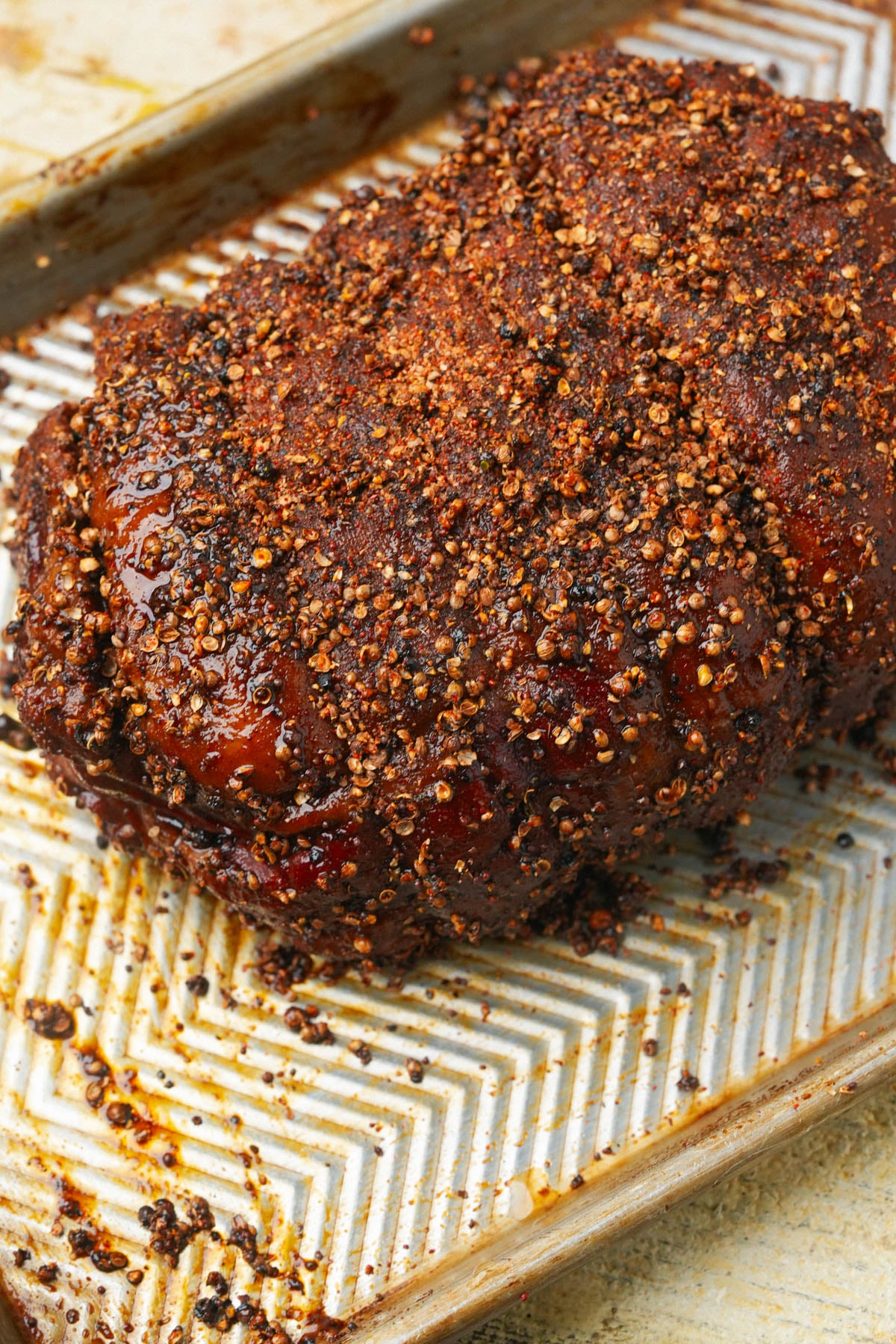
🔥 A Bark With Some Bite: Cracked peppercorns, coriander, and mustard seed get pressed into the outside, then baked or smoked until it's nearly black and crackly. That crust is what makes pastrami taste like pastrami, so don't you dare skimp.
🍷 Braised in Wine and Porcini: Red wine, dried porcini, garlic, and bay leaves make a ridiculously savory braise that the roast soaks up for 90 minutes. Your kitchen is gonna smell like a Lower East Side deli in 1962.
🧊 The Overnight Chill Is Non-Negotiable: Resting it in its own jus for at least 8 hours sets those fat seams and firms it up enough to slice paper thin. Skip it, and you get pastrami crumbles, which sounds like a cereal nobody asked for.
Tested and Approved Worldwide: Like all of my vegan recipes, this one got made by hundreds of testers in dozens of countries, through every stage of the dough-braise-bark saga. Somewhere out there, a guy in Denmark is still waiting for his overnight chill to finish so he can finally make a sandwich.


I'm on my knees staring weirdly into your eyes, asking you in a soothing voice to be my taste-testing partner in crime. Sign up for the recipe testing crew and get early access to new recipes before they're published.
Vegan Pastrami Ingredients
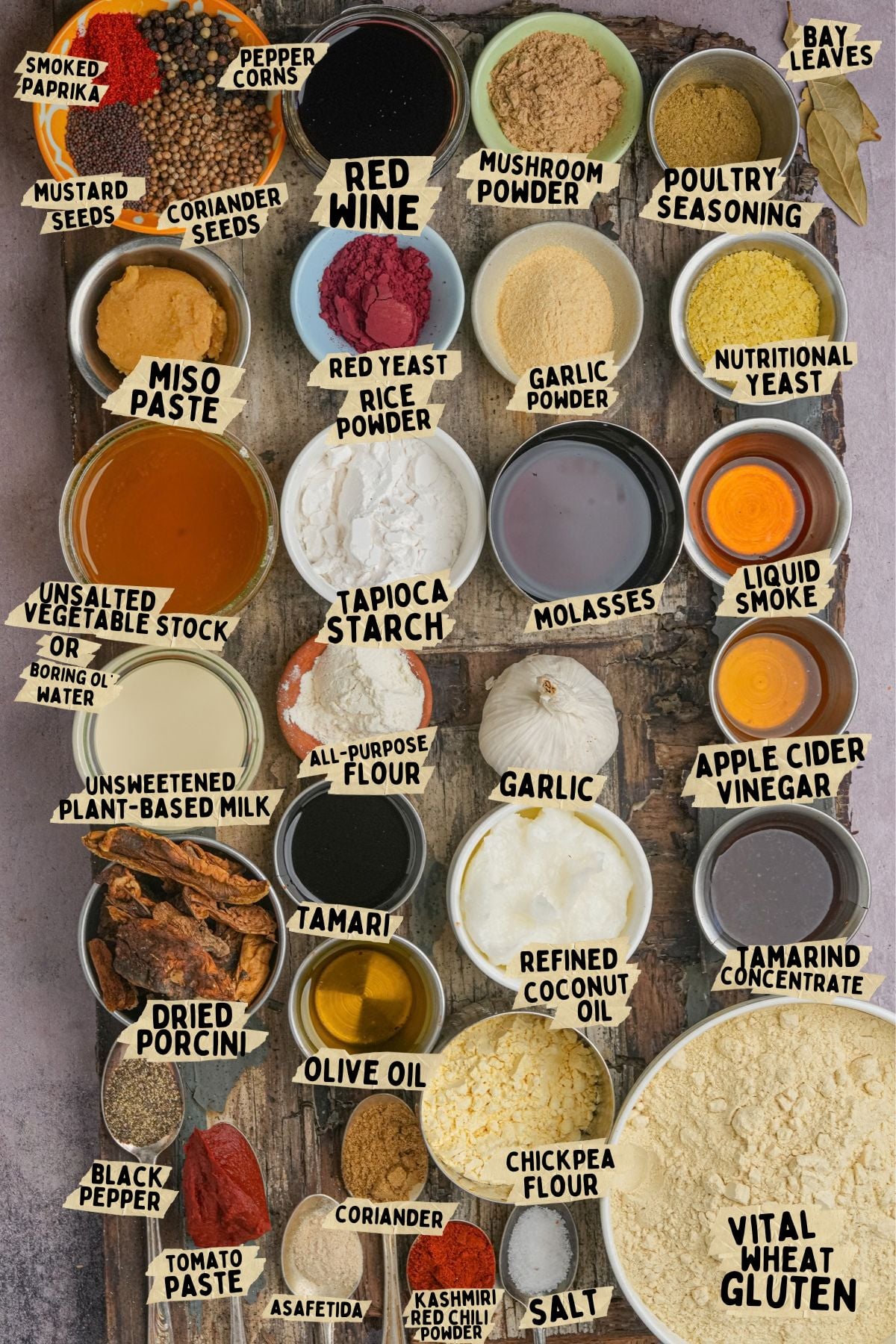
Gluten
Vital wheat gluten's in both the lean dough and the fat dough, giving the whole roast its sliceable, fibrous structure. The lean dough needs the full 8-minute knead, a rest, and a second knead to build the right grain, so don't you dare shortcut it. I usually just grab the cheap Anthony's stuff in the big bag, since there's no reason to spend extra on gluten.
Mushroom Powder
Mushroom powder gives the lean dough a deep, meaty, umami backbone, working quietly alongside the miso and tamarind instead of hogging the spotlight. Grab one with porcini in it if you can. I use it to sneak meaty flavor into a ton of my seitan recipes, like my vegan carne asada and maple mustard glazed vegan ham.
Red Yeast Rice Powder
This is doing all the color work, giving the pastrami that deep, smoked-meat red without any artificial dye. Some folks take red yeast rice powder as a cholesterol supplement, but don't sweat it, the tiny amount in here is just for color. Kashmiri chili powder backs it up with a milder, fruitier color and heat than a sharper chili would bring.
Tamarind Concentrate
Tamarind adds a sour, fruity funk that gives the lean dough that deep, cured-meat flavor, without anyone being able to put their finger on why. Look for the jarred concentrate at any Indian or Southeast Asian grocery store, where it's usually way cheaper than in the "international" aisle at the supermarket.
Liquid Smoke
Used in both the dough and the braising liquid, liquid smoke carries the smoky flavor all the way through the roast rather than leaving it sitting only on the surface crust.
Red Wine
3 cups go into the braise, adding acidity and depth that the roast soaks up over its 90-minute simmer. Pick something dry enough that you'd pour yourself a glass while you wait (for quality control purposes, obv.).
Lots of wines are secretly filtered with animal stuff like egg whites, gelatin, casein, or isinglass (fish bladders, yuck), and it's never on the label. Look up your bottle on barnivore.com before you buy to make sure it's vegan.
*See the recipe card at the bottom of the page for exact quantities, nutritional info, and detailed cooking directions.
Variations
Smoked Instead of Baked
If you have access to a smoker, swap the oven step for an hour at 250°F (120°C), brushing with the reduced jus at the halfway mark. The low, slow smoke pushes the flavor even further in the direction of a real deli pastrami.
Corned Beef
Want the deli vibe without the 2-dough, overnight marbling saga? My vegan corned beef is a single tofu and white bean seitan loaf, simmered, then baked under an Old Bay and hoisin baste until it's melt-in-your-mouth tender, and it's begging to get piled onto rye for a Reuben.

Grab my easy-yo-use app that builds your whole week with real, chef-tested vegan dinners in 30 seconds, customized to your budget, time, and taste, with a shopping list sorted by aisle.

How to make seitan pastrami
This one unfolds in stages: build 2 doughs, layer them into a single roast, braise, crust, and chill. Follow the steps and tips below, or jump to the recipe card if you just need the numbers.
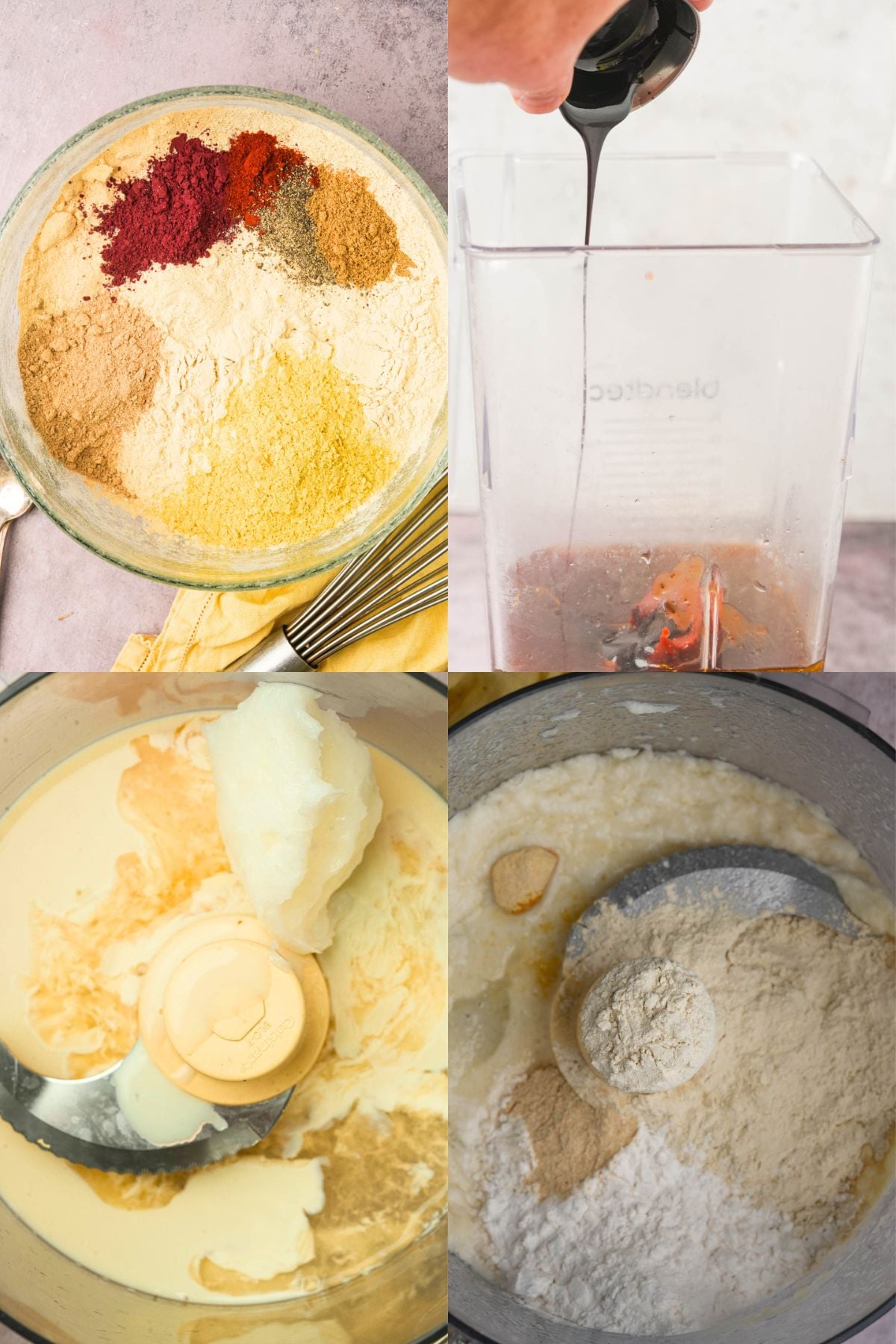
Step One
Gluten for Punishment:
Whisk the dry meat dough ingredients together in a large bowl.
Step Two
Wine-ona Ryder:
Blend the wet meat dough ingredients in a blender until smooth, then pour them into the dry mix.
Knead in a stand mixer on medium-low for 8 minutes until the dough is firm, rubbery, and pulls into ropey strands. Cover and rest for 15 minutes, then mix for 2 more minutes to build the grain.
Step Three
Fat Chance:
In a food processor, blend the coconut oil, cold soy milk, and apple cider vinegar for 90 seconds until it turns into a thick white purée.
Step Four
Pastramia Farrow:
Add the dry fat dough ingredients and process for 30 seconds just until a dough forms. Transfer to a container and refrigerate for 15-20 minutes to firm the coconut oil back up.
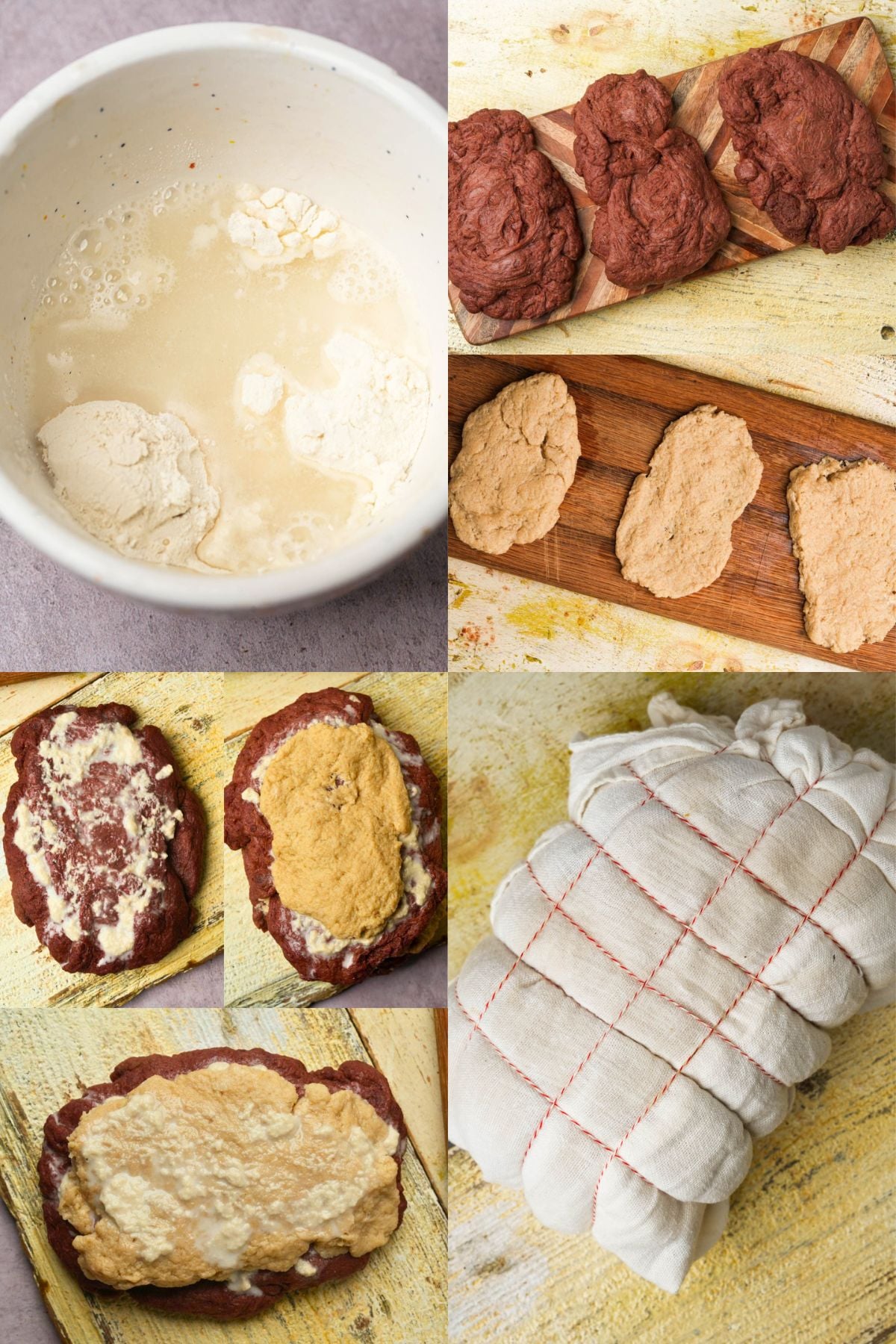
Step Five
Glue-ten:
Whisk together the "glue" ingredients with the tines of a fork in a small bowl.
Step Six
Stack Overflow:
Divide the lean dough into 3 pieces and flatten each into a rough 7x5-inch slab, about ½ inch thick.
Divide the fat dough into 2 small pieces and 1 larger piece, pressing the small pieces about ⅛ inch thick and the large piece about ¼ inch thick, keeping all of them slightly uneven on purpose.
Step Seven
A Tisket a Tasket, There's Fake Brisket in Your Basket:
Stack the layers in this order, brushing a thin coat of glue between each one: meat slab, thin fat sheet, meat slab, thin fat sheet, meat slab, thick fat cap. Let the inner fat sheets stop short of the edges in spots so the seams look natural.
Step Eight
Dress Up:
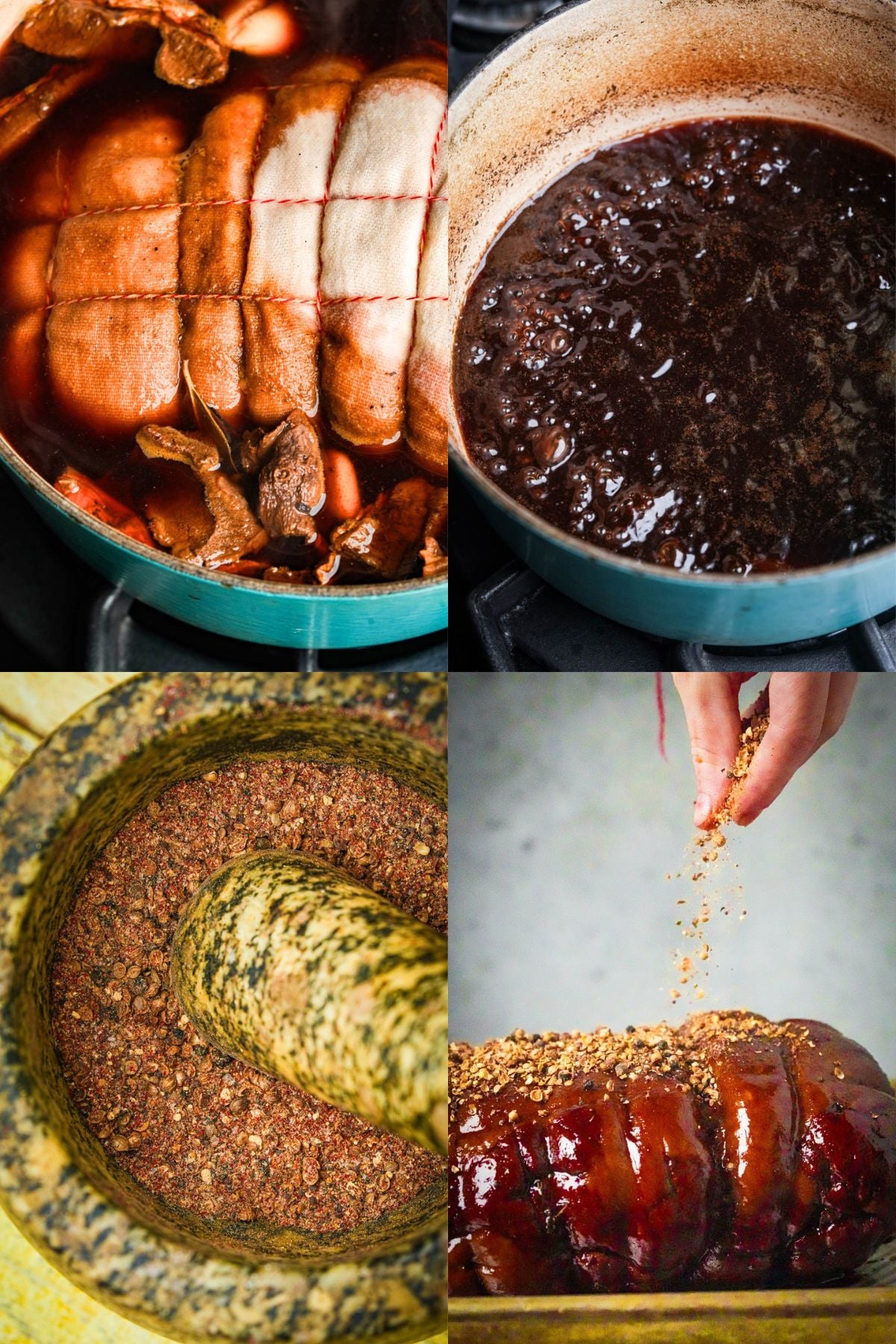
Press the stack down firmly and push the sides in to form a tight, tall brisket shape about 3-4 inches thick. Wrap it tightly in 2 layers of cheesecloth and tie it with butcher's twine every inch or so, keeping it snug so the gluten does not puff up and go spongy.
Step Nine
Sim Simmer, Who's Got the Keys to my Bimmer:
Bring the braising liquid ingredients to a boil in a dutch oven. Lower in the roast, reduce the heat to the lowest possible simmer, cover, and cook for 90 minutes, flipping every 15 minutes. Turn off the heat and let the roast cool in the liquid for 1 hour.
Step Ten
Jus the Two of Us:
Lift out the roast and strain the braising liquid. Simmer the strained braising liquid over medium-high heat for about 20-25 minutes until reduced to about 1 cup.
Step Eleven
Joan of Bark:
Meanwhile, heat the oven to 325°F (165°C), or a smoker to 250°F (120°C). Unwrap the roast and pat it dry. Coarsely crush the peppercorns, coriander seeds, and mustard seeds, then mix with the smoked paprika, garlic powder, and salt.
Step Twelve
Despicable PistraMe:
Whisk the olive oil and molasses together, brush it over the roast, then press the rub on hard, especially on the fat cap.
Step Thirteen
Bake to the Future:
Set the roast on a rack over a sheet pan. Bake for 30-35 minutes, brushing with the reduced jus at the 20-minute mark (or smoke for 1 hour, brushing with jus at the halfway point). It's done when the crust is near-black and crackly.
Step Fourteen
Stabby Stabby
Cool the roast to room temperature, then refrigerate it in a container for at least 8 hours. Slice thinly across the layers, then reheat by steaming for 2-3 minutes or warming in a skillet with a splash of jus.
Serving Ideas
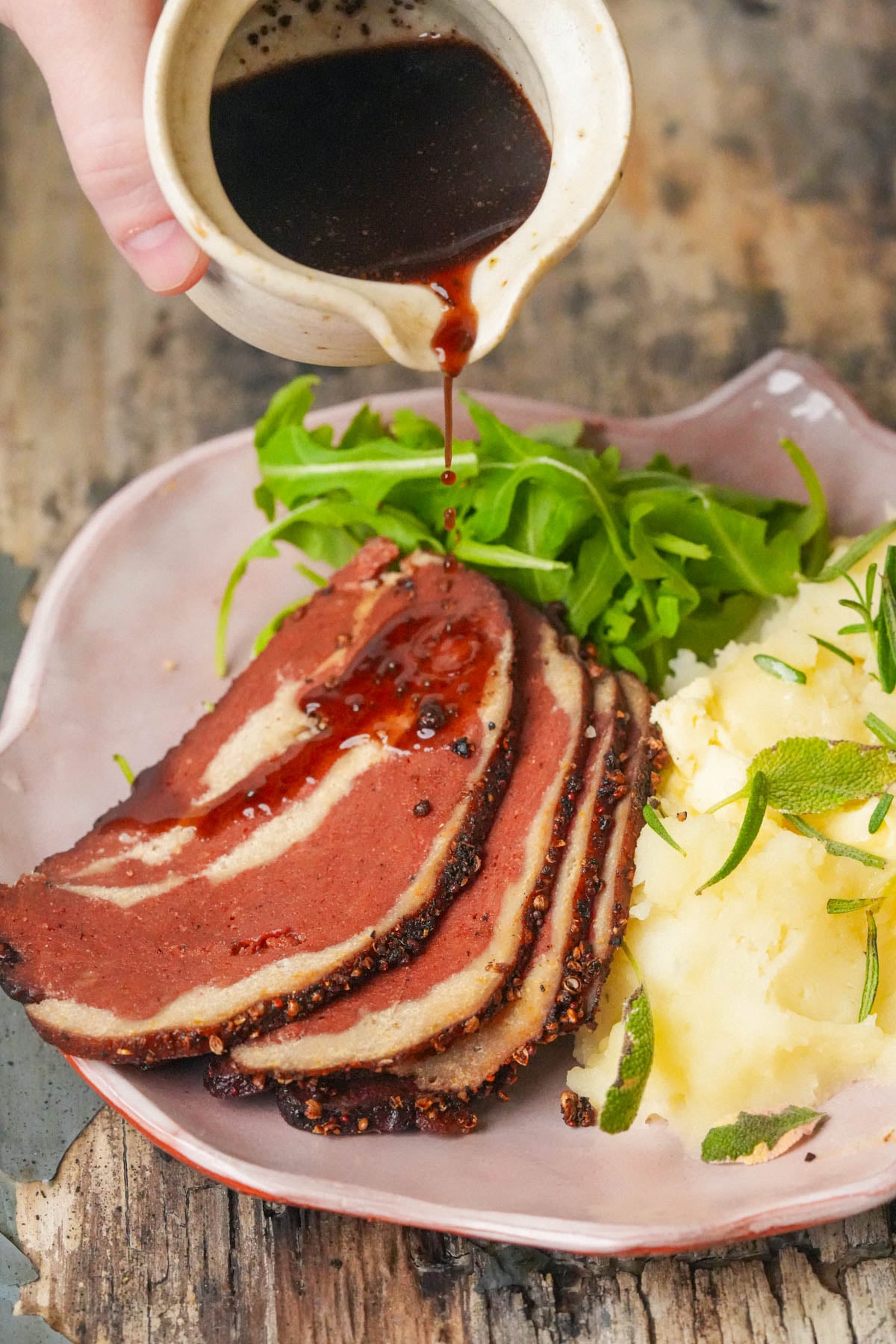
This is legit deli food, so set your table up like you're running a Lower East Side counter with a grumpy-ass guy named Lou behind it. Obviously, this is begging to be piled onto a vegan Reuben.
Put a bowl of vegan chopped liver out with rye crackers or crudités, plus some carrot lox with everything bagel seasoning, and you've got a drop-dead bangin' spread with 2 kinds of smoky goodness going at once.
If people are hanging around before the sandwiches land, start 'em off with a bowl of vegan borscht. And a scoop of vegan truffle mac and cheese next to a pile of pastrami? That covers the comfort food and deli nutritional pyramid you must survive on from here on out in 1 shot.
Top tips
- Don't Rush the Second Knead: The first 8-minute knead builds the dough, but the rest and 2-minute second knead are what create that fibrous, meaty grain. Skip it, and you've got yourself a rubbery blob that not a single goose wants to put on rye.
- Keep the Fat Dough Cold AF: Chill the fat dough for 15-20 minutes before building the roast, so the coconut oil stays firm enough to press into clean sheets. If it gets warm and mushy, it'll smear into the lean dough like cheap lip gloss instead of staying in separate marbled layers.
- Wrap It Tight, No Slack: Tie the cheesecloth snug every inch with butcher's twine. Any slack lets the gluten puff up and go spongy instead of dense and meaty.
- Flip It Every 15 Minutes: Turn the roast regularly while it braises so every side soaks up flavor, not just the bottom.
Recipe FAQs
This usually means there was too much slack in the cheesecloth wrap, letting the gluten expand as it braised, but it can also happen if you cook it at too high of a temperature. Wrap it tight and tie it firmly every inch to keep the structure from puffing up.
Kneading by hand works, it just takes longer and more effort to get the dough firm and ropey. Expect to knead for closer to 12-15 minutes by hand to hit the same texture you would get from 8 minutes in a stand mixer.
You can also do it for 3 full minutes in your food processor, but this is an easy way to destroy your FP's motor, so only do that if you have a POS thrift store food processor (like I do) that you don't care about that much.
Nope, the oven gets you a seriously great crust, and a smoker is just a bonus round for extra smokiness. If you've got one, smoke the crusted roast at 225°F (107°C) with hickory, oak, or a little cherry for 1 ½-2 hours, until the bark goes dark and crackly.
You can, but the slices will be warmer, softer, and more likely to fall apart instead of holding together as clean pieces. The overnight chill is what gives you that classic thin deli slice.
It's mainly there for color, so you can leave it out if you can't find it, and the flavor won't really change. A few drops of red food coloring work fine in its place, or just skip it and live with a slightly less rosy pastrami.
🧊 In the Fridge
Store sliced or whole pastrami in an airtight container with a splash of the reserved jus for up to 6 days. The jus keeps the slices from drying out as they sit.
❄️ In the Freezer
Wrap slices tightly and freeze in a sealed container for up to 3 months. Thaw overnight in the fridge before reheating.
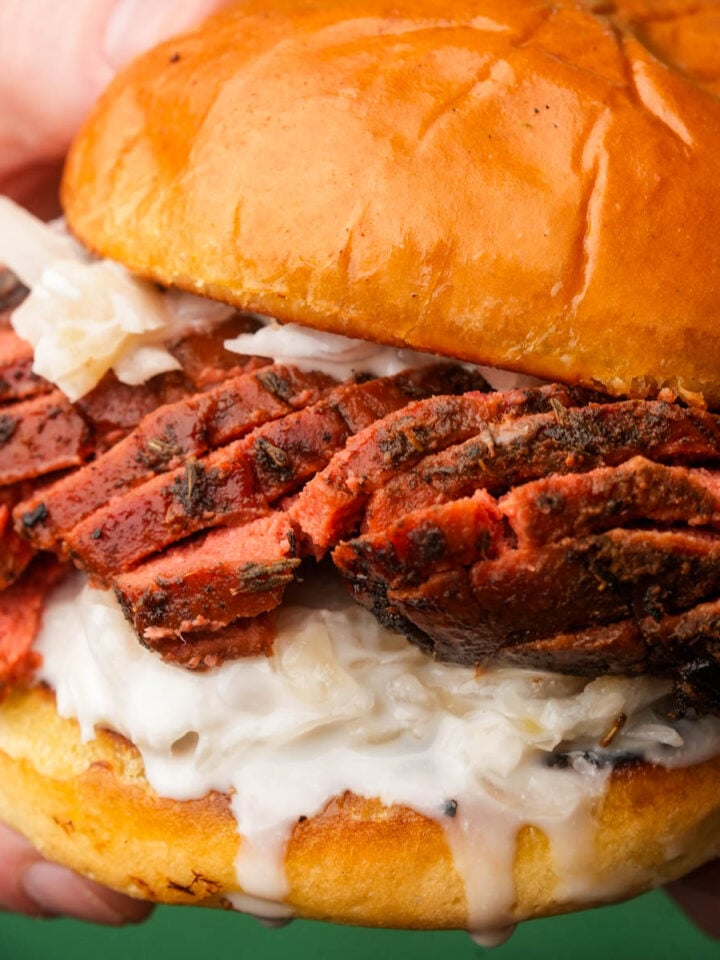
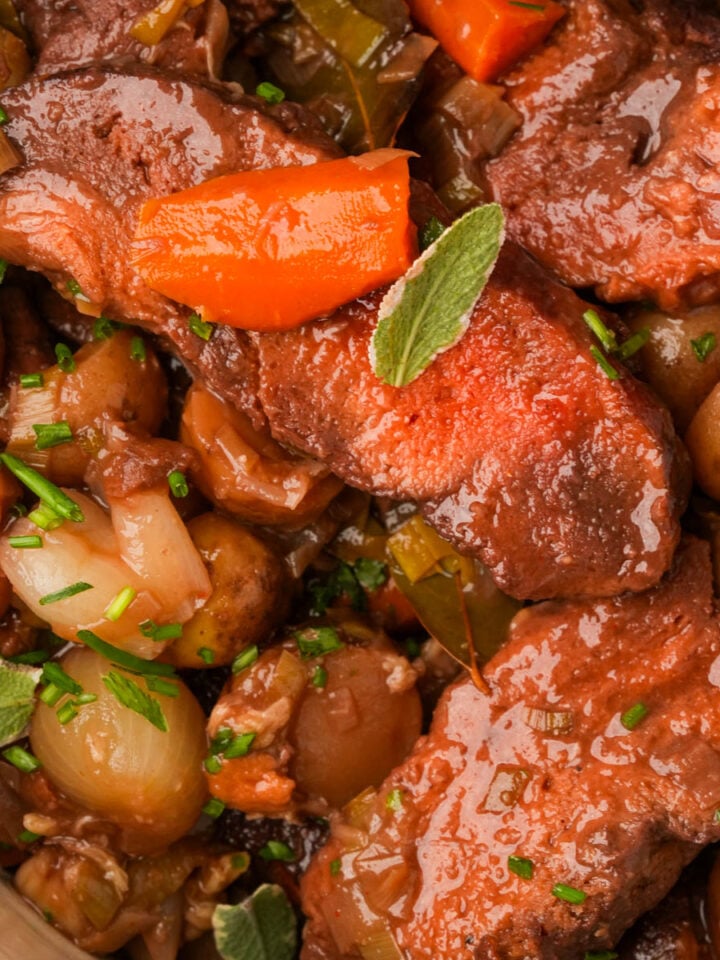
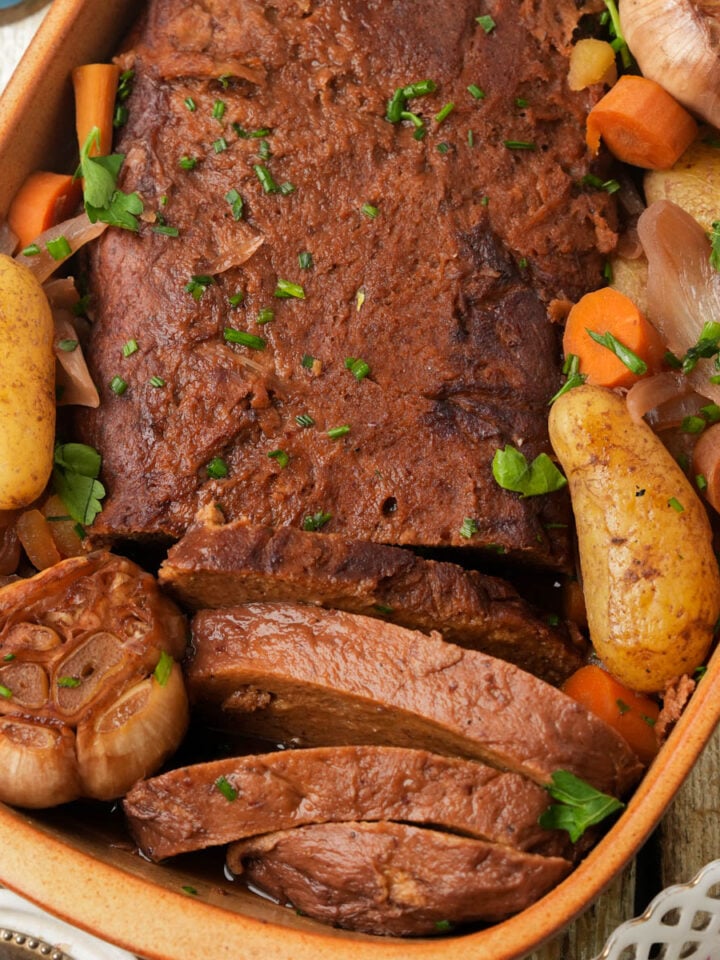
You'll also love these Vegan Beef Recipes:


Enter your email & I'll send it to your inbox. Plus, get great new recipes from me every week!
By submitting this form, you consent to receive emails from Cinnamon Snail.
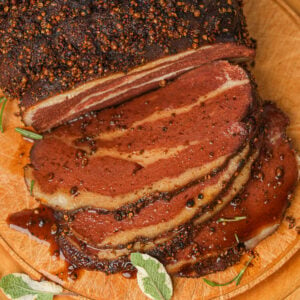
Vegan Pastrami Recipe
Equipment
- blender (optional)
- Butcher's twine
- Smoker (optional)
Ingredients
For the Meat dough:
- 2 ½ cups vital wheat gluten
- ⅓ cup chickpea flour
- 4 teaspoons mushroom powder
- 2 tablespoons nutritional yeast
- 2 teaspoons garlic powder
- 1 tablespoon red yeast rice powder
- 1 teaspoon Kashmiri red chili powder
- 1 teaspoon coriander
- ½ teaspoons black pepper
- ⅔ cup ice-cold water
- 1 cup red wine
- 2 tablespoons tamari
- 2 tablespoons miso paste
- 1 tablespoon tomato paste
- 1 tablespoon tamarind concentrate
- 2 teaspoons molasses
- 1 ½ teaspoon liquid smoke
- 2 tablespoons olive oil
For the Fat dough:
- ⅓ cup refined coconut oil melted, then cooled to room temperature
- ⅓ cup unsweetened soy milk cold
- 2 teaspoons apple cider vinegar
- ¾ cup vital wheat gluten
- 3 tablespoons tapioca starch
- ½ teaspoon salt
- ½ teaspoon asafetida
- ¼ teaspoon garlic powder
For the "Glue" (Yummm?):
- 1 tablespoon all-purpose flour
- 1 tablespoon vital wheat gluten
- ¼ cup water
For the Braising liquid:
- 3 cups red wine
- 4 cups unsalted vegetable stock or water
- 0.5 oz. dried porcini mushrooms about ½ cup
- 6 garlic cloves smashed
- 3 bay leaves
- 1 tablespoon poultry seasoning
- 2 tablespoons tamari
- 1 teaspoon liquid smoke
For the Pastrami bark:
- 2 tablespoons peppercorns
- 5 teaspoons coriander seeds
- 1 teaspoon mustard seeds
- 1 tablespoon olive oil
- 1 teaspoon blackstrap molasses
- 2 teaspoons smoked paprika
- 1 teaspoon garlic powder
- ½ teaspoon salt
Instructions
Make the meat dough:
- In a large bowl, whisk together the vital wheat gluten, chickpea flour, mushroom powder, nutritional yeast, onion powder, garlic powder, red yeast rice powder, Kashmiri red chili powder, coriander, and black pepper.
- In a blender, blend the ice-cold water, wine, tamari, red miso, tomato paste, tamarind concentrate, blackstrap molasses, liquid smoke, and olive oil until smooth. Pour the wet mixture into the dry mix.
- Knead in a stand mixer on medium-low for 8 minutes, until the dough is firm and rubbery and pulls into ropey strands.
- Cover and rest for 15 minutes, then mix for 2 more minutes. That second knead gives you the grain we are looking for.
Make the fat dough:
- In a food processor, blend the melted coconut oil, cold soy milk, and apple cider vinegar for 90 seconds, until it turns into a thick white emulsion.
- Add the vital wheat gluten, tapioca starch, salt, asafetida, and garlic powder. Process for 30 seconds, just until a dough forms.
- Transfer to a container and refrigerate for 15 to 20 minutes to stiffen the coconut oil.
Build the roast:
- In a small bowl, stir together the all-purpose flour, vital wheat gluten, and water to make the glue.
- Divide the meat dough into 3 pieces (about 12 oz. each) and flatten each into a rough 7x5-inch (18x13 cm) slab, about ½ inch (1.25 cm) thick.
- Divide the fat dough into 2 small pieces and 1 larger piece. I like to split the dough in half, then cut one of those halves into quarters. Press each small piece to about ⅛ inch (3 mm) thick, making them slightly uneven on purpose. Press the large piece to about ¼ inch (6 mm) thick for the fat cap, again keeping it somewhat uneven.
- Stack the layers in this order, brushing a very thin coat of glue between each one: meat slab, thin fat sheet, meat slab, thin fat sheet, meat slab, thick fat cap. Let the inner fat sheets stop short of the edges in spots so the seams look natural and the meat encapsulates the inner fatty layers.
- Press the stack down firmly and push the sides in to form a tight, tall brisket shape about 3 inches (7.5 cm) thick. Keep the shape wide and flat-ish.
- Wrap it tightly in 2 layers of cheesecloth and tie with butcher's twine every inch (2.5 cm) or so. Too much slack lets the gluten puff up and go spongy, which sorta sucks.
Braise:
- In a Dutch oven, bring the red wine, vegetable stock (or water), dried porcini mushrooms, smashed garlic cloves, bay leaves, poultry seasoning, tamari, and liquid smoke to a boil.
- Lower in the roast and reduce the heat to the lowest possible simmer. Cover the pot and cook for 70 minutes, flipping the seitan over once or twice during the time it cooks.
- Turn off the heat and let the roast cool in the liquid for 1 hour.
Reduce the jus:
- Lift out the roast and strain the braising liquid.
- Simmer the strained liquid over medium-high heat until reduced to about 1 cup (240 ml).
Bark it:
- Heat the oven to 325°F (165°C), or a smoker to 250°F (120°C). Unwrap the roast and pat it dry.
- In a mortar and pestle, coarsely crush the black peppercorns, coriander seeds, and mustard seeds. Mix in the smoked paprika, garlic powder, and salt.
- In a small bowl, whisk the olive oil and blackstrap molasses together. Brush it over every surface of the roast, then press the rub on hard, especially on the fat cap.
- Set the roast on a rack over a sheet pan. Bake for 30-35 minutes, brushing with the reduced jus at the 20-minute mark (or smoke for 1 hour, brushing with jus at the halfway point). It's done when the crust is near-black and crackly.
Chill and serve:
- Cool the roast to room temperature, then refrigerate it in a container with ¼ cup (60 ml) of the reduced jus for at least 8 hours. Don't skip this, because it sets the fat seams and firms the inside enough to slice cleanly.
- Slice thinly across the layers, and serve with additional warm jus poured on top.
- To reheat, steam the slices for 2-3 minutes, or warm them in a skillet over medium-low heat with a splash of jus.
Notes
Enter your email & I'll send it to your inbox. Plus, get great new recipes from me every week!
By submitting this form, you consent to receive emails from Cinnamon Snail.
Leave a Reply