

*This post may contain affiliate links. Read more »
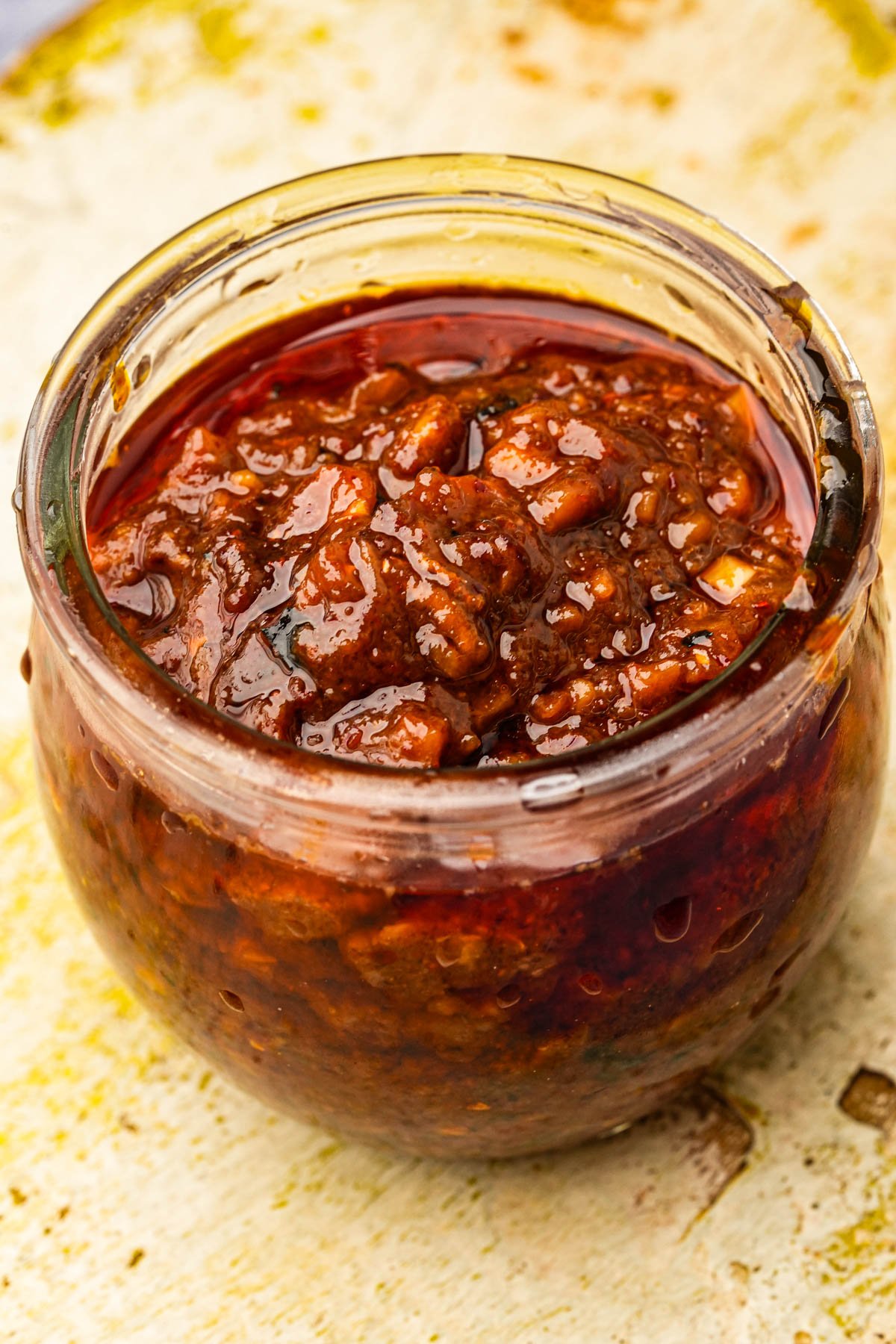
If you love fish, then why on earth would you eat the poor lil' dudes? Forget making your kitchen smell like low tide-- this vegan shrimp paste recipe delivers all the umami-packed, sweet-salty fire of traditional Filipino bagoong without harming a hair on the head of a single sea creature (uh, assuming we can all agree that fish have hairstyles…). It's ready in under 20 minutes and is not just deeply yummy, but actually great for you too!
Recipe tips tailored to what matters most to you:

Shaoxing wine is usually made with wheat, so use cooking sake instead. Stick with tamari, and check that your miso is rice-based and not barley.

It's 20 minutes and keeps 6 weeks, so make a double batch once and be done. Grate the onion on a food processor disc if you've got one.

White button mushrooms do the same job here as oyster mushrooms for a lot less. Grind up a nori sheet instead of buying a bag of aonori too.

Coconut aminos swap in 1:1 for the tamari and carry a bit less sodium. You can also start with half the oil and add more only if you want for better consistency.

Ground nori sheets replace the aonori and white button mushrooms replace the oyster ones. Gochugaru is the best in this, but Aleppo pepper flakes and crushed red pepper flakes are good subs with slightly different heat levels.

Grated onion breaks down faster than chopped and integrates more smoothly into the paste.
Miso is sensitive to heat. Stir it in gently over medium-low heat so you don't cook off its subtle fermented notes.
A properly sterilized jar keeps your vegan bagoong funkalicious and fresh for up to 6 weeks. Always use a clean, dry metal spoon.
Oodles more tips, step-by-step recipe photos, info on weird ingredients, and FAQs are all still here. I just tucked 'em out of the way so you can start cooking sooner.
Filipino-style bagoong is often used to spike dishes like ginataang gulay, tokwa't baboy, and laing with the fermented intensity that makes Filipino food so dang dope and craveable. But this plant-based shrimp paste swaps the fishies out for a nicely balanced blend of mushrooms, shaoxing wine, miso, tamari, and sea veg. to deliver a similar depth, minus the avoidable violence.
Even better? This bad boy keeps in the fridge for up to 6 weeks, so you can batch it once and flavor bomb your meals on demand. No fermentation, no steps you can't follow if you suck at cooking, no problem to smash this stuff night and day in your recipes.


Super tasty!! It's really good for topping different noodle dishes, too! And keeping for 6 weeks means you can batch this bad boy and elevate weeknight dinners on demand!
Jump to:
Why you'll adore this vegan bagoong recipe
✊ Vegan AF & GF: Like all of my vegan Filipino recipes, this one is gloriously free of shrimp, anchovy paste, fish sauce, and any other funky sea-stank components. It also fits snugly into your collection of gluten-free vegan recipes, because bagoong shouldn't come with an EpiPen or require you to Google the difference between tamari and soy sauce at 2 am.
🧕 Fermentation-Free: No waiting days for flavor to develop. This cooks up in 15 minutes, and it's ready to party.
🍿 Batch and Stash: Keeps for 6 weeks in the fridge if you use a clean spoon and a sterilized jar.
Tested and Approved Worldwide: Like all of my vegan recipes, this one was tested and trialed by a massive team of hundreds of recipe testers and came back with zero complaints (except for "can I get more?").


I'm on my knees staring weirdly into your eyes, asking you in a soothing voice to be my taste-testing partner in crime. Sign up for the recipe testing crew and get early access to new recipes before they're published.
Vegan shrimp paste Ingredients
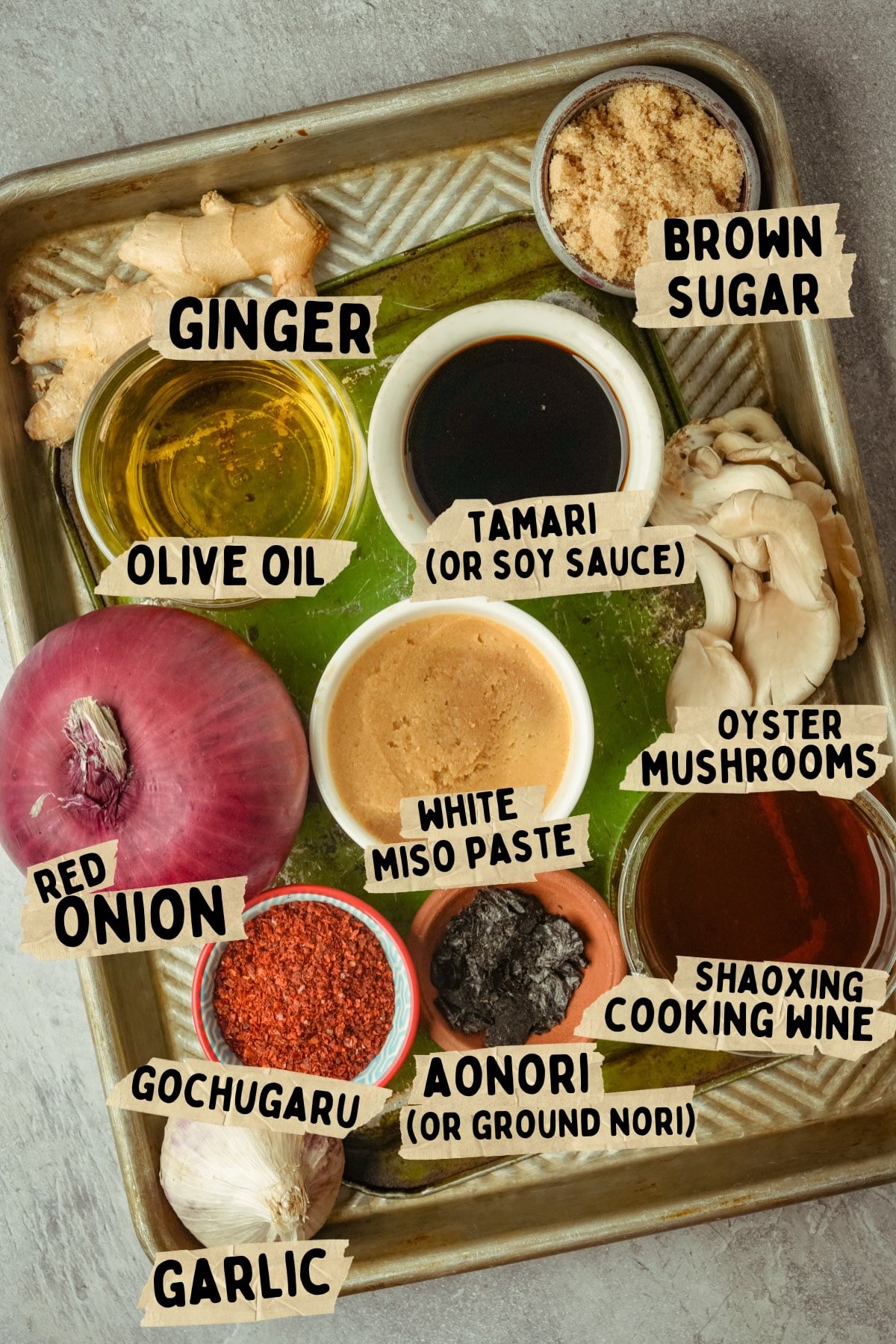
Oyster Mushrooms
These are your chewy, funky, umami heroes that will make up some of the bulk of this recipe. Chopping oyster mushrooms super finely before cooking lets them mimic the texture of fermented shrimp bits in traditional bagoong. No oyster mushrooms? White button mushrooms or shiitake mushrooms work great too.
Aonori or Ground Nori
These dried seaweed flakes provide that subtly oceanic depth you'd usually get from seafood, but without the fish. If you don't have aonori on hand, ground nori sheets can step in just fine. Aonori is also great to keep on hand for making your own legit shichimi togarashi, and for adding ocean vibes to carrot lox without scaring off your salmon friends.
Gochugaru
Gochugaru is a coarse chili powder with a smoky, fruity flavor and a gorgeous crimson color that brings life to basically anything it touches. It's essential in Korean dishes like Korean carrot salad and vegan kimchi, where it gives off that unmistakable heat-meets-sweet magic.
Shaoxing Cooking Wine
This fermented Chinese cooking wine adds a deep complexity, mimicking the funk you'd normally get from actual fermentation, uh, because it IS a product of fermentation, after all.
It's not just for sauces-Shaoxing wine is also a key ingredient in Vietnamese stir-fried noodles. Cooking sake or mirin also works in a pinch, though the resulting paste will be slightly sweeter.
White Miso Paste
White miso (shiro miso) adds fermented depth and umami without excessive saltiness, making it an effective substitute for the funky intensity of traditional shrimp paste. I keep this kind of miso on hand exclusively, and love using it in my nasu dengaku and even in vegan meat recipes like vegan yakitori and seitan carne asada.
If you don't have miso on hand, doenjang (the Korean fermented soybean paste that you use to make Korean tofu soup), or taucu (fermented yellow soybean paste that is used in cooking mee rebus) can be used in equal measure. Both offer a more intense and somewhat saltier flavor, which might mean you'll want to cut back a bit on the soy sauce added.
The Soy Sauce
Tamari offers a rich, salty backbone and keeps the recipe gluten-free. You can, of course, use just about any soy sauce available if gluten isn't a concern for you. For a gluten-free and soy-free option, coconut aminos provide a great 1:1 substitution.
*See the recipe card at the bottom of the page for exact quantities, nutritional info, and detailed cooking directions.
Variations
Malay Vegan Belacan
To make a vegan belacan variation, replace the tamari with light soy sauce and add 1 teaspoon toasted chili flakes and ground toasted coconut. Use taucu instead of miso for a bolder, more pungent flavor typical of Malaysian-style belacan that goes amazingly in everything from curry laksa to sambal goreng tempeh.
Vegan Nước Chấm
Vegan nước chấm is spicy, sweet, tangy, a little salty, and it's got mad umami for days. It's also an absolute dream to drizzle into bánh bao chay (steamed veggie buns) and to dip bánh tráng cuốn (Vietnamese rice paper rolls) in.

Grab my easy-yo-use app that builds your whole week with real, chef-tested vegan dinners in 30 seconds, customized to your budget, time, and taste, with a shopping list sorted by aisle.

How to make vegan Filipino bagoong
I know you're starving and ready to ditch the scroll, but hang tight for these step-by-step deets. Or zoom down to the printable recipe card if you need that vegan umami hit, like, yesterday.

Step One
Sauté Der Night Fever:
Heat olive oil in a skillet over medium heat. After 90 seconds, add grated red onion and cook for 3 minutes, stirring occasionally.
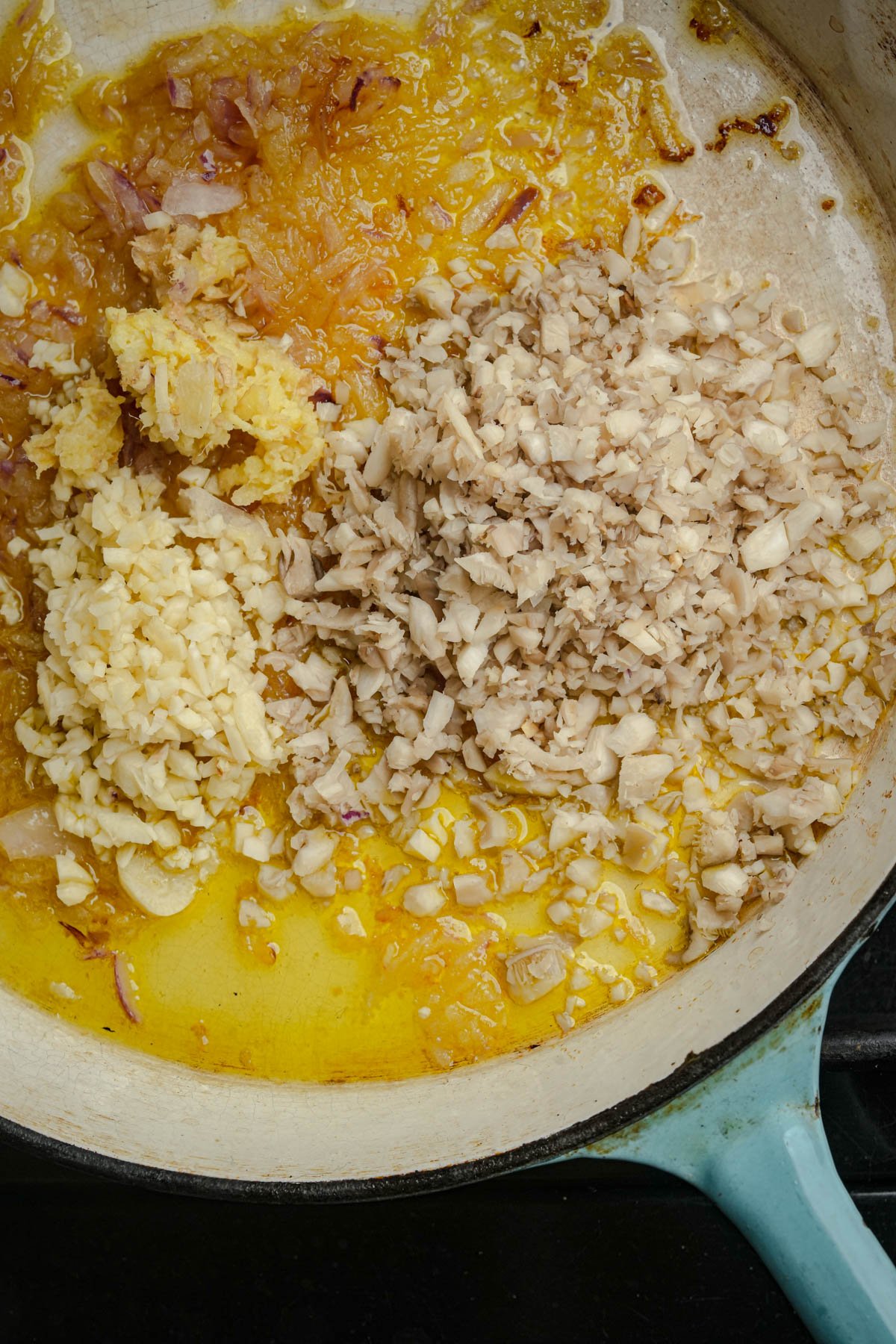
Step Two
Fin-garlickin' Good:
Add the ginger, garlic, and chopped mushrooms. Cook for 5 minutes, stirring occasionally, until the mushrooms release moisture and begin to brown.
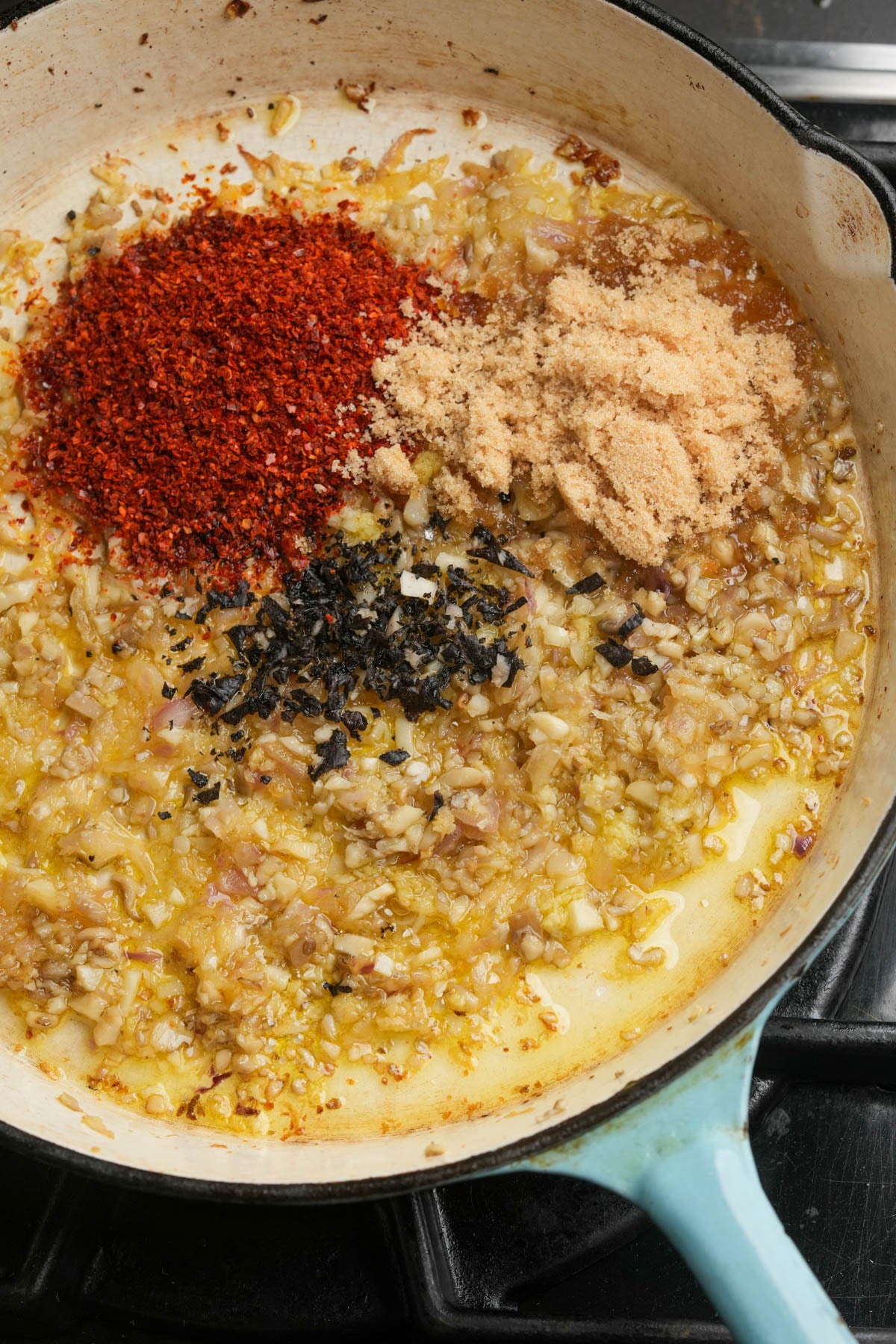
Step Three
I Gochu Babe:
Stir in the aonori, gochugaru, and brown sugar. Cook for 2 minutes, stirring frequently.
Step Four
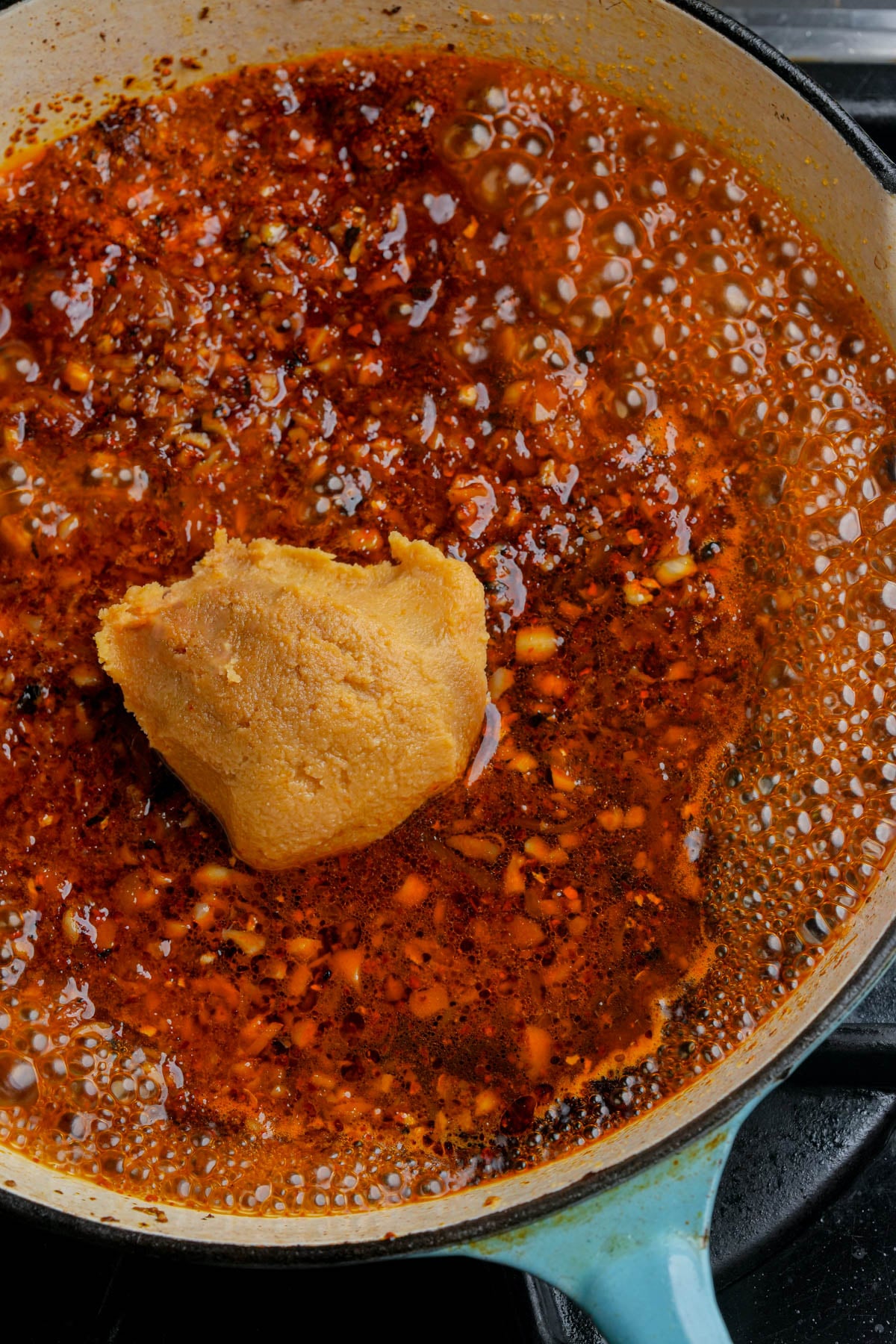
Miso: Impossible:
Reduce to low heat and mix in the shaoxing wine, miso, and tamari. Stir constantly for 3-4 minutes until the paste thickens considerably and darkens.
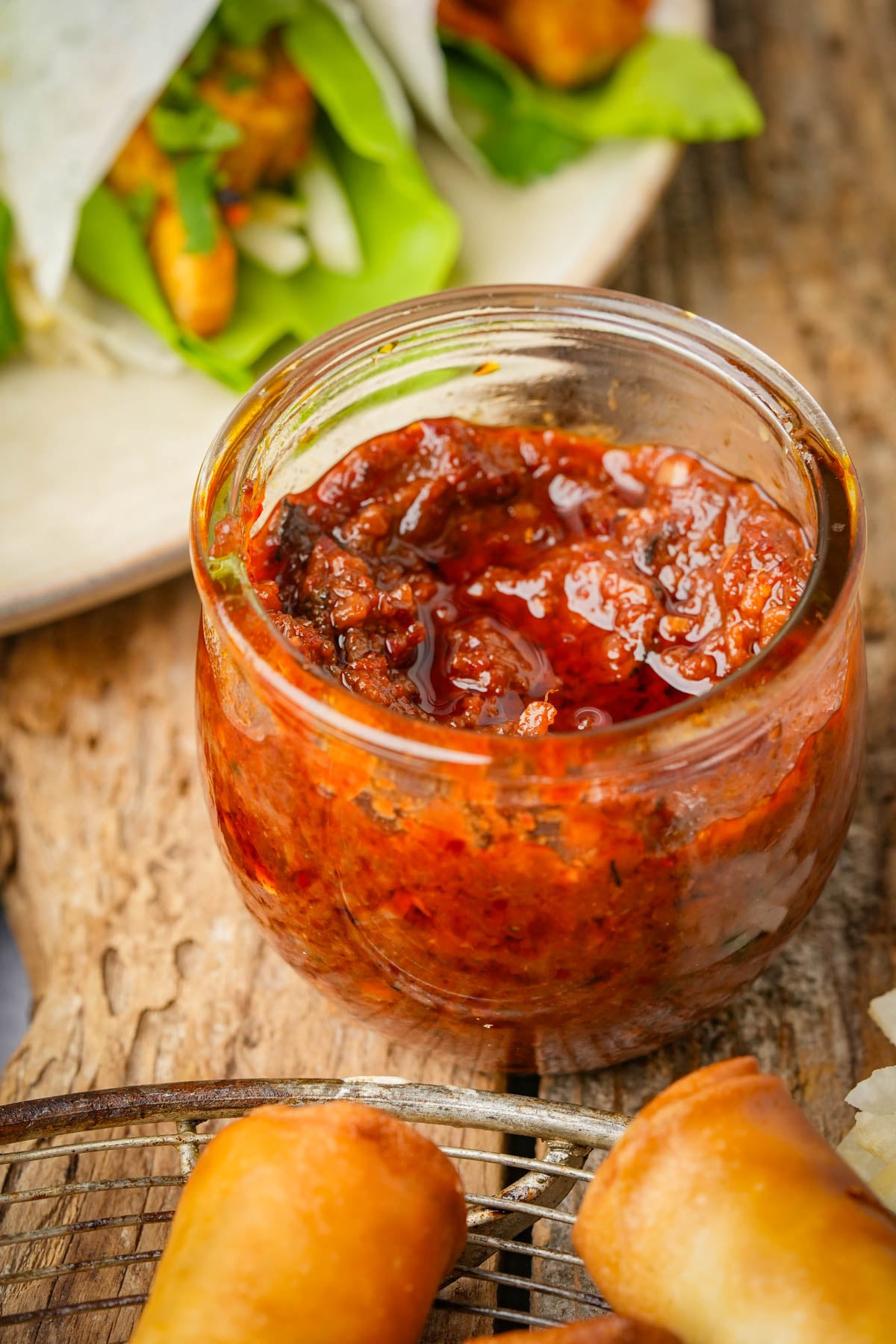
Step Five
Cool Runnings:
Remove from heat and let cool completely. Transfer to a sterilized jar and refrigerate. Use within 6 weeks. Always take some out with clean, dry spoons to avoid contamination.
Serving Ideas
Vegan shrimp paste is your cheat code to dialing Filipino dishes up to maximum umami chaos. Stir it into sinangag, sauté your tofu sisig with it, or let it vibe with ginataang langka for a pretty perfies coconut-umami one-two punch.
It brings laing and ginisang munggo from chill to shouty with its salty-funky backbone, and turns humble ensaladang talong into an overachiever. Drop it into your adobong sitaw for a little fermented oomph, or add some of it into your lumpiang Shanghai dipping sauce and watch people lose their minds.

Top tips
- Grate That Onion: Grated onion breaks down faster than chopped and integrates more smoothly into the paste. This helps prevent uneven texture and gives the final bagoong that spreadable, heavenly, melt-into-broth consistency..
- Don't Rush the Miso: Miso is sensitive to heat. Stir it in gently over medium-low heat so you don't cook off its subtle fermented notes. High heat will flatten the flavor and turn your paste into something dull and one-note.
- Sterilize Your Jars: This isn't just about food safety-it's about longevity. A properly sterilized jar keeps your vegan bagoong funkalicious and fresh for up to 6 weeks. Always use a clean, dry metal spoon to avoid introducing moisture or bacteria.
Recipe FAQs
Nope! This is a quick-cook condiment stealing its fermented vibes from miso and Shaoxing wine.
It's not a perfect replica, but it hits all the same salty, sweet, fermented notes-minus the seafood. Traditional bagoong alamang is made with fermented krill or tiny shrimp, which gives it that potent fishy funk. This version skips all that marine drama and builds its umami bombshell entirely from plants-mushrooms, miso, and seaweed.
Store this in a sealed, sterilized jar for up to 6 weeks.
You'll love these essential sauces too:



Enter your email & I'll send it to your inbox. Plus, get great new recipes from me every week!
By submitting this form, you consent to receive emails from Cinnamon Snail.

Vegan Shrimp Paste Recipe
Equipment
Ingredients
- 3 tablespoons olive oil
- ⅓ cup red onion grated
- 4 teaspoons ginger minced
- 2 tablespoons garlic minced
- ½ cup oyster mushrooms very finely chopped
- 2 tablespoons aonori or finely ground nori seaweed
- 2 tablespoons gochugaru
- 2 tablespoons brown sugar
- ¼ cup shaoxing cooking wine
- ¼ cup miso paste
- ¼ cup tamari or other soy sauce of your preference
Instructions
- Heat the olive oil in a skillet over medium heat. After 90 seconds, when the oil is hot, add the red onion and cook for 3 minutes, stirring occasionally.
- Add the ginger and garlic and oyster mushrooms and cook for 5 minutes, stirring occasionally, until the mushrooms release their moisture and begin to brown slightly.
- Stir in the aonori (or ground nori sea weed), gochugaru, and brown sugar.. Cook for 2 minutes, stirring frequently.
- Reduce to low heat and stir in the shaoxing wine, miso paste, and tamari. Cook for 3-4 minutes, stirring continuously, until the mixture is thick and dark in color.
- Remove from heat and let cool to room temperature. Transfer to a sterilized jar and refrigerate until ready to use. The bagoong will be fine to use for up to 6 weeks, as long as the jar it is stored in has been sterilized, and you always take some out using a clean, dry metal spoon.
Notes
Enter your email & I'll send it to your inbox. Plus, get great new recipes from me every week!
By submitting this form, you consent to receive emails from Cinnamon Snail.
Tee Hansen says
Super tasty!! It's really good for topping different noodle dishes, too! And keeping for 6 weeks means you can batch this bad boy and elevate weeknight dinners on demand!
Dushenka Silberfarb says
This is brilliant!!!