

*This post may contain affiliate links. Read more »
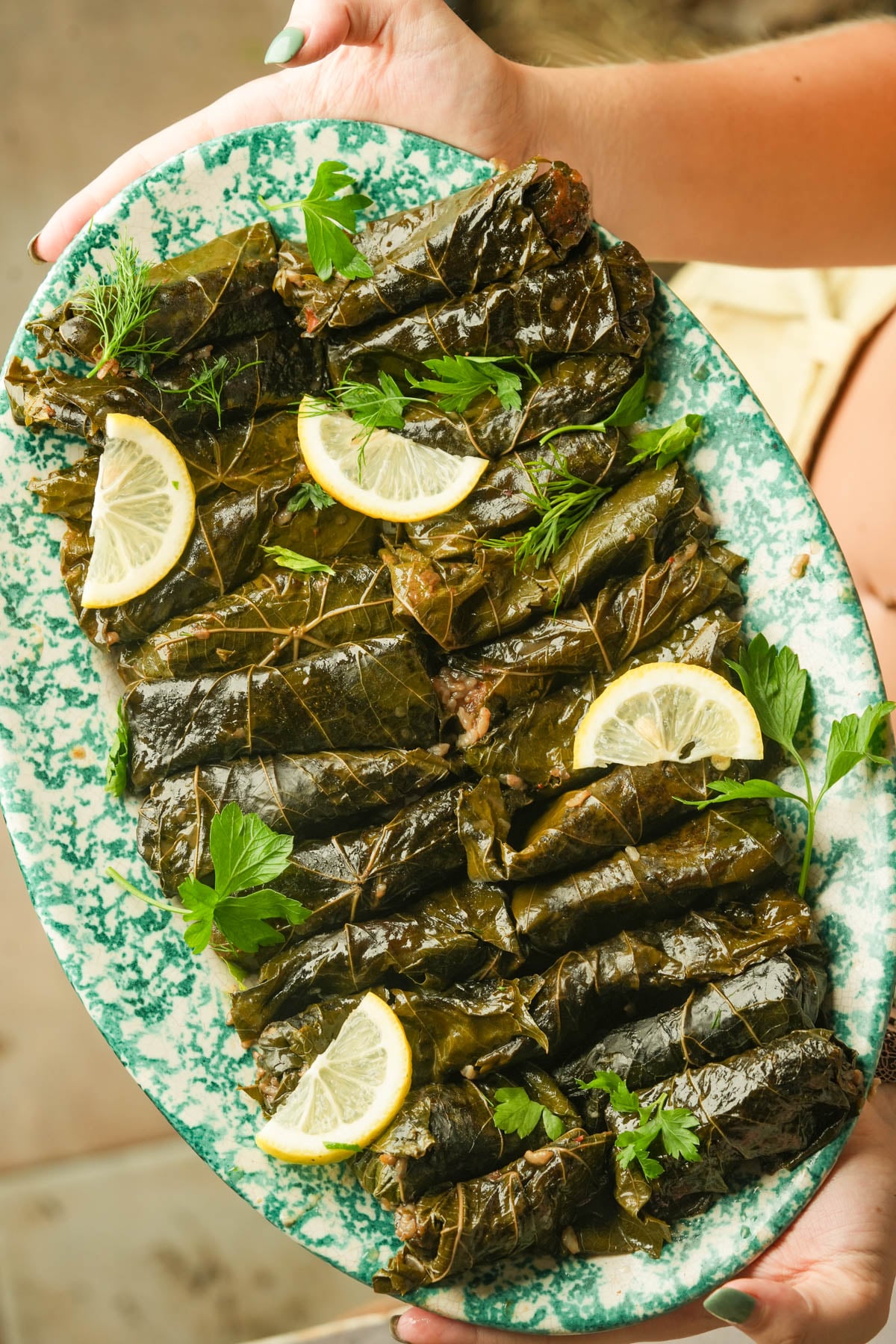
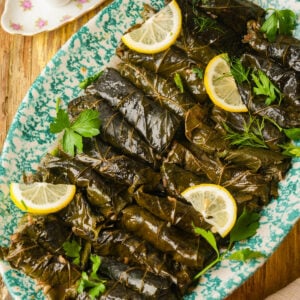
A naturally traditional vegan Middle Eastern banger? Yes. Yalanji are the Lebanese stuffed grape leaves you love from your fave falafel spot. Just because you can get reasonably OK ones in a can doesn't mean you can't make them way tastier from scratch. My wife says she will never touch canned grape leaves again now that we can make them so much better at home. So let's get that happening for you too!
Recipe tips tailored to what matters most to you:

Already gluten-free as written, rice, grape leaves, herbs, and warm spices, no wheat anywhere in this one.

Grab the jarred grape leaves instead of using fresh ones, you skip the blanching step completely and go straight to rolling.

Got a grape vine on your property? Me too! Blanch fresh leaves for 30 to 40 seconds instead of buying the jarred ones, totally free filler for the roll.

Ease back on the olive oil in the filling and cooking liquid if you want, these still hold together and taste great with less.

No Aleppo pepper flakes in the pantry? Gochugaru or paprika work as a stand-ins.

I know it feels wrong, but the rice goes into the leaves completely uncooked. It steams inside the roll and soaks up the lemon, olive oil, and pomegranate.
The onion and tomato need to be minced fine, like really fine. I prefer using a box grater to really shred them into oblivion for this.
Setting a heatproof plate or some other kind of weight directly on the rolls keeps them submerged and weighed down while they cook.
Oodles more tips, step-by-step recipe photos, info on weird ingredients, and FAQs are all still here. I just tucked 'em out of the way so you can start cooking sooner.
Here's one of my favorite pieces of food trivia in the galaxy: yalanji basically means "liar." That means that these are the stuffed grape leaves pretending to be the meaty ones, and they have been getting away with it AND leaving people super-happy for centuries because legit, nothing is missing, and nobody has ever taken a bite of one of these soft green cigars and felt shortchanged.
This is the semi-rare dish where the vegan version is not a substitute, it is the original, invented centuries ago by someone who left the lamb out, stuffed the leaves with raw rice, herbs, and pomegranate molasses, and cheekily named it after the deception. The raw rice trips people up, but it cooks right inside the leaf, soaking up lemon, olive oil, and pomegranate molasses as it steams, so you cannot fake it with pre-cooked rice. Trust me, I tried in one of the zillion times I tested this recipe before it was perfect.
Like a lot of Syrian and Lebanese standards, from shorbet adas to Lebanese rice and toum, yalanji is made to sit out and be shared, and it actually gets better in the fridge overnight. Fair warning though, rolling 24 of these is a sit-down-put-a-podcast-on typa thing, but by leaf 4 your hands figure out the rhythm and stop asking you for help.


Who would have guessed pomegranate molasses and allspice go into dolmas? And it really works. So yummy!
Jump to:
Why you'll adore these vegan stuffed grape leaves
✊ Vegan AF & GF: Yalanji roughly translates to "liar," a jab at the fact that it skipped the meat. All my gluten-free vegan recipes stick to the same lie.😉
🍋 Pomegranate Molasses Is Doing Something Wild: That sweet-tart syrup blended into the filling is what separates yalanji from every canned stuffed grape leaf you have had (usually only made sour from lemon juice or vinegar). The resulting flavor is sour, sweet, and complex.
🧊 Better Cold, Better Tomorrow: These are meant to be eaten cool or at room temperature, and they genuinely improve overnight in the fridge. Make-ahead food that gets BETTER while you sleep is a gift from Father Time, Old Man Winter, and other mythical, time-related old men.
Tested and Approved Worldwide: Hundreds of recipe testers across dozens of countries rolled my vegan Middle Eastern recipes in their own kitchens before this ever hit the site. Nobody overnighted me a wrapped and ready to eat tho. So, boo to that.


I'm on my knees staring weirdly into your eyes, asking you in a soothing voice to be my taste-testing partner in crime. Sign up for the recipe testing crew and get early access to new recipes before they're published.
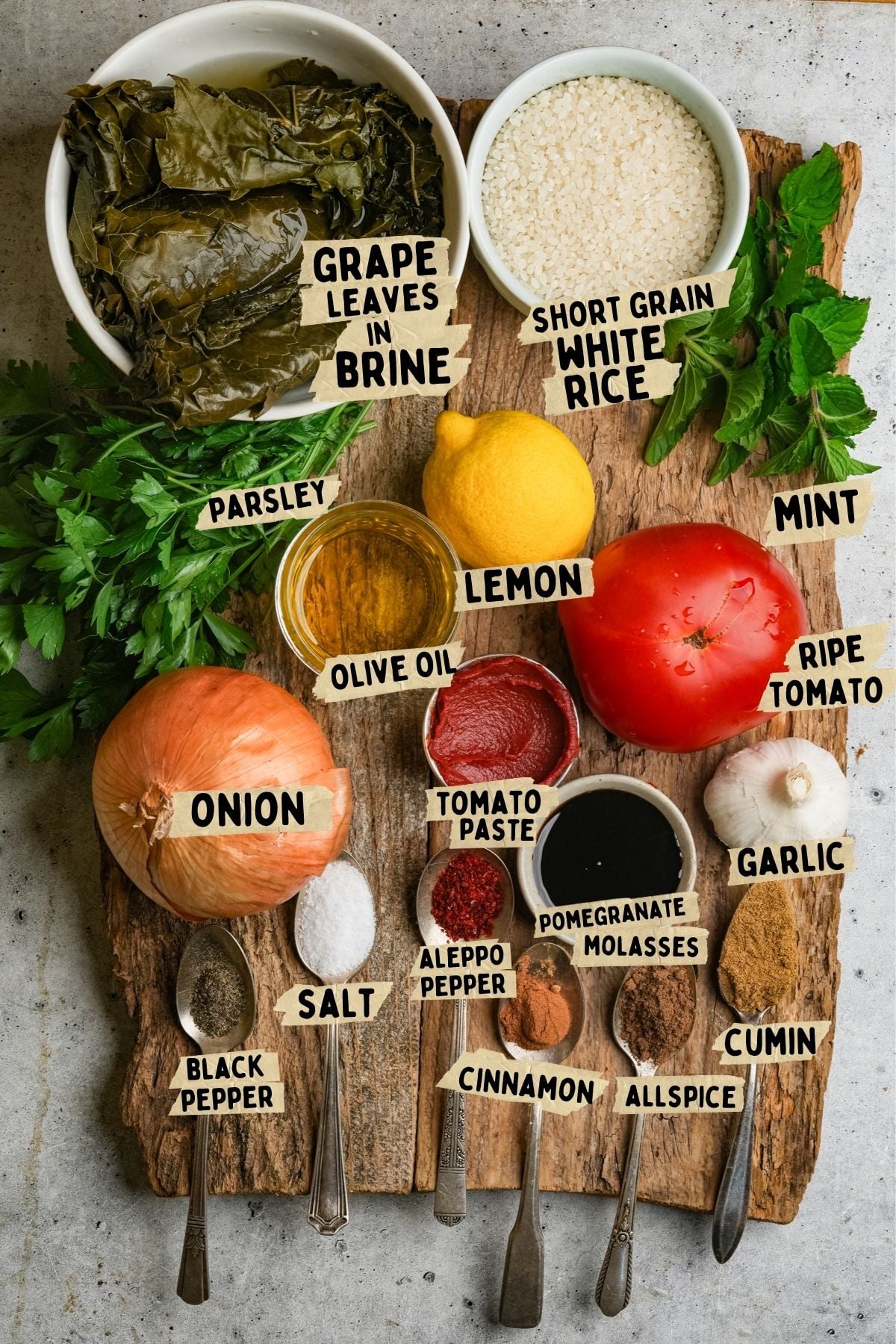
Syrian Vegetarian Stuffed Grape Leaves Ingredients
The Rice
Go short-grain or medium-grain white rice or go home. The starch it releases while cooking is what binds everything into a filling that actually holds instead of falling apart in your hand. Rinse it till the water goes clear and drain it. It stays soft and plump inside the leaf too.
Long grain rice and basmati are a hard no here, they cook up dry and separate and make a crumbly mess. Brown rice is an even bigger nope, it will not cook through in the wrapped rolls without taking forever.
Grape Leaves in Brine
One 16 oz. jar is around 30 leaves, which feels like a ton right up until you inhale 15 of them standing at the counter. Don't worry, some tear. But if that happens, you can get away with doubling them up to still have enough to work with.
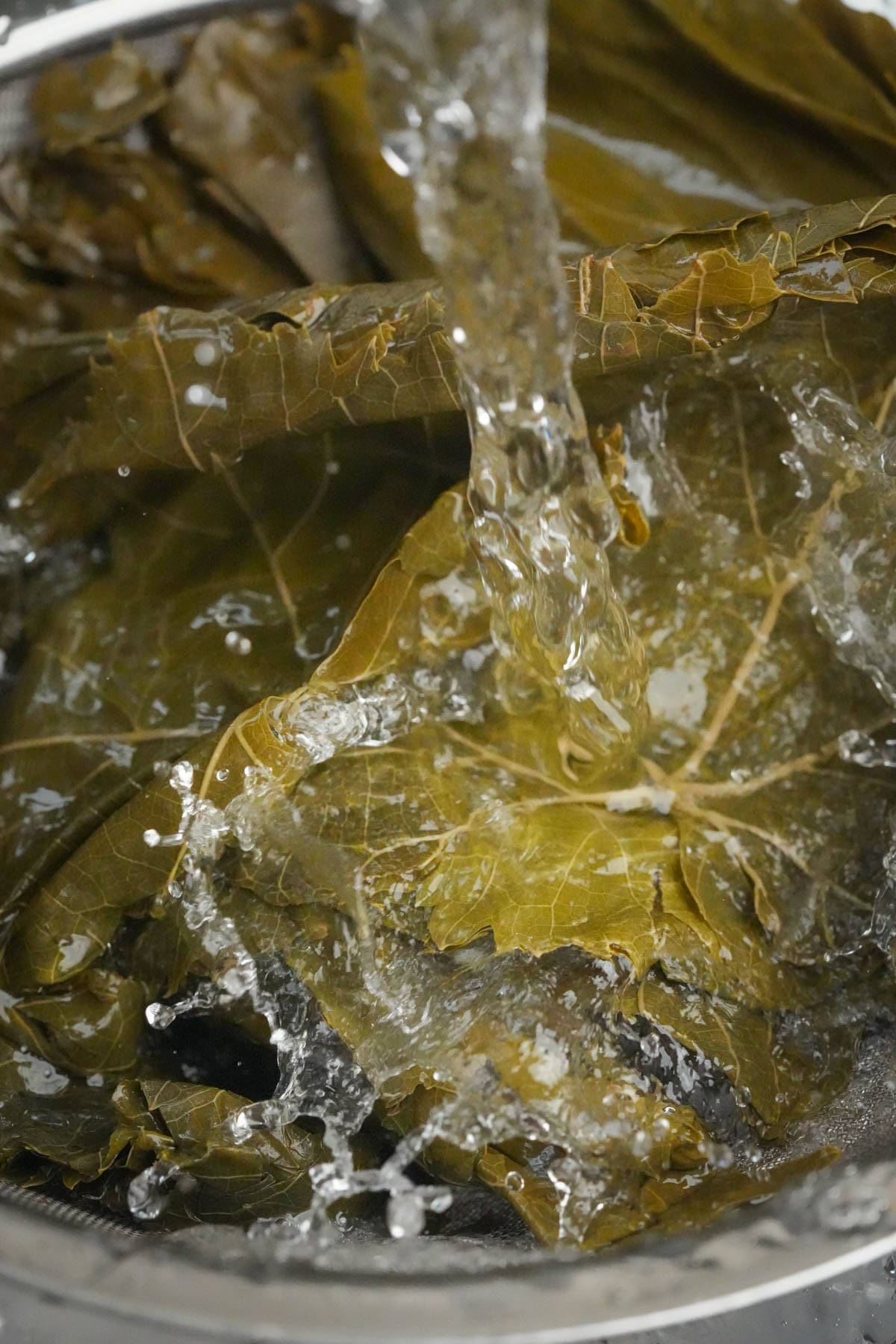
Rinse them well to tame the brine, because these things are salty enough to knock the whole dish off balance. Snip any thick stems and set the torn or itty-bitty ones aside for lining the pot. On brands, Orlando generally has the most sturdy grape leaves I've found. Krinos and Ziyad get the job done, but expect at least a few ripped leaves in each jar.
Pomegranate Molasses
Thick, sweet-tart, fruity and caramelized, it brings a deep, layered sourness that lemon alone just cannot pull off. No real swap exists, though lemon juice with a splash of date syrup gets you kinda close to pomegranate molasses, I guess.
Buy a bottle, it lasts approximately forever. And if you end up with extra and no plan, throw it into khoresh bademjan, muhammara, or Turkish çiğ köfte.
Aleppo Pepper
Aleppo pepper flakes are mellow and add a tiny touch of heat without bullying the other spices. Gochugaru (the stuff you might use to make vegan kimchi) is a great swap if you cannot track down Aleppo.
And if you have got a bag of Aleppo pepper hanging around after making this, it is stupid good in roasted red pepper hummus, ezme, zaalouk, and matbucha.
*See the recipe card at the bottom of the page for exact quantities, nutritional info, and detailed cooking directions.
Variations
Turkish Stuffed Grape Leaves
Yaprak sarma is basically the Turkish cousin to yalanji. These get stuffed with rice, currants, pine nuts, and Turkish pepper paste, plus cinnamon and dried mint. Same rolling technique, completely different personality.

Grab my easy-yo-use app that builds your whole week with real, chef-tested vegan dinners in 30 seconds, customized to your budget, time, and taste, with a shopping list sorted by aisle.

How to make yalanji
Yes, there are a lot of leaves. No, you do not have to be good at this yet. Follow these step-by-step instructions with tips below and you will be a rolling machine by leaf 12, or scroll to the recipe card if you already know the drill.
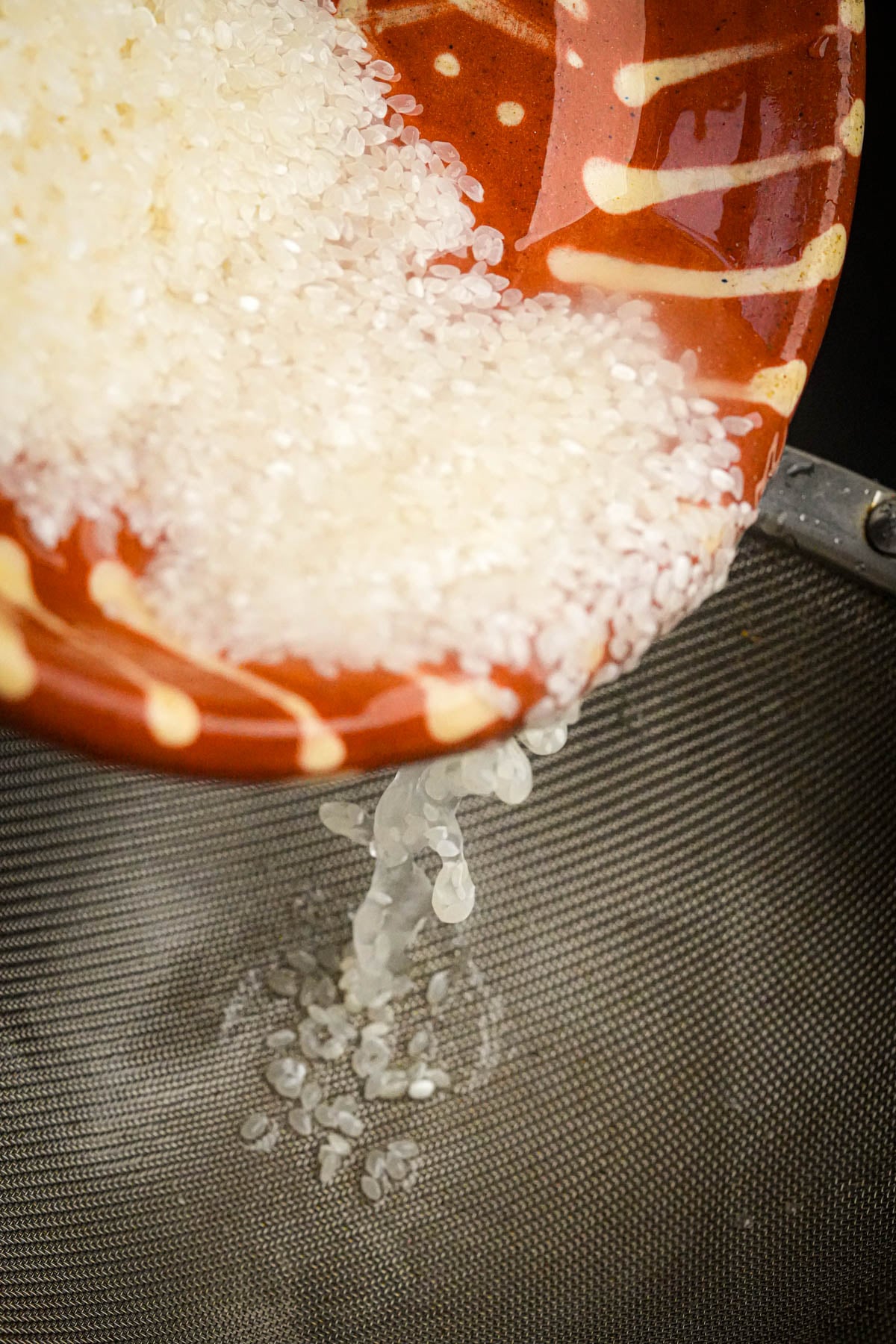
Step One
Condoleezza Rice:
Add the rice to a large bowl and cover it with cold water. Work it with your hands to release the starch, then drain and rinse it in a wire mesh strainer under cold running water for about a minute until the water runs clear. Set it aside to drip dry.
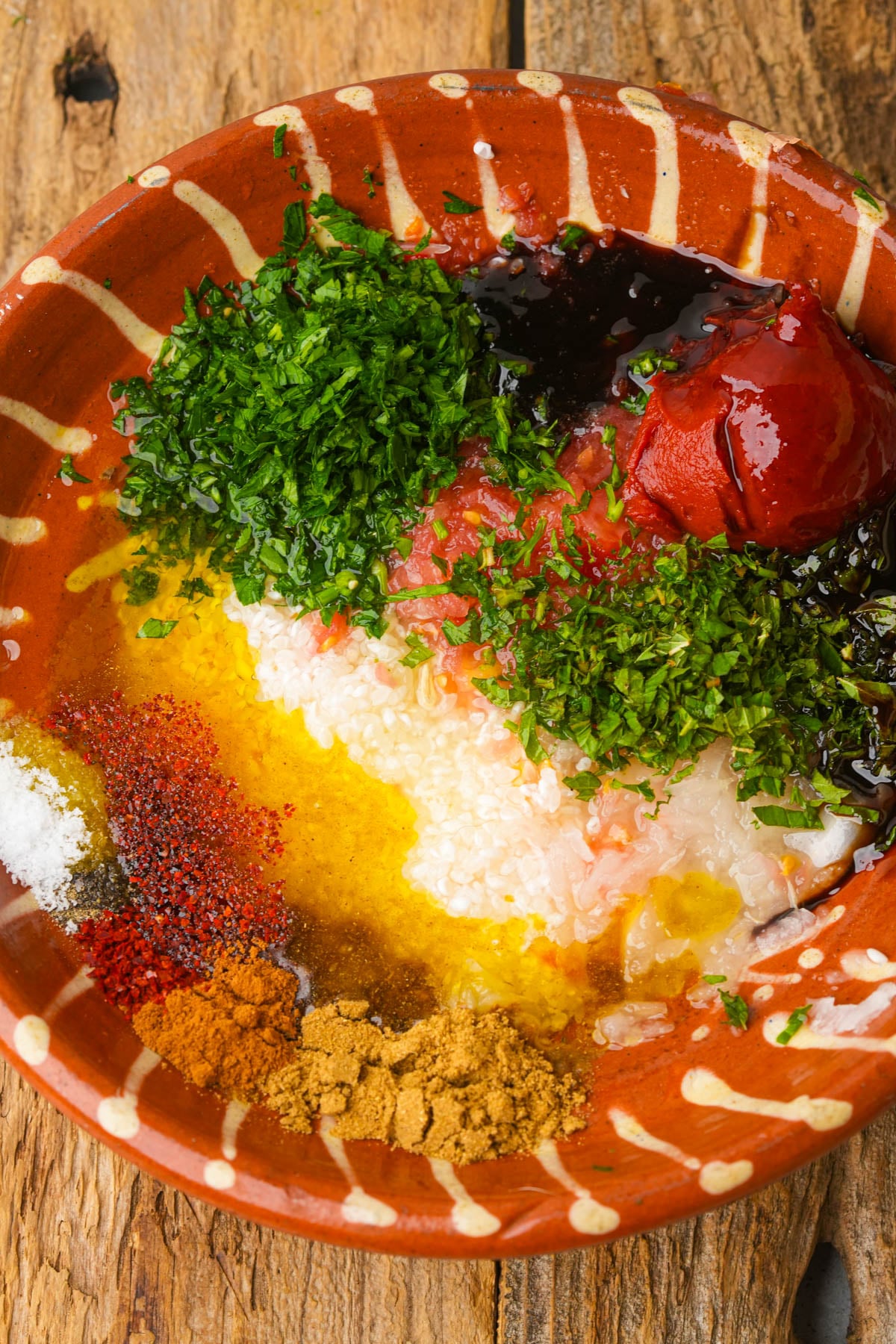
Step Two
Mixin' Impossible:
Move the rice to a mixing bowl and add the tomato, onion, parsley, mint, tomato paste, olive oil, lemon juice, pomegranate molasses, allspice, cumin, black pepper, cinnamon, Aleppo pepper, and salt. Stir until everything is fully combined.
Step Three
Leaf It to Beaver:
Gently pull the grape leaves apart and rinse them under cool water to wash off the extra brine. Snip off any thick stems with a small knife or sharp kitchen scissors. Lay the leaves out on your work surface, vein side up, with the stem end pointing toward you.
Step Four
What's Eating Gilbert Grape Leaf:
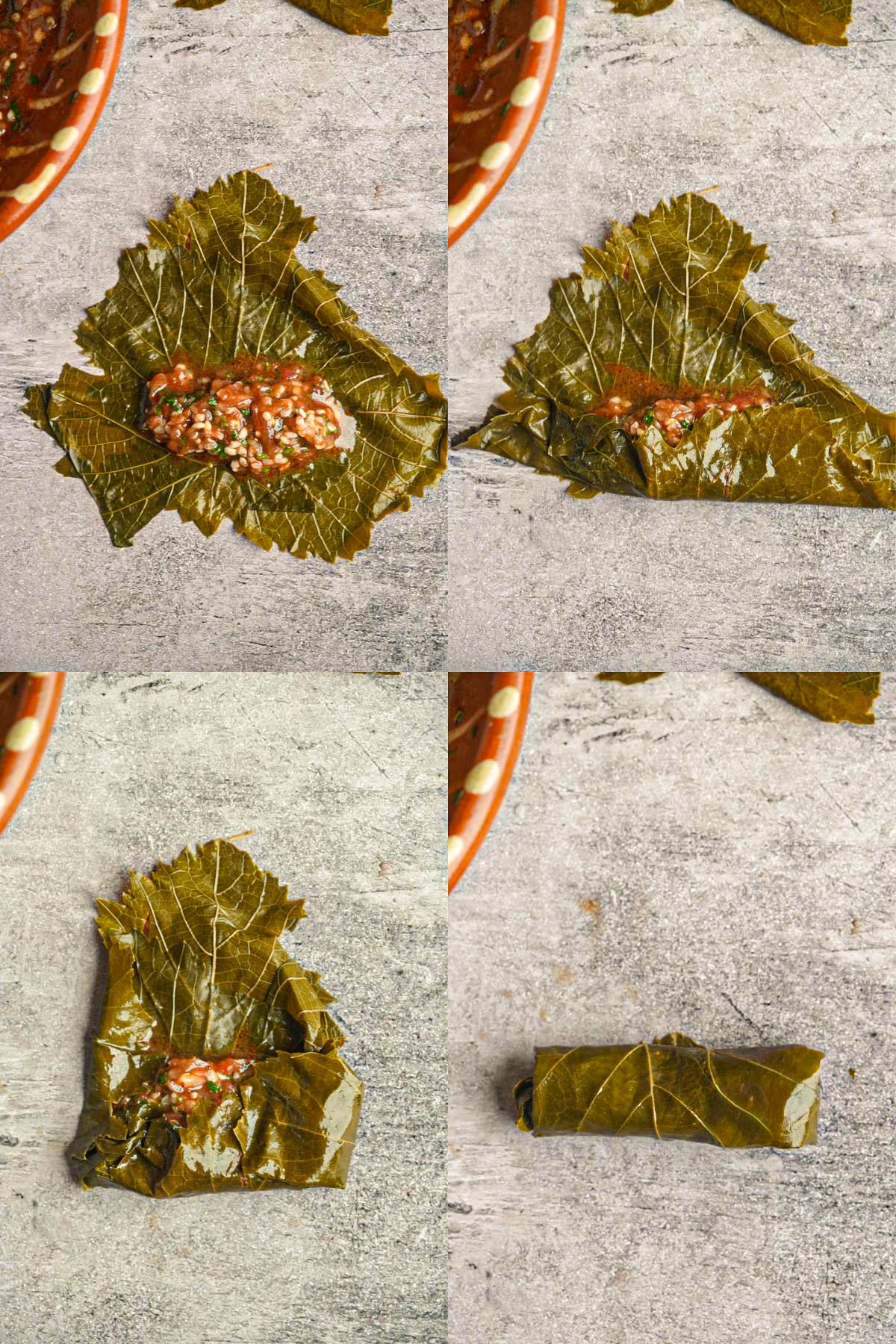
Spoon roughly 4 teaspoons of filling near the stem end of each leaf, using more if the leaf is on the larger side. Bring the bottom of the leaf up over the filling, tuck in both sides, and roll it tightly toward the tip into a snug cylinder.
Repeat with the rest of the leaves and filling.
Step Five
Garls in Charge:
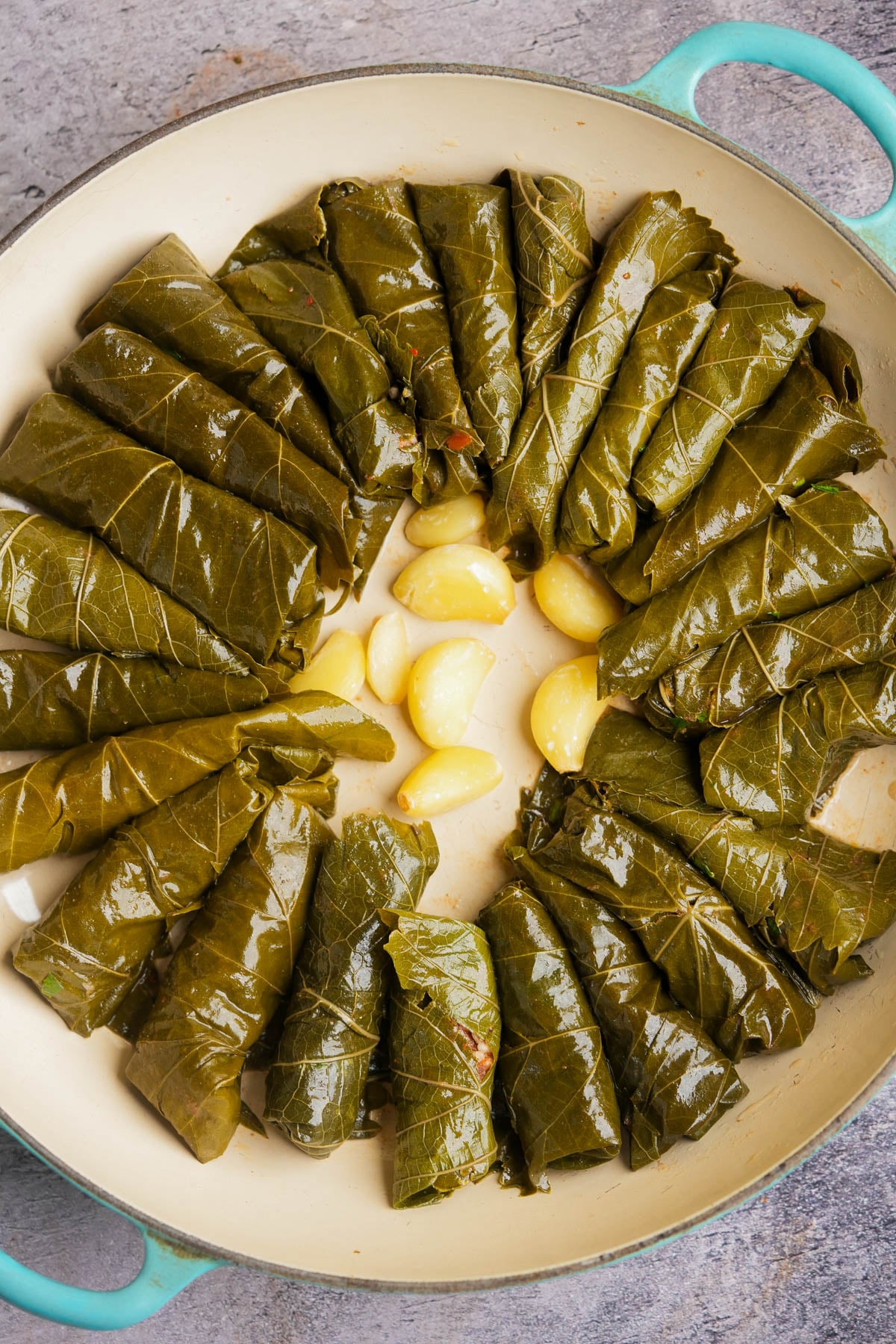
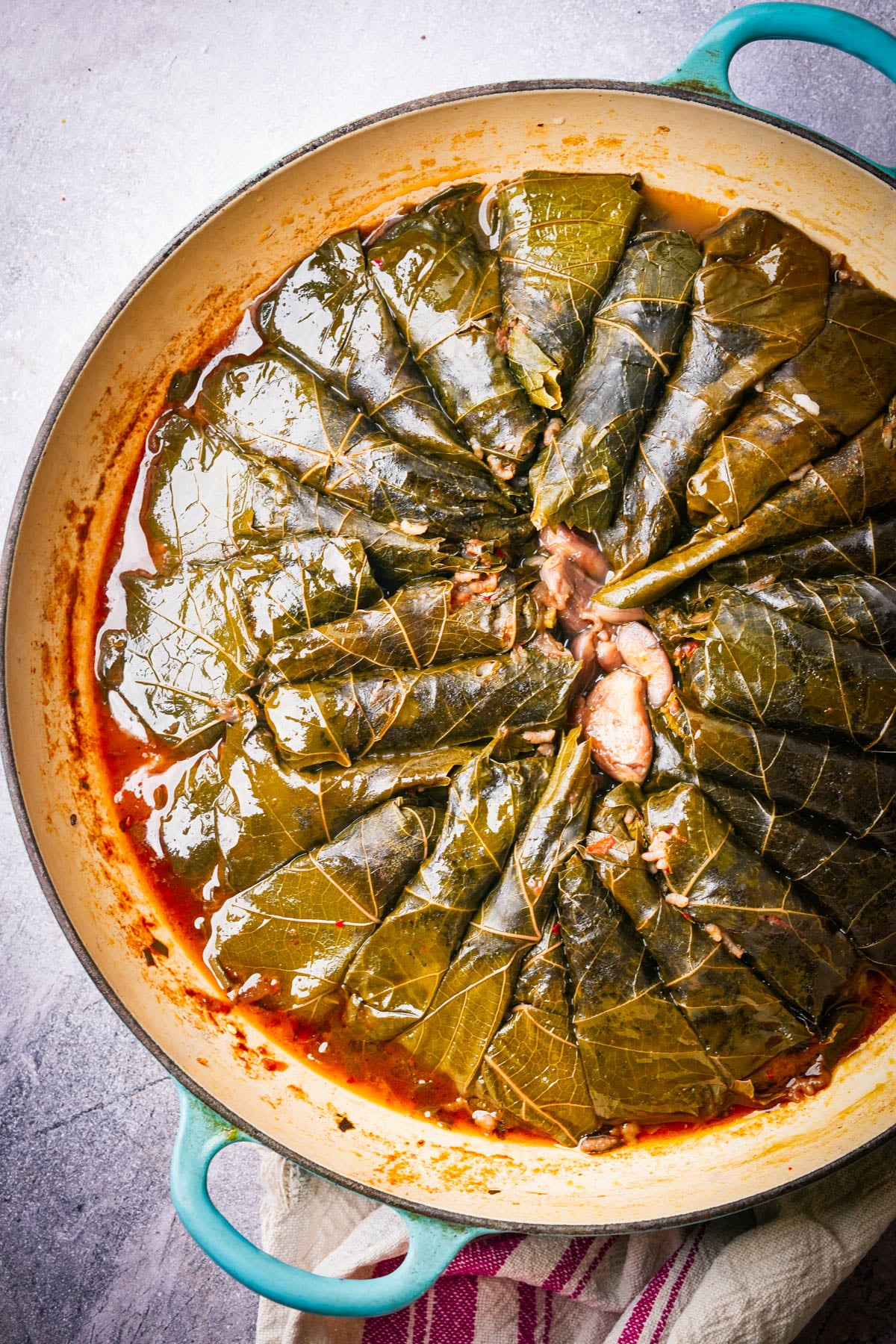
Place the garlic cloves in the center of a wide heavy pot. Set the rolls in the pot all around the garlic cloves seam-side down, packing them in tight so they hold their shape while cooking.
Step Six
Better Plate Than Never:
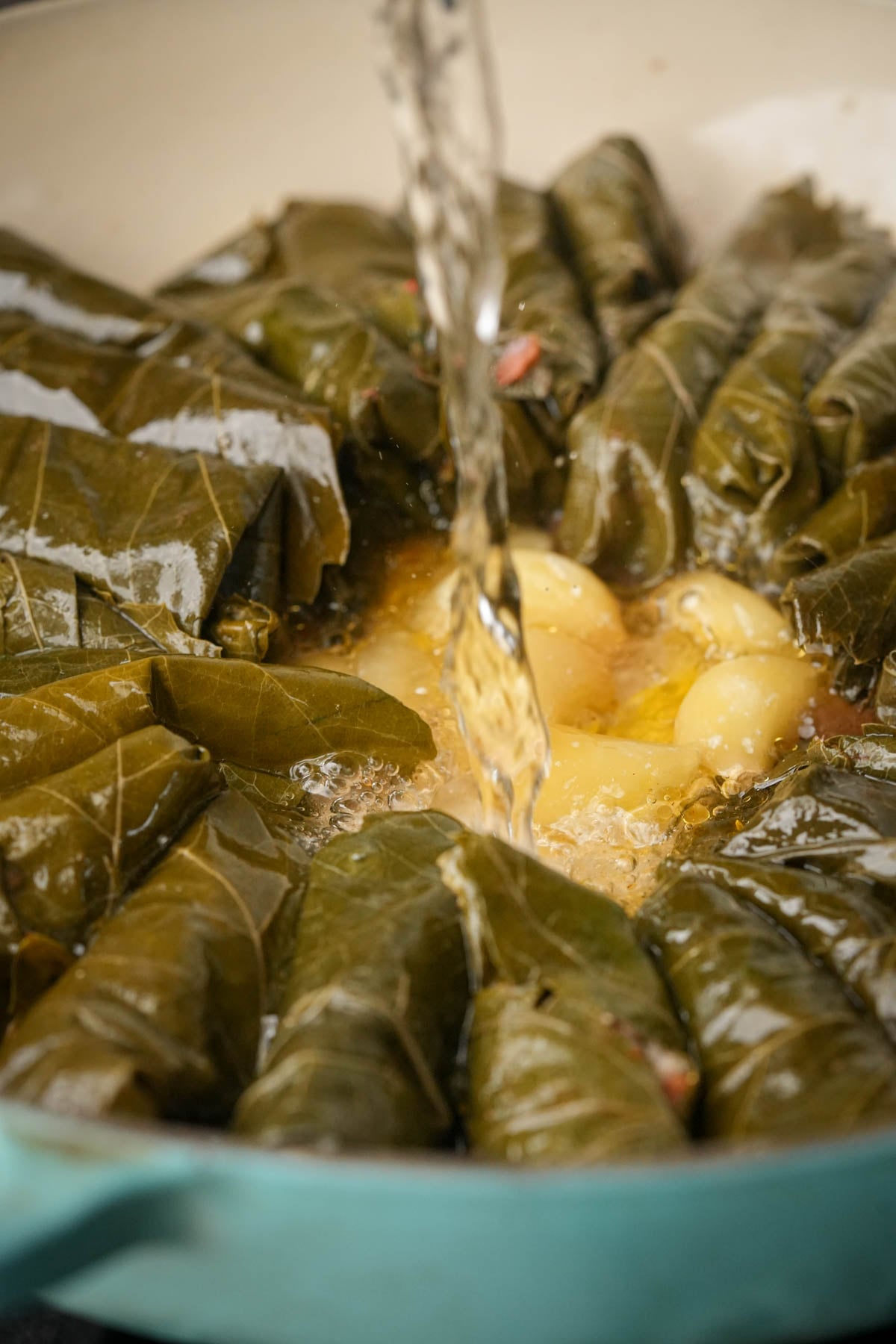
Pour the olive oil and lemon juice evenly over the rolls, then add the water. Rest a heatproof plate right on top of the rolls so they stay submerged as they cook.
Step Seven
Sim Simmer, Who's Got the Keys to My Bimmer:
Bring the liquid to a gentle simmer over medium heat. Turn the heat down to low, put the lid on, and let it cook for 40-45 minutes until the rice is tender and the leaves are fully cooked through.
Step Eight
Grape Balls of Fire:
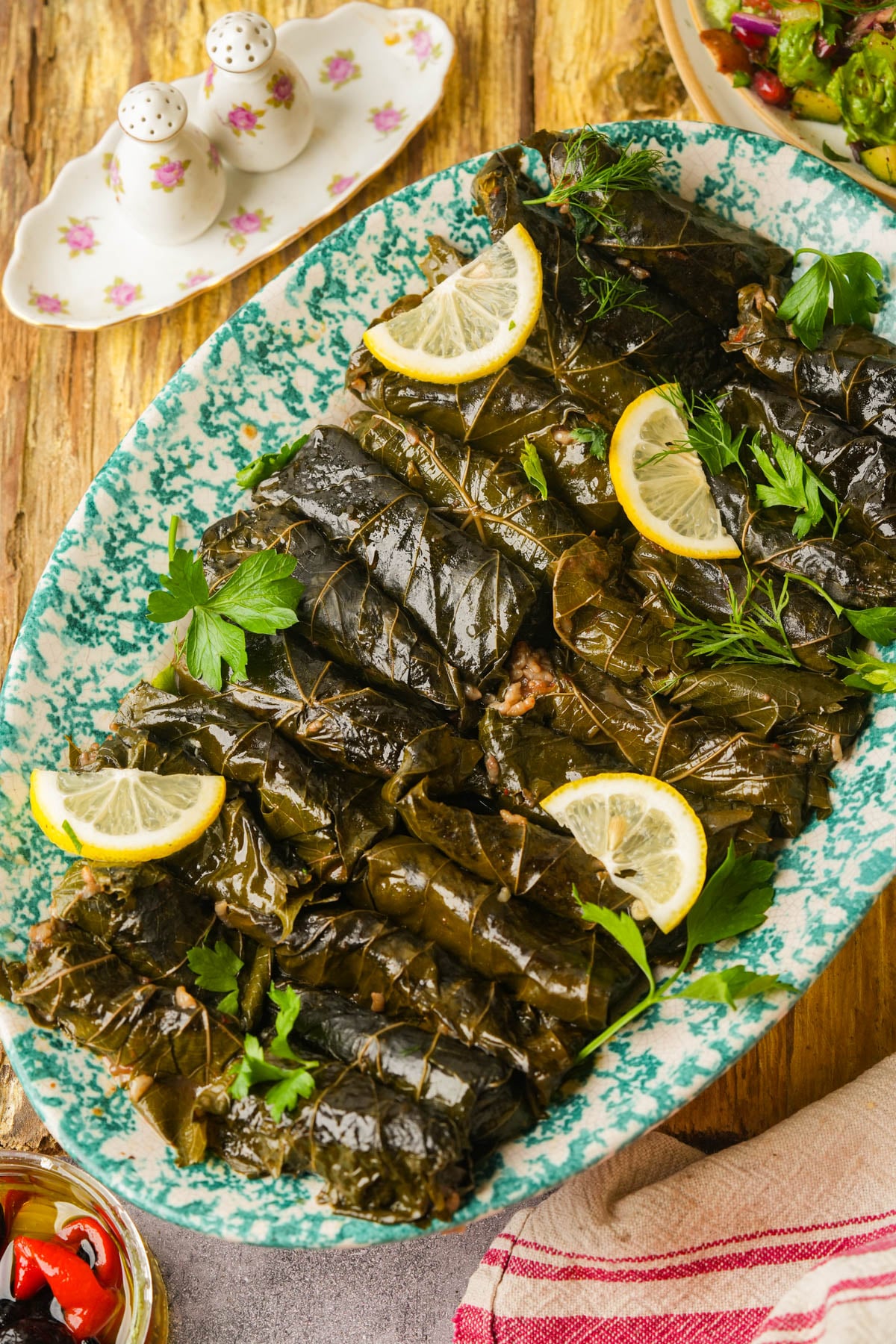
Take the pot off the heat and let the rolls sit, still covered, for 20 minutes. Move them to a serving platter, top with parsley and pomegranate seeds, and serve with lemon wedges on the side.
Serving Ideas
Yalanji is a team player, so throw some other stuff on the table with it.
A bowl of mutabal or muhammara gives you something rich to dunk into, and matbucha brings that saucy, cooked-tomato thing that goes pretty darn great with all the tart pomegranate action happening in these little rolls.
Zaalouk or a cucumber beet salad will keep your meal fresh and colorful, and will make you feel like you are still wholesome enough to rock an extra piece of vegan baklava for dessert.
Top Tips
- Use Raw Rice, Not Cooked: I know it feels wrong, but the rice goes into the leaves completely uncooked. It steams inside the roll and soaks up the lemon, olive oil, and pomegranate as it cooks. Pre-cooked rice will turn into a sad over-cooked rice pudding-like mush by the time the leaves are done.
- Shred or Dice Everything Absurdly Small: The onion and tomato need to be minced fine, like really fine. I prefer using a box grater to really shred them into oblivion for this. Chunky pieces make the filling lumpy, which makes the rolls impossible to seal, which means they burst open in the pot and you spend the evening fishing rice out of your cooking liquid.
- Don't Skip the Plate on Top: Setting a heatproof plate or some other kind of weight directly on the rolls keeps them submerged and weighed down while they cook. Without it, they float around, cook unevenly, and start coming apart. And then some don't cook right, and you YELLLLLL, and then you try to get my site removed from the internet while you fume in anger.
Recipe FAQs
Not enough liquid or not enough time. The rice needs to stay fully submerged the whole time, so check that the water level is still covering the rolls and add a splash more if it has cooked down. Keep the plate on top and give it more time on low.
It's not too late. Just add additional water and keep cooking until the rolls are all filled with tender rice.
Yes, but they need a quick blanch first. I do this with my grape vines from my front yard garden. Drop them in boiling water for 30-40 seconds until they soften and turn olive green, then shock them in ice-cold water. Fresh leaves are a wee bit rougher, but still awesome.
🧊 In the Fridge
Store in an airtight container for up to 5 days. Drizzle a little olive oil over them before sealing to keep the leaves from drying out. They taste better on day 2 than day 1, which is a rare and beautiful thing!
❄️ In the Freezer
Freeze cooked and cooled rolls in a single layer, then move them to an airtight container for up to 3 months. Thaw overnight in the fridge and serve at room temperature.
You'll love these Middle Eastern sides too:


Enter your email & I'll send it to your inbox. Plus, get great new recipes from me every week!
By submitting this form, you consent to receive emails from Cinnamon Snail.
Yalanji Recipe
Ingredients
For the Filling:
- 1 cup short-grain white rice
- 1 cup tomato minced or grated
- ½ cup onion minced or grated
- ⅓ cup parsley finely chopped
- ¼ cup mint minced (or 2 tablespoons dried mint)
- 2 tablespoons tomato paste
- ¼ cup extra-virgin olive oil
- 3 tablespoons lemon juice
- 1 tablespoon pomegranate molasses
- 1 teaspoon allspice
- 1 ½ teaspoons ground cumin
- ¼ teaspoon ground black pepper
- ½ teaspoon cinnamon
- ½ teaspoon Aleppo pepper flakes
- 1 teaspoon salt or to taste
For rolling and cooking:
- 16 oz. grape leaves in brine drained
- 8 cloves garlic peeled
- 3 tablespoons olive oil
- ¼ cup fresh lemon juice
- 2 cups water
Optional For serving:
- 8 lemon wedges
- 2 tablespoons parsley chopped
- ¼ cup pomegranate seeds
Instructions
- Place the rice in a large bowl, and cover it with cold water. Massage the rice under the water to release starch, and then drain and rinse the rice under cold running water in a wire mesh strainer for about a minute until the water turns clear. Let the rice drip dry.
- Place the rice in a mixing bowl and add the tomato, onion, parsley, mint, tomato paste, olive oil, lemon juice, pomegranate molasses, allspice, cumin, black pepper, cinnamon, Aleppo pepper, and salt. Stir everything together thoroughly.
- Carefully separate the grape leaves and rinse them under cool water to remove excess brine. If any leaves have thick stems attached, trim them away with a small knife or sharp kitchen scissors. Arrange the leaves on a work surface with the vein side facing upward and the stem end closest to you.
- Place a small portion of filling (about 4 teaspoons or more depending on the size of the grape leaves) near the stem end of each leaf. Fold the bottom of the leaf over the filling, fold in the sides, and roll tightly toward the tip to form a compact cylinder. Continue with the remaining leaves and filling.
- Arrange the garlic cloves in the center of a wide heavy pot. Place the rolled grape leaves seam-side down around the garlic, arranging them in a tightly packed layer to prevent unrolling during cooking.
- Drizzle the olive oil and lemon juice evenly over the grape leaves, then pour in the water. Set a heatproof plate directly on top of the rolls to keep them submerged during cooking.
- Bring the liquid to a gentle simmer over medium heat. Reduce to low heat, cover the pot, and cook for 40-45 minutes until the rice is tender and the grape leaves are fully cooked.
- Remove the pot from the heat and leave the grape leaves to rest, covered, for 20 minutes. Transfer them to a serving platter and garnish with parsley and pomegranate seeds. Serve with lemon wedges alongside.
Notes
Enter your email & I'll send it to your inbox. Plus, get great new recipes from me every week!
By submitting this form, you consent to receive emails from Cinnamon Snail.

Dushenka Silberfarb says
Who would have guessed pomegranate molasses and allspice go into dolmas? And it really works. So yummy!
Deborah Shields says
The seasoning for the rice sounds AMAZING! I'm going to tweak this a bit by cooking the filling on the stove, then add in some cooked garbanzo beans and roll everything up in steamed collard leaves, which are abundant at my local farm market at this time of year. Thank you Adam!